The purpose of this systematic review and meta-analysis was to compare the effects of supervised versus non-supervised exercise interventions, in which both groups performed exercise training, on blood pressure reduction in individuals with hypertension and prehypertension, and to determine which exercise modalities provide the greatest benefits for clinical practice.
MethodsThree databases (EMBASE, MEDLINE/PubMed, and Cochrane CENTRAL) were searched from inception to July 2025. Adults with hypertension or prehypertension were included. The intervention of interest was supervised exercise training, compared with non-supervised exercise training. Primary outcomes were systolic and diastolic blood pressure. Only randomized controlled trials reporting pre- and post-intervention blood pressure outcomes were included. Mean differences and standard deviations (SDs) for systolic and diastolic blood pressure were extracted. A random-effects meta-analysis was performed, and heterogeneity was assessed using the I² statistic. Subgroup analyses were conducted by training program. Study quality was assessed using the PEDro scale.
ResultsEleven studies were included in the systematic review, with 10 proceeding to the meta-analysis. The included studies had an average PEDro score of 5.3±1.6, ranging from fair to good methodological quality. Interventions included continuous aerobic training, high-intensity interval training, isometric handgrip, and combined exercise. Meta-analysis showed a significant between-group difference in systolic blood pressure reduction favoring supervised exercise (mean difference = -3.46 mmHg; 95% CI: -5.94, -0.97; p = 0.006), although heterogeneity was substantial (I² = 74%), particularly during continuous aerobic training in the subgroup analysis (p = 0.003, I2 = 64%). In contrast, no significant between-group difference was observed in diastolic blood pressure reduction (mean difference = -0.99 mmHg; 95% CI: -3.38, 1.39; p = 0.41), with high heterogeneity (I² = 89%).
ConclusionSupervised exercise interventions may be more effective than non-supervised programs in lowering systolic blood pressure, particularly with continuous aerobic training. However, no significant between-group differences were observed for diastolic blood pressure reduction, and the influence of supervision on diastolic blood pressure outcomes remains uncertain. These findings should be interpreted with caution due to the substantial heterogeneity and methodological limitations among the included studies.
Hypertension is a growing global health concern, affecting approximately 1.28 billion adults worldwide. 1,2 Effective blood pressure (BP) management is essential because elevated BP is associated with increased cardiovascular risk. 3 Current approaches for BP reduction include antihypertensive medications and lifestyle modifications, particularly regular physical activity and exercise training. 4,5
Evidence suggests that performing at least 150 minutes of moderate-intensity or 75 minutes of vigorous-intensity aerobic exercise per week can effectively lower BP. 3 In addition, incorporating dynamic or isometric resistance training two to three times per week is also recommended as a complement to aerobic exercise for individuals with hypertension. 3,6 Although various exercise modalities are effective for BP reduction, the level of supervision during exercise training may influence adherence, exercise intensity, and ultimately BP responses. A recent meta-analysis study 7 combined 270 randomized controlled trials with 15,827 participants to assess the effects of exercise training on systolic blood pressure (SBP) and diastolic blood pressure (DBP). The results showed a significant reduction after aerobic training (-4.49 SBP / -2.53 DBP mmHg), dynamic resistance training (-4.55 SBP / -3.04 DBP mmHg), combined training with resistance and aerobics (-6.04 SBP / -2.54 DBP mmHg), high-intensity interval training (-2.08 SBP / -2.50 DBP mmHg), and isometric exercise training (-8.24 SBP / -4.00 DBP mmHg) in resting SBP and DBP. Despite robust evidence supporting the efficacy of exercise as a non-pharmacological strategy for lowering SBP and DBP, the role of supervision as a modifier of BP response remains insufficiently characterized.
Supervised training can enhance adherence, ensure high-quality training, and provide motivation, whereas unsupervised approaches are more accessible and scalable. 8 However, the relative impact of supervised versus non-supervised exercise on BP reduction remains unclear. Both SBP and DBP are clinically important, yet they differ in prognostic significance, physiological determinants, and responsiveness to exercise. 9 SBP is largely influenced by arterial elasticity and cardiac output, whereas DBP is determined primarily by peripheral arteriolar resistance, which adapts more slowly to lifestyle modification. 10,11 Previous studies have yielded inconsistent findings. 12-19 Some trials have demonstrated that supervised exercise is superior, 12-16 particularly for SBP reduction, 12 while others have reported comparable effects between supervised and non-supervised interventions for both SBP and DBP. 17-19 These inconsistencies highlight the need for a comprehensive evaluation of the role of supervision in exercise-based interventions for hypertension. In addition, it remains unclear which exercise modalities may provide the greatest reductions in BP under supervised versus non-supervised conditions.
Notably, a recent updated review published in 2024 11 discussed supervision only within a limited section on isometric exercise training, including four studies comparing supervised and non-supervised protocols. However, previous reviews have not directly compared supervised versus non-supervised exercise interventions across different exercise modalities, and the currently available evidence remains fragmented and modality-specific. A systematic review and meta-analysis are therefore warranted to synthesize and critically appraise the existing evidence. Therefore, the present study aimed to compare the effects of supervised versus non-supervised exercise interventions on BP reduction in individuals with hypertension and prehypertension, and to identify the most effective interventions, thereby providing evidence-based recommendations for clinical practice.
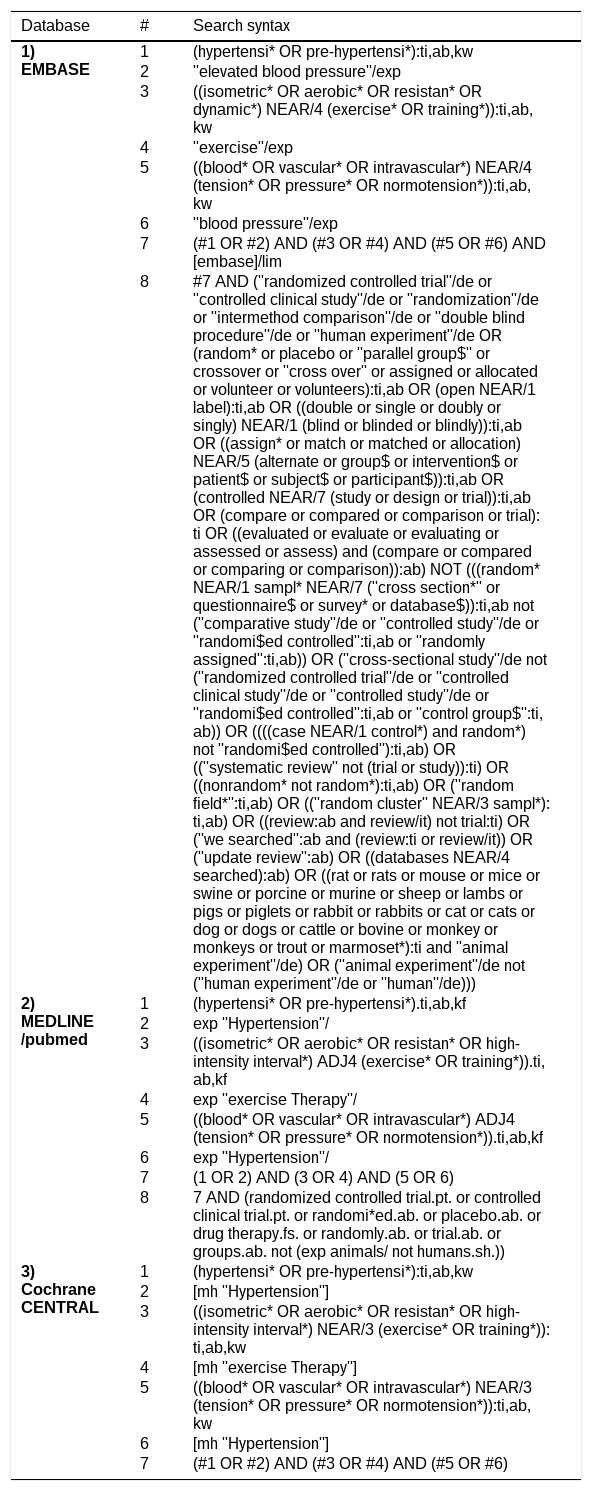
MethodsLiterature searchThis systematic review was conducted in accordance with the Preferred Reporting Items for Systematic Reviews and Meta-Analyses (PRISMA) guidelines 20 by two of the authors and was prospectively registered in the International Prospective Register of Systematic Reviews (PROSPERO; registration number: #420251132262). A comprehensive search of EMBASE, MEDLINE/PubMed, and Cochrane CENTRAL was performed from database inception to July 2025. In addition, manual searches of the reference lists of relevant reviews and included studies were conducted to identify any additional eligible articles. Relevant Medical Subject Headings (MeSH) terms and free-text keywords were applied to identify studies related to participants (e.g., hypertension, pre-hypertension, elevated blood pressure), interventions (e.g., exercise, training), and outcomes (e.g., blood pressure, hypertension), as outlined in Table 1.
Relevant MeSH terms and free-text keywords.
Study selection followed the PICOS framework (Population, Intervention, Comparison, Outcome, and Study design). (1) Population: adults aged ≥18 years diagnosed with hypertension or prehypertension, including individuals with metabolic syndrome who met the BP criteria, were eligible. Prehypertension was defined as SBP ≥120 mmHg and/or DBP ≥80 mmHg, whereas hypertension was defined as SBP ≥140 mmHg and/or DBP ≥90 mmHg. Studies involving pregnant women or individuals with stroke, heart failure, or chronic kidney disease were excluded. (2) Intervention: eligible studies included at least one supervised (SUP) training group and one non-SUP training group. SUP was defined as having ≥ two-thirds (≥0.67) of total training sessions conducted under supervision (e.g., guided by an instructor), whereas non-SUP was defined as having ≤ one-third (≤0.33) of sessions conducted under supervision. Studies were excluded if the supervision ratio fell between 0.33 and 0.67 or was not clearly defined 21 to minimize overlap between groups and improve conceptual separation between predominantly supervised and predominantly self-directed exercise interventions. (3) Comparison: the comparator was a group receiving non-supervised exercise training. Studies that mentioned only “standard care” without specific exercise recommendations were excluded. (4) Outcomes: studies were required to report both baseline and post-intervention BP measurements for SBP and DBP. (5) Study design: only randomized controlled trials (RCTs) were included. Systematic reviews, meta-analyses, conference abstracts, case reports, dissertations, observational studies, and studies not published in English were excluded.
Study selection and data extractionTwo reviewers (*** and **) independently screened the titles and abstracts of all retrieved records to identify studies meeting the inclusion criteria. Full-text articles were obtained for studies deemed potentially eligible by two reviewers (*** and **) independently. All references were imported into EndNote 21 (Clarivate, Philadelphia, PA, USA), and duplicate entries were removed. Discrepancies between reviewers were resolved through consensus, with arbitration by a third reviewer when necessary. Data extraction was conducted by one reviewer using a form developed for this purpose. The extracted variables included study identifiers (authors and year), group allocation, inclusion criteria, participant characteristics, medication use, BP type and measurement methods, intervention characteristics, training content, exercise frequency and duration, follow-up duration, and quantitative outcome data (means, SDs, and sample size) used for the meta-analysis.
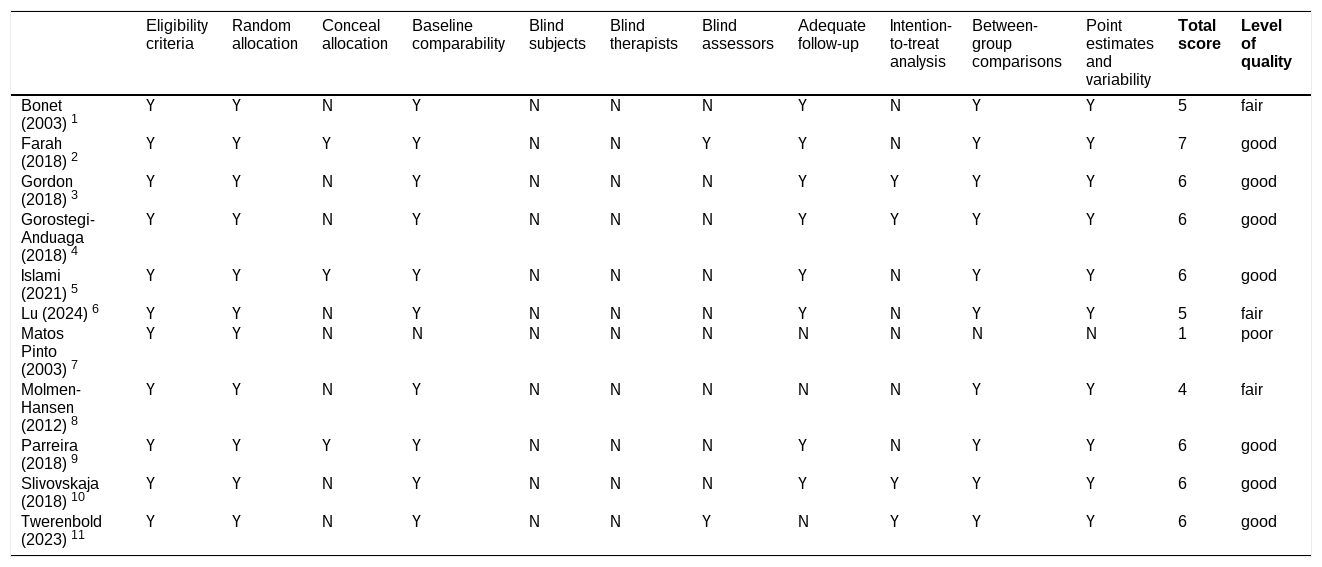
Quality assessmentThe methodological quality of the included studies was assessed using the Physiotherapy Evidence Database (PEDro) scale. 22 This tool comprises 11 items, including eligibility criteria, random allocation, concealed allocation, baseline comparability, blinding of subjects, blinding of therapists, blinding of assessors, adequate follow-up, intention-to-treat analysis, between-group comparisons, and reporting of point estimates with measures of variability. The final 10 items contribute to the total PEDro score. Based on these scores, study quality was classified as excellent (9-10), good (6-8), fair (4-5), or poor (≤3). When available, PEDro scores were extracted directly from the PEDro database (https://pedro.org.au/english/resources/pedro-scale/), which included committee-assigned scores for three of the included studies .12,17,23 For studies not listed in the database, two reviewers independently assessed quality in accordance with the PEDro guidelines. 22 Discrepancies were resolved through discussion, with a third reviewer serving as arbiter when consensus could not be reached.
Data analysisThe means and SDs of the reported outcomes were extracted by the first author into a Microsoft Excel 2019 spreadsheet and independently verified by the second author. Discrepancies were resolved through discussion with the third author. When data were available only in graphical format and could not be obtained from the study authors, mean and SD values were extracted using WebPlotDigitizer. 24 Data synthesis and analysis were performed using Review Manager (RevMan) version 5.4 (Nordic Cochrane Center, Cochrane Collaboration, Copenhagen, Denmark). For SBP and DBP, the mean differences and corresponding SDs of the mean differences were calculated. The SDs of the mean differences were derived using published equations, 20 applying a conservative correlation coefficient (r = 0.5).
A random-effects model was applied to all analyses. Statistical heterogeneity was quantified using the inconsistency index (I²), with values >50% indicating substantial heterogeneity and values <50% indicating low heterogeneity. Statistical significance was set at p < 0.05. In addition, subgroup analyses were performed according to exercise programs, including continuous aerobic exercise training, high-intensity interval training (HIIT), isometric handgrip training, and combined training, to further explore potential sources of heterogeneity and differences in intervention effects. Pooled effect estimates for SBP and DBP between comparison groups were presented as forest plots with 95% confidence intervals (CIs). Publication bias assessment using funnel plots was planned only when sufficient studies were available, as interpretation of funnel plots may be unreliable with a small number of studies.
The studies by Gorostegi-Anduaga et al. 17 and Molmen-Hansen et al. 25 included three and two SUP groups, respectively. We divided the non-SUP group into subgroups for comparison in the meta-analysis. Specifically, the non-SUP group in Gorostegi-Anduaga et al. comprised 40 participants, whom we divided into three subgroups (n = 13, 13, and 14). In Molmen-Hansen et al., the non-SUP group comprised 25 participants, whom we divided into two subgroups (n = 13 and n = 12).
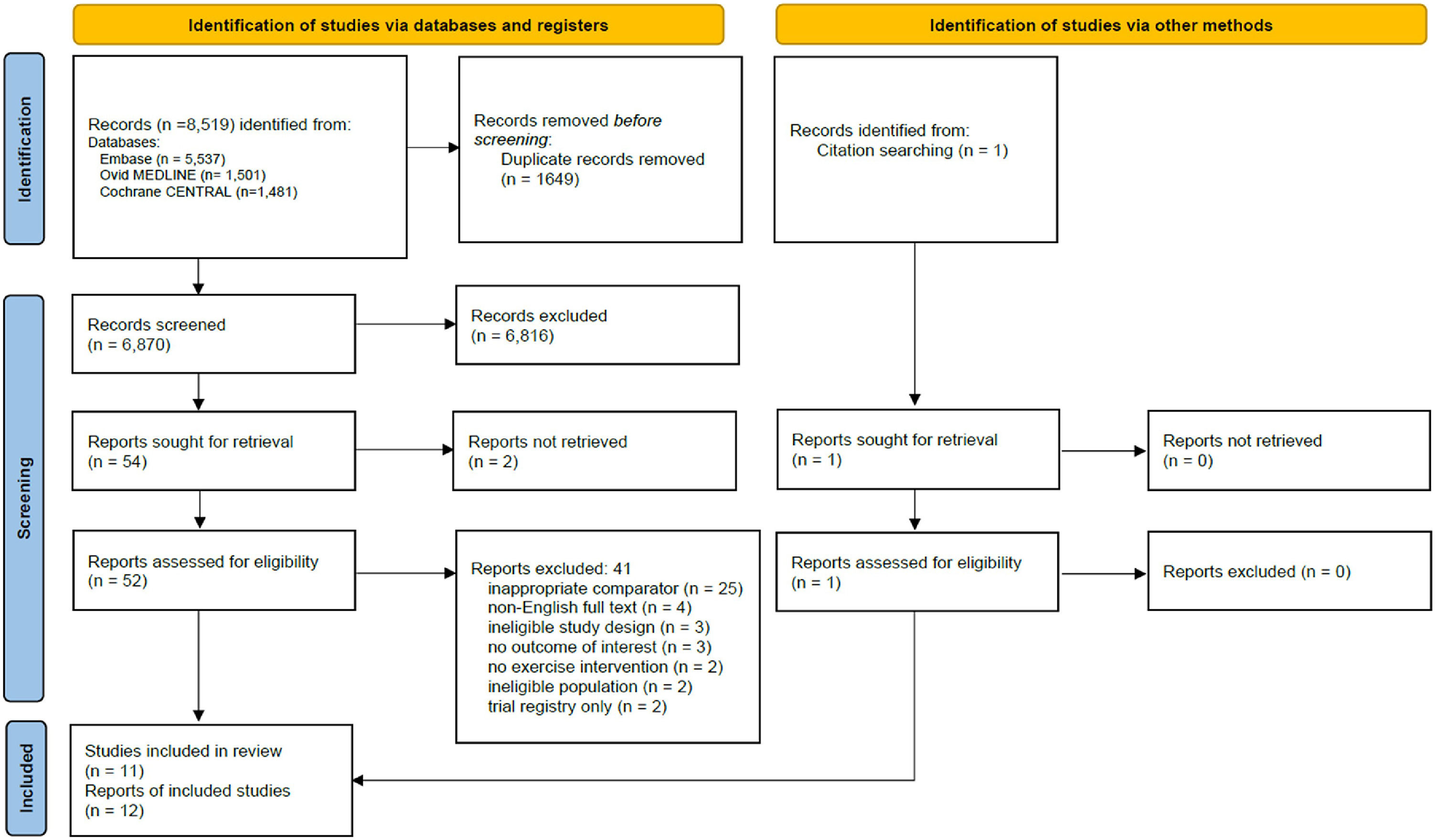
ResultsLiterature searchA total of 8,520 reports were retrieved: 8,519 from the three databases and 1 via manual searching. After removing 1,649 duplicate reports, the remaining 6,871 reports were screened. Fifty-five reports matched the inclusion criteria for full-text download; however, two could not be retrieved. Of the 53 full-text articles successfully downloaded, 41 reports were subsequently excluded for reasons such as the wrong comparator, the wrong study design, no exercise intervention, the wrong population, no outcome of interest, and the wrong publication type. Appendix 1 details the excluded reports and the reasons. Consequently, 12 reports were identified; however, only 11 unique studies were included in the systematic review because one trial registry record 26 and one journal article 13 referred to the same study (Fig. 1). Ten studies 12,13,17,18,23,25,27-30 were included in the final quantitative synthesis because one study 31 did not report SD values. The obtained studies were published between 2003 and 2024.
Quality assessment
The average PEDro score across the 11 studies was 5.3 ± 1.6, with a maximum of 7 and a minimum of 1 (Table 2). Thus, the reviewed studies have methodological quality ranging from fair to good. Due to the limited number of included studies in most subgroup analyses, publication bias was not formally assessed.
PEDro quality assessment of studies included for review.
| Eligibility criteria | Random allocation | Conceal allocation | Baseline comparability | Blind subjects | Blind therapists | Blind assessors | Adequate follow-up | Intention-to-treat analysis | Between-group comparisons | Point estimates and variability | Total score | Level of quality | |
|---|---|---|---|---|---|---|---|---|---|---|---|---|---|
| Bonet (2003) 1 | Y | Y | N | Y | N | N | N | Y | N | Y | Y | 5 | fair |
| Farah (2018) 2 | Y | Y | Y | Y | N | N | Y | Y | N | Y | Y | 7 | good |
| Gordon (2018) 3 | Y | Y | N | Y | N | N | N | Y | Y | Y | Y | 6 | good |
| Gorostegi-Anduaga (2018) 4 | Y | Y | N | Y | N | N | N | Y | Y | Y | Y | 6 | good |
| Islami (2021) 5 | Y | Y | Y | Y | N | N | N | Y | N | Y | Y | 6 | good |
| Lu (2024) 6 | Y | Y | N | Y | N | N | N | Y | N | Y | Y | 5 | fair |
| Matos Pinto (2003) 7 | Y | Y | N | N | N | N | N | N | N | N | N | 1 | poor |
| Molmen-Hansen (2012) 8 | Y | Y | N | Y | N | N | N | N | N | Y | Y | 4 | fair |
| Parreira (2018) 9 | Y | Y | Y | Y | N | N | N | Y | N | Y | Y | 6 | good |
| Slivovskaja (2018) 10 | Y | Y | N | Y | N | N | N | Y | Y | Y | Y | 6 | good |
| Twerenbold (2023) 11 | Y | Y | N | Y | N | N | Y | N | Y | Y | Y | 6 | good |
The youngest lower limit reported was 18 years, and the oldest upper limit was 70 years (one study included ≥60 years). Across the included studies, the participants were predominantly middle-aged to older adults with overweight to obese body mass index (BMI) values. Five studies 12,17,18,25,31 specifically included participants with stage 1-2 hypertension, while six studies 13,23,27-30 did not report the hypertension stage in detail. Notably, one study 30 recruited participants with metabolic syndrome, of whom 91.3% had hypertension.
In the 11 included studies, a total of 462 participants were initially allocated to the SUP group, with a mean of 42.0 ± 36.7 subjects per study. After accounting for dropouts, the final sample size of the SUP group was 396, corresponding to an average of 36.0 ± 36.4 participants per study. For the non-supervised (non-SUP) group, 293 participants were originally allocated, with a mean of 26.6 ± 11.8 per study. After dropouts, the final number of participants was 252, with an average of 22.9 ± 12.1 per study.
For the 10 studies included in the meta-analysis, a total of 378 participants were allocated to the SUP group. The mean number of participants per study was 37.6 ± 28.4 for continuous aerobic exercise training, 31.8 ± 11.5 for HIIT, 9.0 ± 1.4 for isometric handgrip training, and 22.5 ± 9.2 for combined training. In comparison, 229 participants were allocated to the non-SUP group, with corresponding means of 22.2 ± 15.2 for continuous aerobic exercise training, 14.8 ± 2.9 for HIIT, 7.5 ± 2.1 for isometric handgrip training, and 22.0 ± 9.9 for combined training.
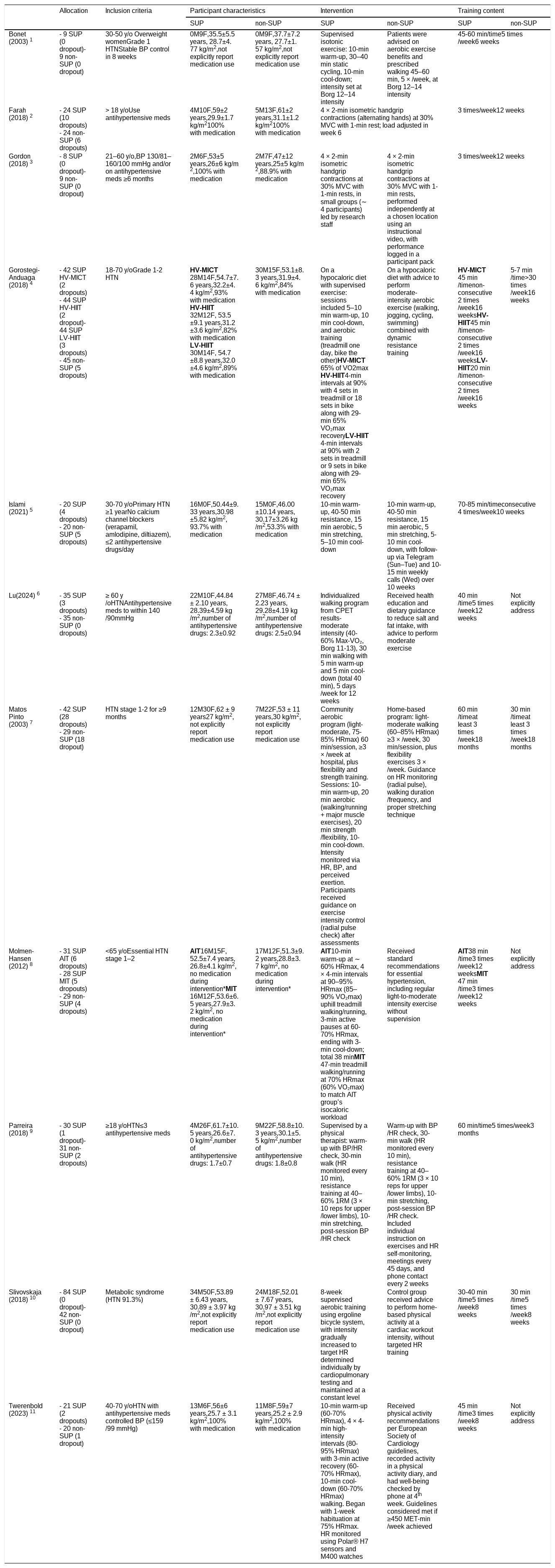
Interventions and outcomesRegarding the training interventions, 6 studies 12,17,25,28,30,31 with fair quality were considered continuous aerobic exercise training, 3 studies 17,23,25 with fair quality used HIIT, 2 studies 13,18 with good quality used isometric handgrip, and 2 studies 27,29 with good quality performed combined training (resistance training, aerobic, and stretching exercises). Regarding the outcome measures, six studies 12,17,18,27,30,31 assessed resting BP only, one study 25 reported 24-h BP, one study 29 assessed both resting and central BP, one study 13 reported resting, central, and 24-h BP, and another study 23 assessed resting, 24-h, and exercise-induced BP. In addition, one study 28 reported resting, 24-h, daytime, and nighttime BP. Table 3 summarizes the interventions across the 11 included studies. The non-SUP groups varied substantially across the 11 included studies, with some performing exercise programs similar to those of the SUP groups in a home-based or partially supervised setting, 12,13,18,27,30-32 while others received only general physical activity recommendations, health education, or standard care rather than equivalent exercise interventions, 17,23,25,28
Characteristics of studies included for review.
| Allocation | Inclusion criteria | Participant characteristics | Intervention | Training content | ||||
|---|---|---|---|---|---|---|---|---|
| SUP | non-SUP | SUP | non-SUP | SUP | non-SUP | |||
| Bonet(2003) 1 | - 9 SUP (0 dropout)- 9 non-SUP (0 dropout) | 30-50 y/o Overweight womenGrade 1 HTNStable BP control in 8 weeks | 0M9F,35.5±5.5 years, 28.7±4.77 kg/m2,not explicitly report medication use | 0M9F,37.7±7.2 years, 27.7±1.57 kg/m2,not explicitly report medication use | Supervised isotonic exercise: 10-min warm-up, 30–40 min static cycling, 10-min cool-down; intensity set at Borg 12–14 intensity | Patients were advised on aerobic exercise benefits and prescribed walking 45–60 min, 5 × /week, at Borg 12–14 intensity | 45-60 min/time5 times/week6 weeks | |
| Farah(2018) 2 | - 24 SUP (10 dropouts)- 24 non-SUP (6 dropouts) | > 18 y/oUse antihypertensive meds | 4M10F,59±2 years,29.9±1.7 kg/m2100% with medication | 5M13F,61±2 years,31.1±1.2 kg/m2100% with medication | 4 × 2-min isometric handgrip contractions (alternating hands) at 30% MVC with 1-min rest; load adjusted in week 6 | 3 times/week12 weeks | ||
| Gordon (2018) 3 | - 8 SUP (0 dropout)- 9 non-SUP (0 dropout) | 21–60 y/o,BP 130/81–160/100 mmHg and/or on antihypertensive meds ≥6 months | 2M6F,53±5 years,26±6 kg/m2,100% with medication | 2M7F,47±12 years,25±5 kg/m2,88.9% with medication | 4 × 2-min isometric handgrip contractions at 30% MVC with 1-min rests, in small groups (∼4 participants) led by research staff | 4 × 2-min isometric handgrip contractions at 30% MVC with 1-min rests, performed independently at a chosen location using an instructional video, with performance logged in a participant pack | 3 times/week12 weeks | |
| Gorostegi-Anduaga(2018) 4 | - 42 SUP HV-MICT (2 dropouts)- 44 SUP HV-HIIT (2 dropout)- 44 SUP LV-HIIT (3 dropouts)- 45 non-SUP (5 dropouts) | 18-70 y/oGrade 1-2 HTN | HV-MICT28M14F,54.7±7.6 years,32.2±4.4 kg/m2,93% with medicationHV-HIIT32M12F, 53.5±9.1 years,31.2±3.6 kg/m2,82% with medicationLV-HIIT30M14F, 54.7±8.8 years,32.0±4.6 kg/m2,89% with medication | 30M15F,53.1±8.3 years,31.9±4.6 kg/m2,84% with medication | On a hypocaloric diet with supervised exercise: sessions included 5–10 min warm-up, 10 min cool-down, and aerobic training (treadmill one day, bike the other)HV-MICT65% of VO2maxHV-HIIT4-min intervals at 90% with 4 sets in treadmill or 18 sets in bike along with 29-min 65% VO₂max recoveryLV-HIIT4-min intervals at 90% with 2 sets in treadmill or 9 sets in bike along with 29-min 65% VO₂max recovery | On a hypocaloric diet with advice to perform moderate-intensity aerobic exercise (walking, jogging, cycling, swimming) combined with dynamic resistance training | HV-MICT45 min/timenon-consecutive 2 times/week16 weeksHV-HIIT45 min/timenon-consecutive 2 times/week16 weeksLV-HIIT20 min/timenon-consecutive 2 times/week16 weeks | 5-7 min/time>30 times/week16 weeks |
| Islami (2021) 5 | - 20 SUP (4 dropouts)- 20 non-SUP (5 dropouts) | 30-70 y/oPrimary HTN ≥1 yearNo calcium channel blockers (verapamil, amlodipine, diltiazem),≤2 antihypertensive drugs/day | 16M0F,50.44±9.33 years,30.98±5.82 kg/m2,93.7% with medication | 15M0F,46.00±10.14 years,30.17±3.26 kg/m2,53.3% with medication | 10-min warm-up, 40-50 min resistance, 15 min aerobic, 5 min stretching, 5–10 min cool-down | 10-min warm-up, 40-50 min resistance, 15 min aerobic, 5 min stretching, 5-10 min cool-down, with follow-up via Telegram (Sun–Tue) and 10-15 min weekly calls (Wed) over 10 weeks | 70-85 min/timeconsecutive 4 times/week10 weeks | |
| Lu(2024) 6 | - 35 SUP (3 dropouts)- 35 non-SUP (0 dropouts) | ≥ 60 y/oHTNAntihypertensive meds to within 140/90mmHg | 22M10F,44.84 ± 2.10 years,28.39±4.59 kg/m2,number of antihypertensive drugs: 2.3±0.92 | 27M8F,46.74 ± 2.23 years,29.28±4.19 kg/m2,number of antihypertensive drugs: 2.5±0.94 | Individualized walking program from CPET results- moderate intensity (40-60% Max-VO₂, Borg 11-13), 30 min walking with 5 min warm-up and 5 min cool-down (total 40 min), 5 days/week for 12 weeks | Received health education and dietary guidance to reduce salt and fat intake, with advice to perform moderate exercise | 40 min/time5 times/week12 weeks | Not explicitly address |
| Matos Pinto (2003) 7 | - 42 SUP (28 dropouts)- 29 non-SUP (18 dropout) | HTN stage 1-2 for ≥9 months | 12M30F,62 ± 9 years27 kg/m2,not explicitly report medication use | 7M22F,53 ± 11 years,30 kg/m2,not explicitly report medication use | Community aerobic program (light-moderate, 75-85% HRmax) 60 min/session, ≥3 × /week at hospital, plus flexibility and strength training. Sessions: 10-min warm-up, 20 min aerobic (walking/running + major muscle exercises), 20 min strength/flexibility, 10-min cool-down. Intensity monitored via HR, BP, and perceived exertion. Participants received guidance on exercise intensity control (radial pulse check) after assessments | Home-based program: light-moderate walking (60–85% HRmax) ≥3 × /week, 30 min/session, plus flexibility exercises 3 × /week. Guidance on HR monitoring (radial pulse), walking duration/frequency, and proper stretching technique | 60 min/timeat least 3 times/week18 months | 30 min/timeat least 3 times/week18 months |
| Molmen-Hansen(2012) 8 | - 31 SUP AIT (6 dropouts)- 28 SUP MIT (5 dropouts)- 29 non-SUP (4 dropouts) | <65 y/oEssential HTN stage 1–2 | AIT16M15F,52.5±7.4 years,26.8±4.1 kg/m2,no medication during intervention*MIT16M12F,53.6±6.5 years,27.9±3.2 kg/m2, no medication during intervention* | 17M12F,51.3±9.2 years,28.8±3.7 kg/m2, no medication during intervention* | AIT10-min warm-up at ∼60% HRmax, 4 × 4-min intervals at 90–95% HRmax (85–90% VO₂max) uphill treadmill walking/running, 3-min active pauses at 60-70% HRmax, ending with 3-min cool-down; total 38 minMIT47-min treadmill walking/running at 70% HRmax (60% VO₂max) to match AIT group’s isocaloric workload | Received standard recommendations for essential hypertension, including regular light-to-moderate intensity exercise without supervision | AIT38 min/time3 times/week12 weeksMIT47 min/time3 times/week12 weeks | Not explicitly address |
| Parreira(2018) 9 | - 30 SUP (1 dropout)- 31 non-SUP (2 dropouts) | ≥18 y/oHTN≤3 antihypertensive meds | 4M26F,61.7±10.5 years,26.6±7.0 kg/m2,number of antihypertensive drugs: 1.7±0.7 | 9M22F,58.8±10.3 years,30.1±5.5 kg/m2,number of antihypertensive drugs: 1.8±0.8 | Supervised by a physical therapist: warm-up with BP/HR check, 30-min walk (HR monitored every 10 min), resistance training at 40–60% 1RM (3 × 10 reps for upper/lower limbs), 10-min stretching, post-session BP/HR check | Warm-up with BP/HR check, 30-min walk (HR monitored every 10 min), resistance training at 40–60% 1RM (3 × 10 reps for upper/lower limbs), 10-min stretching, post-session BP/HR check. Included individual instruction on exercises and HR self-monitoring, meetings every 45 days, and phone contact every 2 weeks | 60 min/time5 times/week3 months | |
| Slivovskaja(2018) 10 | - 84 SUP (0 dropout)- 42 non-SUP (0 dropout) | Metabolic syndrome(HTN 91.3%) | 34M50F,53.89 ± 6.43 years,30.89 ± 3.97 kg/m2,not explicitly report medication use | 24M18F,52.01 ± 7.67 years,30.97 ± 3.51 kg/m2,not explicitly report medication use | 8-week supervised aerobic training using ergoline bicycle system, with intensity gradually increased to target HR determined individually by cardiopulmonary testing and maintained at a constant level | Control group received advice to perform home-based physical activity at a cardiac workout intensity, without targeted HR training | 30-40 min/time5 times/week8 weeks | 30 min/time5 times/week8 weeks |
| Twerenbold(2023) 11 | - 21 SUP (2 dropouts)- 20 non-SUP (1 dropout) | 40-70 y/oHTN with antihypertensive meds controlled BP (≤159/99 mmHg) | 13M6F,56±6 years,25.7 ± 3.1 kg/m2,100% with medication | 11M8F,59±7 years,25.2 ± 2.9 kg/m2,100% with medication | 10-min warm-up (60-70% HRmax), 4 × 4-min high-intensity intervals (80-95% HRmax) with 3-min active recovery (60-70% HRmax), 10-min cool-down (60-70% HRmax) walking. Began with 1-week habituation at 75% HRmax. HR monitored using Polar® H7 sensors and M400 watches | Received physical activity recommendations per European Society of Cardiology guidelines, recorded activity in a physical activity diary, and had well-being checked by phone at 4th week. Guidelines considered met if ≥450 MET-min/week achieved | 45 min/time3 times/week8 weeks | Not explicitly address |
AIT, aerobic interval training; BP, blood pressure; CPET, cardiopulmonary exercise testing; HR, heart rate; HRmax, maximal heart rate; HTN, hypertension; HV-HIIT, high volume aerobic high-intensity interval training; HV-MICT, high volume moderate-intensity continuous training; LV-HIIT, low volume aerobic high-intensity interval training; Meds, medicines; MET, metabolic equivalent of task; MIT, moderate intensity continuous training; MVC, maximal voluntary contraction; non-SUP, non-supervised; SUP, supervised; VO₂max, maximal oxygen uptake; 1RM, one-repetition maximum; *, before inclusion, 39 patients discontinued antihypertensive medication and underwent a 1-month wash-out and end-of-period measurements served as baseline.
The effects of SUP versus non-SUP exercise training on SBP and DBP were synthesized.
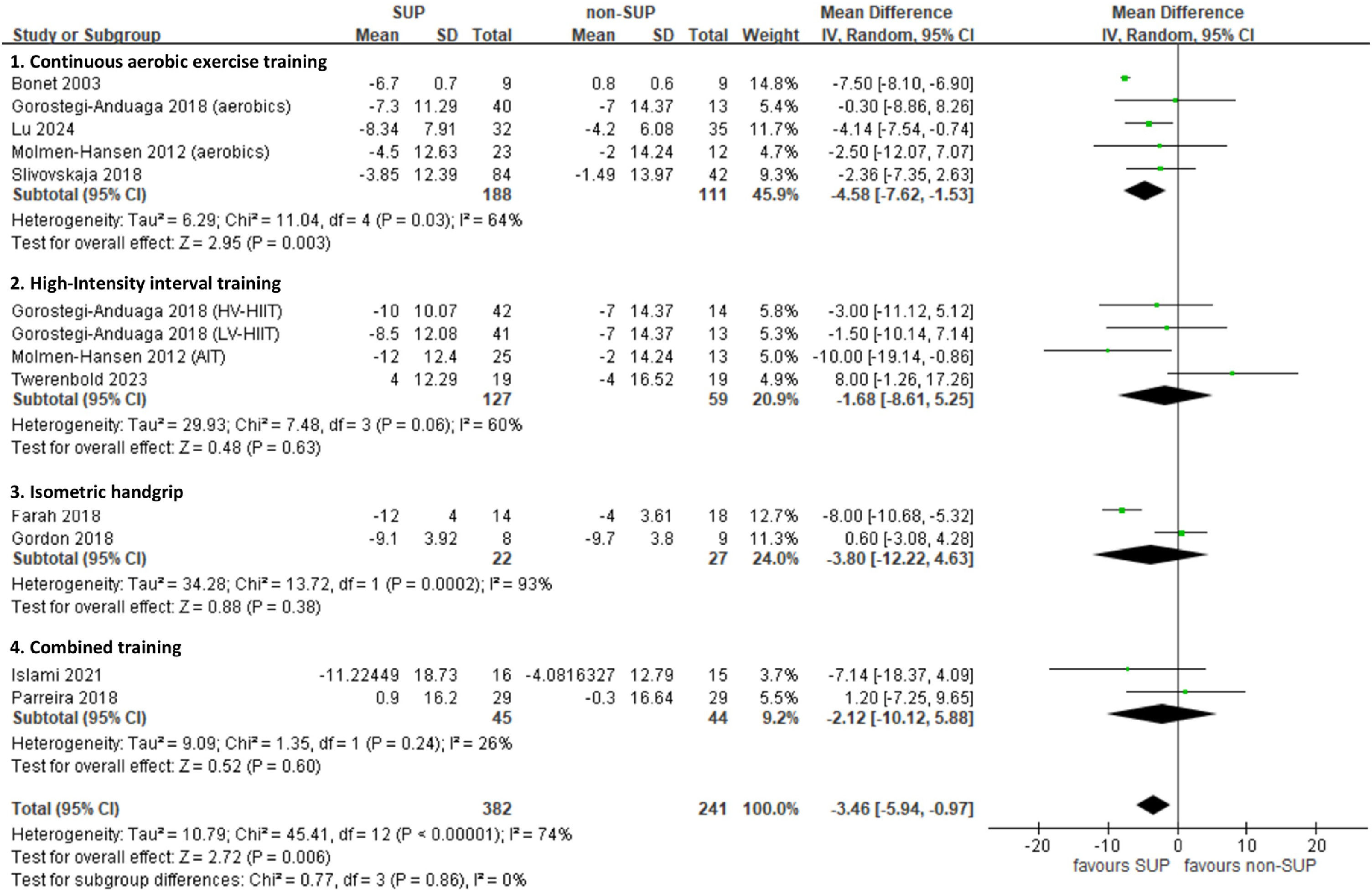
Ten studies 12,13,17,18,23,25,27-30 were scrutinized to examine the effects of SUP training on SBP. The pooled results showed significant differences (p = 0.006, I2 = 74%) between the SUP and non-SUP groups (Fig. 2). The mean difference favored the SUP group (MD = -3.46 mmHg; 95% CI: -5.94, -0.97). The subgroup analysis results indicated that continuous aerobic exercise training (p = 0.003, I2 = 64%) favors SUP in reducing SBP. However, no significant differences were observed for HIIT (p = 0.63, I2 = 60%), isometric handgrip (p = 0.38, I2 = 93%), or combined training (p = 0.60, I2 = 26%).

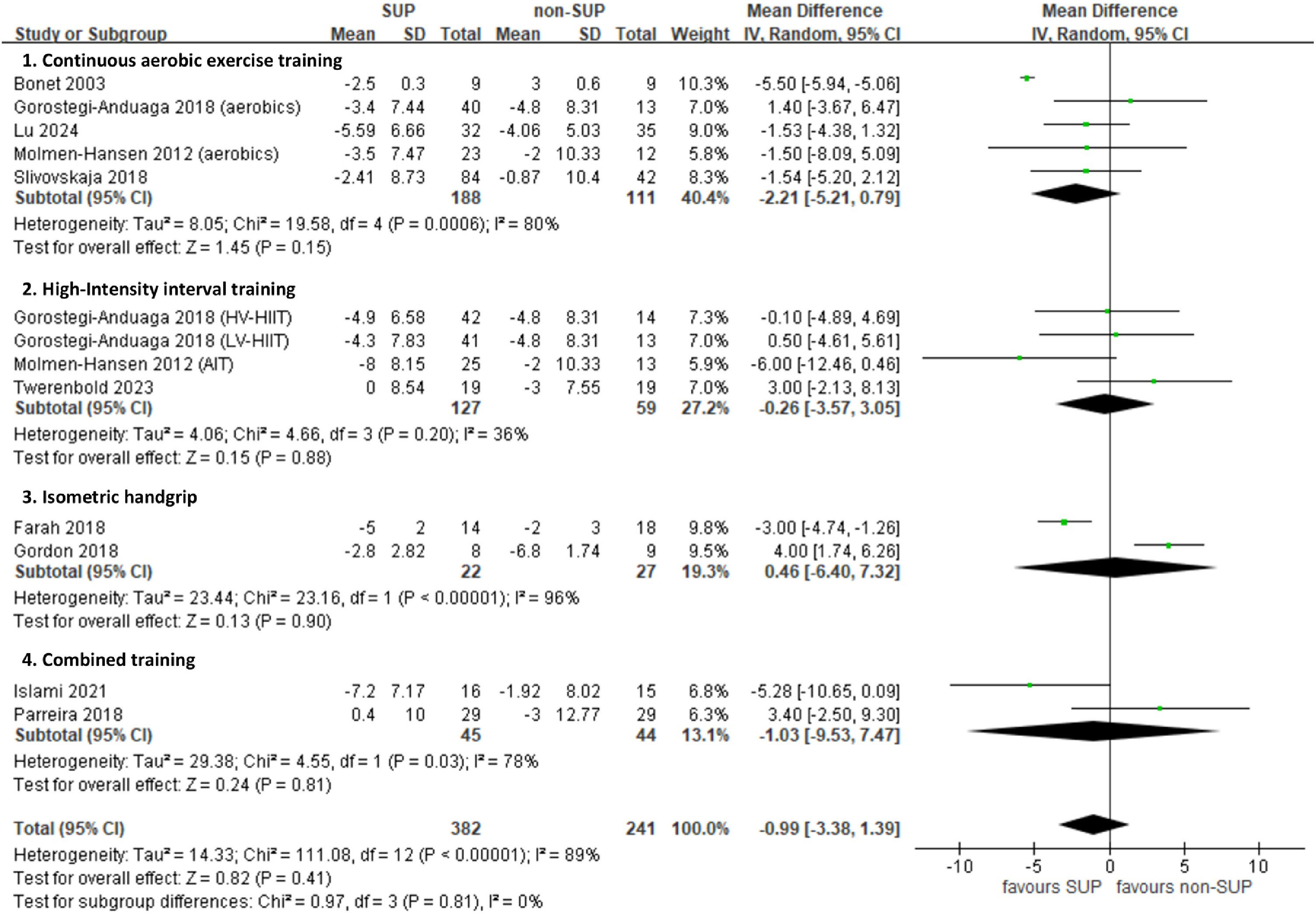
Ten studies 12,13,17,18,23,25,27-30 were similarly examined to determine whether SUP training had any effect on DBP compared with non-SUP training. The pooled results showed no significant differences (p = 0.41, I2 = 89%) between the SUP and non-SUP groups (Fig. 3). The mean difference was -0.99 mmHg (95% CI: -3.38, 1.39). The results of subgroup analyses indicated that continuous aerobic exercise training (p = 0.15, I2 = 80%), HIIT (p = 0.88, I2 = 36%), isometric handgrip (p = 0.90, I2 = 96%), and combined training (p = 0.81, I2 = 78%) also had a similar effect on the change of DBP.
Discussion
The systematic review included 11 RCTs studies with quality ranging from fair to good quality based on the PEDro scale. After excluding one study that did not report SDs, the meta-analysis synthesized evidence from 10 RCTs that compared SUP and non-SUP exercise interventions in individuals with hypertension. The SUP intervention resulted in a greater reduction in SBP than the non-SUP intervention, whereas there were no significant group differences in DBP. The subgroup analyses demonstrated that SUP was more effective than non-SUP in reducing SBP only during continuous aerobic exercise training, whereas other exercise types (i.e., HIIT, isometric handgrip, and combined training) showed no significant group differences.
SBPThe findings demonstrated that SUP interventions were associated with greater reductions in SBP than non-SUP interventions (mean difference = -3.46 mmHg; 95% CI: -5.94, -0.97; p = 0.006). SUP interventions may be more effective than non-SUP training because SUP enhances adherence, ensures quality training, and provides motivation and social support. 33,34 With respect to adherence, patients in non-SUP settings may either fail to perform the prescribed exercises correctly or neglect them altogether, whereas SUP generally ensures stricter adherence to the exercise program, reducing the risk of missed sessions or insufficient training. 35,36 In addition, SUP enables patients to exercise with proper posture and intensity, thereby preventing ineffective training or injuries caused by improper technique. 35 Furthermore, a supervised environment often offers greater motivation, encouragement, and social support, which may facilitate long-term exercise participation. From a clinical perspective, the findings suggest that patients with elevated SBP may respond more favorably to supervised exercise intervention.
DBPThe current meta-analysis showed no clear differences between SUP and non-SUP interventions in reducing DBP (mean difference = -0.99 mmHg; 95% CI: -3.58, 1.39; p = 0.41), with high heterogeneity. This could indicate that both approaches are equally effective in lowering DBP. Since DBP is primarily influenced by peripheral arteriolar resistance, which adapts more slowly, short-term interventions, even with supervision, may not be sufficient to produce measurable changes. Alternatively, the absence of a difference may be due to insufficient statistical power or high heterogeneity, which limit the ability to detect between-group effects. In this study, heterogeneity in DBP outcomes reached as high as 89%, suggesting that the lack of a difference is more likely attributable to insufficient evidence rather than to truly equivalent effects. Among the included studies, 7 of 10 involved participants on antihypertensive medication, of which 2 reported 100% medication use. Only one study completely excluded pharmacological treatment, thereby providing the clearest evidence of exercise's isolated effect. In contrast, 2 studies did not report medication status, which limits the transparency and applicability of their findings. The widespread use of antihypertensive therapy among participants suggests that BP, particularly DBP, was already well controlled at baseline. Under such conditions, the additional margin for BP reduction through exercise, whether supervised or not, may have been limited, which could explain the similarity of effects between SUP and non-SUP interventions. Thus, medication use represents an important source of heterogeneity in exercise trials for hypertension. Future studies should more rigorously control for or stratify analyses by medication status to better isolate the independent effects of exercise.
Two main reasons may explain why differences were observed for SBP but not for DBP. First, regulation of SBP is largely influenced by arterial elasticity and cardiac output; therefore, SBP may be inherently more sensitive to general lifestyle modifications, including exercise and dietary interventions .9 Given this characteristic, improvements in SBP may be achieved more in SUP settings, which could partly explain why the additional benefit of supervision appears pronounced for SBP. In contrast, DBP is primarily determined by the peripheral resistance of arterioles, a process that requires a longer period for vascular remodeling and adaptation of endothelial function. 9 As a result, the magnitude of DBP reduction is typically smaller and less pronounced than that observed for SBP. Second, previous meta-analyses have shown that exercise interventions reduce SBP by approximately 6–8 mmHg, whereas DBP decreases by only 3–5 mmHg on average. 37,38 This general observation indicates that the absolute reduction in SBP is usually greater than that in DBP, making differences between SUP and non-SUP conditions more detectable for SBP than for DBP.
Interventions and outcomesTo better understand the influence of supervision across different exercise training, subgroup analyses were conducted. The included training programs encompassed continuous aerobic exercise training, HIIT, isometric handgrip, and combined training. Subgroup analysis revealed that the SUP was associated with greater reductions in SBP than non-SUP interventions, evident only with continuous aerobic exercise training (mean difference = -4.58; 95% CI: -7.62, -1.53; p = 0.003), whereas no significant differences were observed for the other exercise training modalities.
Continuous aerobic exercise trainingContinuous aerobic exercise training typically emphasizes prolonged sessions to achieve a sufficient total exercise volume. The greater success of SUP continuous aerobic exercise training can be attributed in part to enhanced regulation of exercise intensity and improved adherence to prescribed training protocols. Supporting this, network meta-analysis 39 in patients with type 2 diabetes mellitus demonstrated that SUP aerobic exercise was superior to both non-SUP aerobic and non-SUP resistance exercise in reducing glycated hemoglobin (HbA1c) and body weight. Furthermore, in children and adolescents, supervised aerobic activity was shown to achieve significantly greater improvement in cardiorespiratory fitness. 40 Taken together, these findings underscore the importance of professional SUP in continuous aerobic exercise programs, not only to ensure appropriate training intensity but also to enhance adherence, thereby optimizing clinical outcomes in patients with hypertension and related chronic conditions.
HIITThe subgroup analysis of HIIT did not reveal consistent differences between SUP and non-SUP interventions. Although some evidence suggested that SUP HIIT may produce greater reductions in BP, this effect was not uniformly observed across trials. The inconsistency might be due to confounding by concomitant dietary intervention and widespread antihypertensive medication use, which likely masked the independent contribution of SUP exercise. Meanwhile, the varying training lengths across studies may have limited the ability to detect significant changes.
These findings suggest that SUP training may be associated with favorable BP outcomes, while also highlighting the complexity of isolating its independent effect. Factors such as exercise intensity, intervention duration, participants’ baseline health status, and concurrent co-interventions (e.g., diet, medication) appear to play critical roles in shaping the BP response. This variability suggests that while supervision may enhance adherence and ensure exercise fidelity, its direct impact on BP outcomes cannot be fully disentangled without controlling for these interacting variables.
Isometric handgripIn the subgroup analysis of isometric handgrip, only two studies were included, which indeed limits the statistical power of the meta-analysis. A closer examination of these two studies reveals contrasting findings. The non-SUP group in Farah et al. 13 did not show any meaningful reduction in BP because participants may have been unable to perform the handgrip exercise correctly or consistently throughout the intervention period. In contrast, Gordon et al. 18 found that both SUP and non-SUP interventions led to clinically significant reductions in BP. A notable methodological difference between the two studies is that the non-SUP group in Gordon et al.’s trial 18 used instructional videos, potentially enhancing adherence compared with the non-SUP group in Farah et al.’s study, 13 which lacked such guidance.
Combined trainingIn the subgroup analysis of combined training, no significant differences were observed between SUP and non-SUP interventions in reducing SBP. This result may be explained by the two included studies not demonstrating notable reductions in BP, thereby limiting the ability to detect additional benefits of supervision. However, previous research has shown that combined training can effectively lower BP. 41 The discrepancy may be attributable to the participant characteristics in these studies, as all individuals were on regular antihypertensive medication and their BP had already been maintained within the normal range, leaving limited room for further reductions. Nevertheless, evidence indicates that combined training is effective in improving other clinically relevant outcomes, including aerobic capacity, muscular strength, functional fitness, and body composition. 38 These adaptations are particularly important in hypertensive populations, as they contribute to improved cardiovascular health and reduced long-term morbidity.
Heterogeneity and interpretation of findingsThe high heterogeneity suggests that the magnitude of the effect varied substantially across studies, limiting the robustness of this finding. Potential sources of heterogeneity include differences in participant characteristics, exercise protocols, and control conditions. Participants’ mean ages ranged from 35.5 to 61.7 years, and sex distribution varied widely, with some studies including only women (e.g., Bonet et al. 12) and others almost exclusively men (e.g., Islami et al. 27). Conditions of non-SUP were also heterogeneous, with some trials providing only general lifestyle advice, others incorporating dietary modification, and some allowing self-selected or partially supervised exercise. These variations likely influenced the relative differences between SUP and non-SUP groups. Moreover, the interventions differed substantially, including continuous aerobic exercise training, HIIT, isometric handgrip, and combined training, with considerable variation in duration and intensity. Subgroup analysis was performed in the current study to provide clearer insights into the effects of different exercise programs. Nonetheless, the overall trend suggests a possible association between SUP exercise and SBP, and future large-scale, rigorously designed studies are warranted to confirm these findings.
LimitationSeveral limitations should be acknowledged. First, the hypertension stages of participants varied across the included studies, ranging from stage 1 to stage 2 hypertension, to unspecified hypertension stages, with one study 30 including participants diagnosed with metabolic syndrome. Given the limited number of available studies on this topic, aggregating them in a meta-analysis may represent a necessary initial step to explore the effects of supervision among individuals with hypertension. Second, the exercise prescriptions for the non-SUP group were not entirely consistent with those provided to the SUP group. In some studies, non-SUP interventions differed in exercise intensity, structure, or delivery approach and, in some cases, consisted primarily of educational or general physical activity recommendations. Consequently, some observed effects may be attributable to differences in exercise protocols rather than the presence or absence of supervision alone. Moreover, the thresholds of 0.33 and 0.67 were adopted based on previous literature 21 and were intended to provide a pragmatic distinction between predominantly supervised and predominantly self-directed exercise interventions. However, we acknowledge that supervision is a multifaceted construct that may not be fully captured by this dichotomized classification. Finally, three of the eleven included studies were rated as fair methodological quality, and one study was rated as poor methodological quality, which may have affected the robustness and generalizability of the findings. Although the PEDro scale is widely used in physical therapy research, it primarily evaluates methodological quality rather than risk of bias. In exercise intervention studies, blinding of participants and therapists is often not feasible, which may influence PEDro scores and should be considered when interpreting the findings.
ConclusionSupervised exercise interventions appeared to be associated with greater reductions in SBP than non-supervised programs, particularly with continuous aerobic training. By contrast, no clear differences between the SUP and non-SUP groups were detected for DBP. From a clinical perspective, these findings suggest that patients with elevated SBP may benefit more from supervised exercise, especially during continuous aerobic exercise training. However, the influence of supervision on DBP regulation remains uncertain, and additional studies specifically targeting DBP outcomes are warranted. These findings should be interpreted with caution, given the substantial heterogeneity, relatively small subgroup sample sizes, and the fair-to-good methodological quality of the included studies.
Nevertheless, future work might focus on designing large-scale, rigorously conducted studies to confirm these findings. Future studies should also incorporate more rigorous control for potential confounders, such as using the same exercise intervention in both groups and accounting for the influence of diet and medication, to better clarify the differential effects of supervision on BP outcomes. Moreover, unsupervised programs can incorporate strategies, such as video-based guidance, to enhance adherence and assess their effects. Therefore, these considerations highlight important directions for future research and also represent limitations of the current evidence base that should be addressed in subsequent trials.
Data availabilityThe data used in this systematic review and meta-analysis were extracted from the 11 published articles. The findings generated from the meta-analysis are presented in the manuscript.
FundingNone.
The author(s) declared no potential conflicts of interest.