
The aim of this study was to examine the effects of upper extremity robotic-assisted training applied in addition to conventional physiotherapy on upper extremity functions and gait parameters.
MethodsThis randomized controlled trial compared robotic-assisted training plus conventional physiotherapy (study group) with conventional physiotherapy alone (control group). Participants in both groups received conventional physiotherapy three times per week for six weeks, while the study group additionally received 30-minute Armeo Spring sessions three times per week. Outcomes included upper-extremity range of motion, unimanual and bimanual function, selective motor control, trunk control, gait parameters, and functional independence. Changes from baseline were compared between groups using independent t-tests or Mann–Whitney U tests, as appropriate.
Results31 participants were divided into study (n = 16) and control (n = 15) group. Between-group comparisons of changes from baseline favored the study group for several upper-limb outcomes. Improvements were greater for wrist flexion (mean change 10.37±6.99° vs 1.13±3.02°), forearm supination (median change 17.5° [IQR 16.0] vs 2.0° [IQR 5.0]), and total Jebsen–Taylor Hand Function Test time (mean change −37.67±24.47 s vs −9.30±12.22 s,). Between-group differences also favored RAT for the stance phase of the unaffected side (mean change 2.56±3.03% vs −0.93±2.18%,). No between-group difference was observed for trunk control.
ConclusionsThe addition of upper extremity robotic rehabilitation to conventional physiotherapy not only improved upper extremity functions but also positively influenced gait parameters.
Unilateral cerebral palsy (uCP) is the most common type of CP characterized by motor and sensory impairments. In individuals with uCP, upper extremity functional impairments such as difficulties in object manipulation, grasping, and releasing, as well as reduced spontaneous movements are commonly observed. These impairments in upper extremity function lead to decreased hand use and lower walking and balance skills compared to healthy peers.1,2
In individuals with CP, the lengthy duration of treatments can lead to motivational issues and individuals rejecting treatment.3 Therefore, robot-assisted therapy (RAT), an innovative treatment method aimed at enhancing motivation and treatment compliance, has gained prominence. RAT enables repetitive, intensive, and task-oriented rehabilitation while providing feedback to both the therapist and the patient.4 For neuroplasticity and motor learning to occur, it is necessary to have frequent repetitions, high motivation levels in individuals, and activities that resemble daily life activities.5 Achieving all of these can be challenging in conventional physiotherapy sessions. While a patient may perform 30 repetitions of upper limb exercises in a 45-minute conventional physiotherapy session,6 the number of repetitions can reach up to 1000 in RAT sessions.7 This number of repetitions supports neuroplasticity and motor learning. Initially, RAT were compared to conventional physiotherapy programs; however, it was later concluded that these therapies should be administered in addition to conventional physiotherapy. Taking all this information into account, we have established a group that receives RAT in addition to conventional physiotherapy, compared to a group that receives only conventional physiotherapy. In this study, the Armeo® Spring Pediatric robotic system was used for RAT. Armeo® Spring is a passive robotic system with an adjustable suspension system in a virtual reality environment. In this way, participants can perform activities that they cannot do against gravity. The device has a total of five degrees of freedom and can perform various active movements in three-dimensional space. Virtual reality programs consist of task-oriented approaches with varying levels of difficulty based on orientation, speed, and range of motion.8
Gait is crucial for daily life activities and participation. Individuals with unilateral CP often develop an asymmetric gait pattern. Although studies evaluating the gait in individuals with CP generally focus on approaches related to the lower extremities,9 it is known that gait is not limited solely to the lower extremities and involves the coordination of all four extremities.10 One of the earliest studies on this topic was conducted by Elftman in 1939, reporting that with the onset of upright posture, the arms were freed from their traditional functions of supporting and propelling the body.11 With the advancement of technology, the direction of studies has shifted. Recent studies indicate that inter-limb coordination during human movement is organized similarly to quadrupeds (e.g., cats).12 Therefore, it is speculated that the spinal organization underlying inter-limb coordination in quadrupeds may also exist in humans.13 For instance, during rhythmic movements of the legs, cyclic modulation of the H-reflex has been observed in the upper extremities.14 Despite this knowledge, upper extremity treatment in individuals with unilateral CP primarily aims to improve hand function or address hygiene issues,15 often overlooking the impact of the upper extremity on walking. Therefore, in the present study, alongside evaluating upper extremity functionality, walking parameters were also assessed.
Although the relationship between upper limb and gait in individuals with unilateral CP has been clearly stated in the literature,16 no studies have been found evaluating gait after RAT targeting the upper limb. The aim of this study was to investigate the effects of RAT targeting the upper limb functions, trunk control, walking parameters, and functional independence in individuals with unilateral CP. Our hypothesis is that RAT targeting the upper limb will have a positive effect on upper limb functions, trunk control, walking, and functional independence.
MethodsStudy designThis randomized controlled trial investigated the effects of RAT in two parallel groups. The research was conducted at Ankara City Hospital Physical Therapy and Rehabilitation Hospital. After explaining the purpose and scope of the study to all individuals and their families who agreed to participate, informed consent forms were provided for them to read and sign. Ethical approval was obtained from the Gazi University Ethics Committee before the start of the study (Approval Number: 2021–591). The study is registered in Clinical Trials (NCT05136612).
ParticipantsInclusion criteria were being between the ages of 6 and 18 years, having a diagnosis of CP (ICD: G.80.2 Infantile hemiplegic cerebral palsy), being classified as level I, II, or III according to the Manual Ability Classification System, and having cognitive abilities sufficient to comply with the assessments. Exclusion criteria were having undergone any orthopedic and/or neurological surgery and/or BoNT A (Botulinum Toxin-A) operation within the last 6 months, having a history of epilepsy, and being unable to exercise with Armeo® Spring due to hearing and/or visual impairment.
Participants who met the eligibility criteria were randomly allocated to the Armeo or control group in a 1:1 ratio. The random allocation sequence was generated using https://www.randomizer.org/.
We conducted a post-hoc power analysis to estimate a required sample size using G*Power (Version 3.1.9.7, University of Düsseldorf, Düsseldorf, Germany). On the basis of a large effect size (d = 1,14) with a total of 31 participants, we calculated the power of the study to be 92% with an alpha error level of 0.05.
InterventionsControl groupParticipants in the control group (CG) received conventional physiotherapy three days a week for 6 weeks, with each session lasting 45 min. The conventional physiotherapy included the following exercises:
- •
Functional range of motion (ROM) exercises: activities such as flipping cards, pouring water into a glass, sticking post-it notes, vacuuming objects, and painting.
- •
Weight shifting exercises: reaching toward a target with one extremity while transferring weight to the opposite extremity while sitting or in a crawling position.
- •
Reaching: placing a ball into an overhead basket.
- •
Grasping and releasing objects of different sizes and weights (such as placing objects into a target after grasping, gathering different objects into a basket, and opening and closing clothespins).
- •
Bimanual activities: manipulating large objects toward a target, stringing beads on a string, painting pictures, making dough imprints, and throwing and catching a ball.
The Armeo group (AG) was followed for 6 weeks in addition to the conventional physiotherapy program. AG trained with the Armeo Spring in 30-minute sessions three times a week. The term “season duration” (30 min) indicates the active exercise duration with the Armeo Spring, excluding device setup and transition times. Ten Armeo Spring virtual reality applications (Supplementary material), each lasting 3 min, were selected by a physiotherapist with Armeo Spring trainer Hocoma certification. The exercises were chosen to provide gradually increasing difficulty levels (easy, moderate, and difficult) to ensure progressive treatment. The exercise program was designed to involve different joints (shoulder, elbow, and wrist) and dimensions (1D, 2D, and 3D) and grasping. Therapists identified appropriate games that facilitated holistic engagement of the upper extremity (shoulder, elbow, wrist, and hand) while considering the participants' needs and goals. Additionally, participants and their families were actively involved in the goal-setting process, collaborating with therapists to create individualized in-game goals. This approach made the therapeutic process more effective and motivating. Feedback was provided both visually and auditorily through the game software and supported by the therapists. This feedback, as an important part of the motor learning process, allowed participants to evaluate their performance and make necessary corrections. The games selected for the robotic rehabilitation session are presented in Supplementary material.
Outcome measuresAll participants in the study underwent assessments using the same protocols, conducted by a physiotherapist who was blinded to the groups and an expert in the field. Within the framework of the International Classification of Functioning, Disability, and Health (ICF) ,17 assessments were conducted for body structures and functions, range of motion; for activities, the Jebsen Taylor Hand Function Test, Abilhand kids, Selective Control of the Upper Extremity Scale, Trunk Control Measurement Scale, and gait analysis were performed; and for participation, evaluations were conducted using the Pediatric Functional Independence Measure scale.
The participants' demographic characteristics, including gender, age, height, body weight, affected side, mode of delivery, and gestational age, were recorded in the registration form.
The degrees of range of motion (ROM) for all participants (shoulder flexion/abduction, elbow and wrist flexion/extension, and forearm pronation/supination) were bilaterally recorded using a universal goniometer in the supine position.18
Jebsen Taylor Hand Function Test (JTHFT) was developed in 1969 to evaluate the effectiveness of treatments for hand injuries. It measures unilateral speed and hand function in timed tasks. It is a valid and reliable test for individuals with CP.19
Abilhand Kids is a functional scale used in planning treatments and determining the effectiveness of treatments for CP and neurological disorders. This questionnaire, filled out by parents, consists of 21 items, most of which involve bimanual activities. Parents rate the perceived difficulties on a scale of 0 (impossible), 1 (difficult), or 2 (easy). It is a valid and reliable scale for individuals with CP.20 Data were analyzed using the Rasch model via the http://rssandbox.iescagilly.be/ website, and the results were obtained as a report on an additional page.
Selective Control of the Upper Extremity Scale is designed for professionals to assess and score upper extremity selectivity. It is easy and practical to use as it does not require additional equipment outside of a video camera. The examined upper extremity joint movements include shoulder (abduction/adduction), elbow (flexion/extension), forearm (supination/pronation), wrist (flexion/extension), and fingers/thumb (grasping/releasing). A score of 3 indicates normal selective motor control, whereas a score of 0 indicates no selective motor control. A higher score indicates better control. It is a valid and reliable scale for individuals with CP.21
Trunk Control Measurement Scale consists of 15 items and evaluates the static and dynamic components of the trunk during sitting. This test can yield a maximum score of 58 points, with higher scores indicating better trunk control. The scale demonstrates inter-rater reliability and validity.22
Gait parameters have been evaluated using the 4D Formetric DIERS (DIERS International GmbH, Schlangenbad, Germany) device with FDA-approved software, as demonstrated in several studies.23 The participant’s self-selected comfortable gait speed was determined and measured after a two-minute warm-up. Spatio-temporal parameters of walking were recorded post-measurement.
The Pediatric Functional Independence Measure (WeeFIM) is derived from the Functional Independence Measure (FIM) developed for adult individuals and consists of 18 items covering six domains. A score of 1 is given when the task is performed with complete assistance, whereas a score of 7 is given when performed completely independently. Thus, a minimum score of 18 (completely dependent) and a maximum score of 126 (completely independent) can be obtained. It is a valid and reliable scale for individuals with CP.24
Statistical analysisThe data were stored in the Statistical Package for Social Sciences (SPSS) version 28 software package. Normality was assessed using the Shapiro-Wilk’s test. For comparisons before and after treatment, paired samples t-test and Wilcoxon test were used. Independent samples t-test and Mann Whitney U test were used for comparisons between groups and the Chi-square test was used for categorical variables. A significance level of p<.05 was considered statistically significant for all analyses.
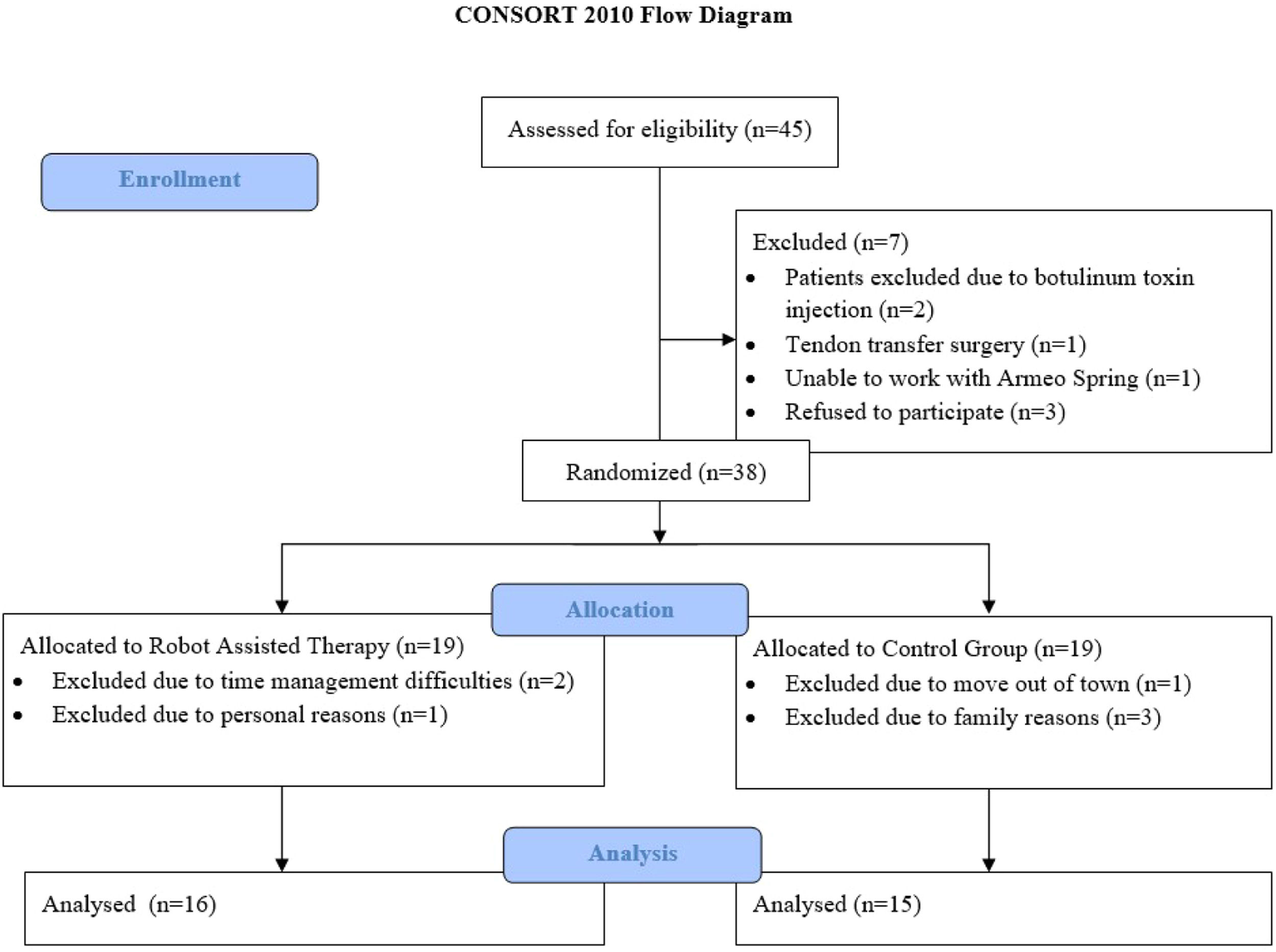
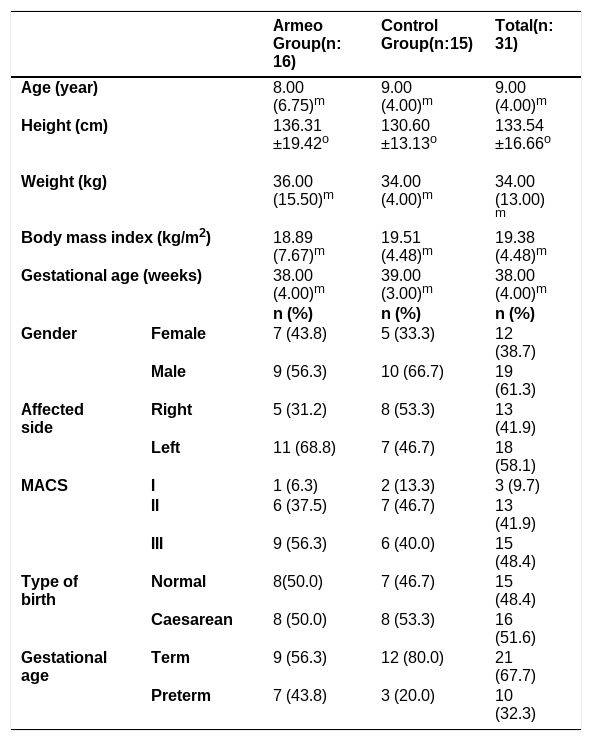
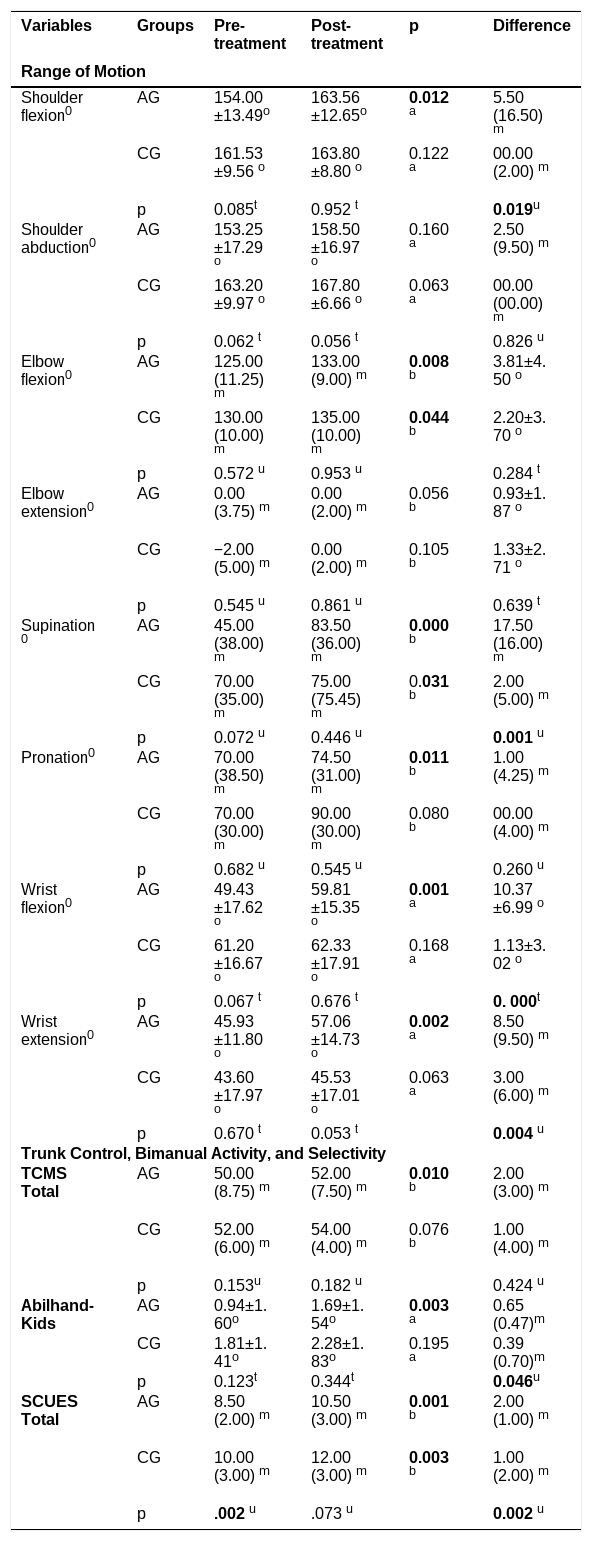
ResultsA total of 45 individuals were assessed for eligibility, of whom seven were excluded (BoNT-A treatment, n=2; tendon surgery, n=1; inability to use the Armeo Spring, n=1; declined to participate, n=3). Thirty-eight participants were randomized to the Armeo (n=19) or control (n=19) group. Seven participants did not complete the study (moved out of town, n=1; family reasons, n=3; time-management difficulties, n=2; personal reasons, n=1). Thus, 31 participants completed the study (Armeo, n=16; control, n=15) (Fig. 1). Participant characteristics are presented in Table 1. Elbow flexion and supination improved significantly in both groups (p<.05). Shoulder flexion (p = .012), elbow pronation (p = .011), wrist flexion (p = .001), and wrist extension (p = .002) increased significantly only in the AG. AG was superior to CG in shoulder flexion (p = .019), elbow supination (p = .001), wrist flexion (p < .001), and wrist extension (p = .004). Range of motion data are provided in Table 2. The detailed flowchart illustrating the progression of participants throughout the study, including the stages of enrollment, intervention, and analysis, is presented in Fig. 1.
Comparison of descriptive characteristics of participants.
| Armeo Group(n:16) | Control Group(n:15) | Total(n:31) | ||
|---|---|---|---|---|
| Age (year) | 8.00 (6.75)m | 9.00 (4.00)m | 9.00 (4.00)m | |
| Height (cm) | 136.31±19.42o | 130.60±13.13o | 133.54±16.66o | |
| Weight (kg) | 36.00 (15.50)m | 34.00 (4.00)m | 34.00 (13.00)m | |
| Body mass index (kg/m2) | 18.89 (7.67)m | 19.51 (4.48)m | 19.38 (4.48)m | |
| Gestational age (weeks) | 38.00 (4.00)m | 39.00 (3.00)m | 38.00 (4.00)m | |
| n (%) | n (%) | n (%) | ||
| Gender | Female | 7 (43.8) | 5 (33.3) | 12 (38.7) |
| Male | 9 (56.3) | 10 (66.7) | 19 (61.3) | |
| Affected side | Right | 5 (31.2) | 8 (53.3) | 13 (41.9) |
| Left | 11 (68.8) | 7 (46.7) | 18 (58.1) | |
| MACS | I | 1 (6.3) | 2 (13.3) | 3 (9.7) |
| II | 6 (37.5) | 7 (46.7) | 13 (41.9) | |
| III | 9 (56.3) | 6 (40.0) | 15 (48.4) | |
| Type of birth | Normal | 8(50.0) | 7 (46.7) | 15 (48.4) |
| Caesarean | 8 (50.0) | 8 (53.3) | 16 (51.6) | |
| Gestational age | Term | 9 (56.3) | 12 (80.0) | 21 (67.7) |
| Preterm | 7 (43.8) | 3 (20.0) | 10 (32.3) | |
χ: Chi-squared test statistic, MACS: Manual Ability Classification System,.
u: Mann Whitney U Test,.
t: Independent Sample T Test, cm: centimeters, m: meter, kg: kilograms,.
Intragroup and intergroup comparison of range of motion, trunk control, bimanual activity, and selectivity.
| Variables | Groups | Pre-treatment | Post-treatment | p | Difference |
|---|---|---|---|---|---|
| Range of Motion | |||||
| Shoulder flexion0 | AG | 154.00±13.49o | 163.56±12.65o | 0.012a | 5.50 (16.50) m |
| CG | 161.53±9.56 o | 163.80±8.80 o | 0.122a | 00.00 (2.00) m | |
| p | 0.085t | 0.952 t | 0.019u | ||
| Shoulder abduction0 | AG | 153.25±17.29 o | 158.50±16.97 o | 0.160a | 2.50 (9.50) m |
| CG | 163.20±9.97 o | 167.80±6.66 o | 0.063a | 00.00 (00.00) m | |
| p | 0.062 t | 0.056 t | 0.826 u | ||
| Elbow flexion0 | AG | 125.00 (11.25) m | 133.00 (9.00) m | 0.008b | 3.81±4.50 o |
| CG | 130.00 (10.00) m | 135.00 (10.00) m | 0.044 b | 2.20±3.70 o | |
| p | 0.572 u | 0.953 u | 0.284 t | ||
| Elbow extension0 | AG | 0.00 (3.75) m | 0.00 (2.00) m | 0.056 b | 0.93±1.87 o |
| CG | −2.00 (5.00) m | 0.00 (2.00) m | 0.105 b | 1.33±2.71 o | |
| p | 0.545 u | 0.861 u | 0.639 t | ||
| Supination0 | AG | 45.00 (38.00) m | 83.50 (36.00) m | 0.000 b | 17.50 (16.00) m |
| CG | 70.00 (35.00)m | 75.00 (75.45)m | 0.031 b | 2.00 (5.00) m | |
| p | 0.072 u | 0.446 u | 0.001 u | ||
| Pronation0 | AG | 70.00 (38.50) m | 74.50 (31.00) m | 0.011 b | 1.00 (4.25) m |
| CG | 70.00 (30.00) m | 90.00 (30.00) m | 0.080 b | 00.00 (4.00) m | |
| p | 0.682 u | 0.545 u | 0.260 u | ||
| Wrist flexion0 | AG | 49.43±17.62 o | 59.81±15.35 o | 0.001 a | 10.37±6.99 o |
| CG | 61.20±16.67 o | 62.33±17.91 o | 0.168 a | 1.13±3.02 o | |
| p | 0.067 t | 0.676 t | 0. 000t | ||
| Wrist extension0 | AG | 45.93±11.80 o | 57.06±14.73 o | 0.002 a | 8.50 (9.50) m |
| CG | 43.60±17.97 o | 45.53±17.01 o | 0.063 a | 3.00 (6.00) m | |
| p | 0.670 t | 0.053 t | 0.004 u | ||
| Trunk Control, Bimanual Activity, and Selectivity | |||||
| TCMS Total | AG | 50.00 (8.75) m | 52.00 (7.50) m | 0.010b | 2.00 (3.00) m |
| CG | 52.00 (6.00) m | 54.00 (4.00) m | 0.076 b | 1.00 (4.00) m | |
| p | 0.153u | 0.182 u | 0.424 u | ||
| Abilhand-Kids | AG | 0.94±1.60o | 1.69±1.54o | 0.003a | 0.65 (0.47)m |
| CG | 1.81±1.41o | 2.28±1.83o | 0.195a | 0.39 (0.70)m | |
| p | 0.123t | 0.344t | 0.046u | ||
| SCUES Total | AG | 8.50 (2.00) m | 10.50 (3.00) m | 0.001 b | 2.00 (1.00) m |
| CG | 10.00 (3.00) m | 12.00 (3.00) m | 0.003 b | 1.00 (2.00) m | |
| p | .002 u | .073 u | 0.002 u | ||
Trunk control significantly increased only in the AG post-treatment (p=.01); however no significant difference was found between the groups. The Abilhand-Kids score significantly improved only in the AG after treatment, and the AG was found to be superior to CG. Selective control improved significantly after treatment in the AGand CG. The AG was significantly superior to the CG. Trunk control, Abilhand Kids, and selectivity data are provided in Table 2.
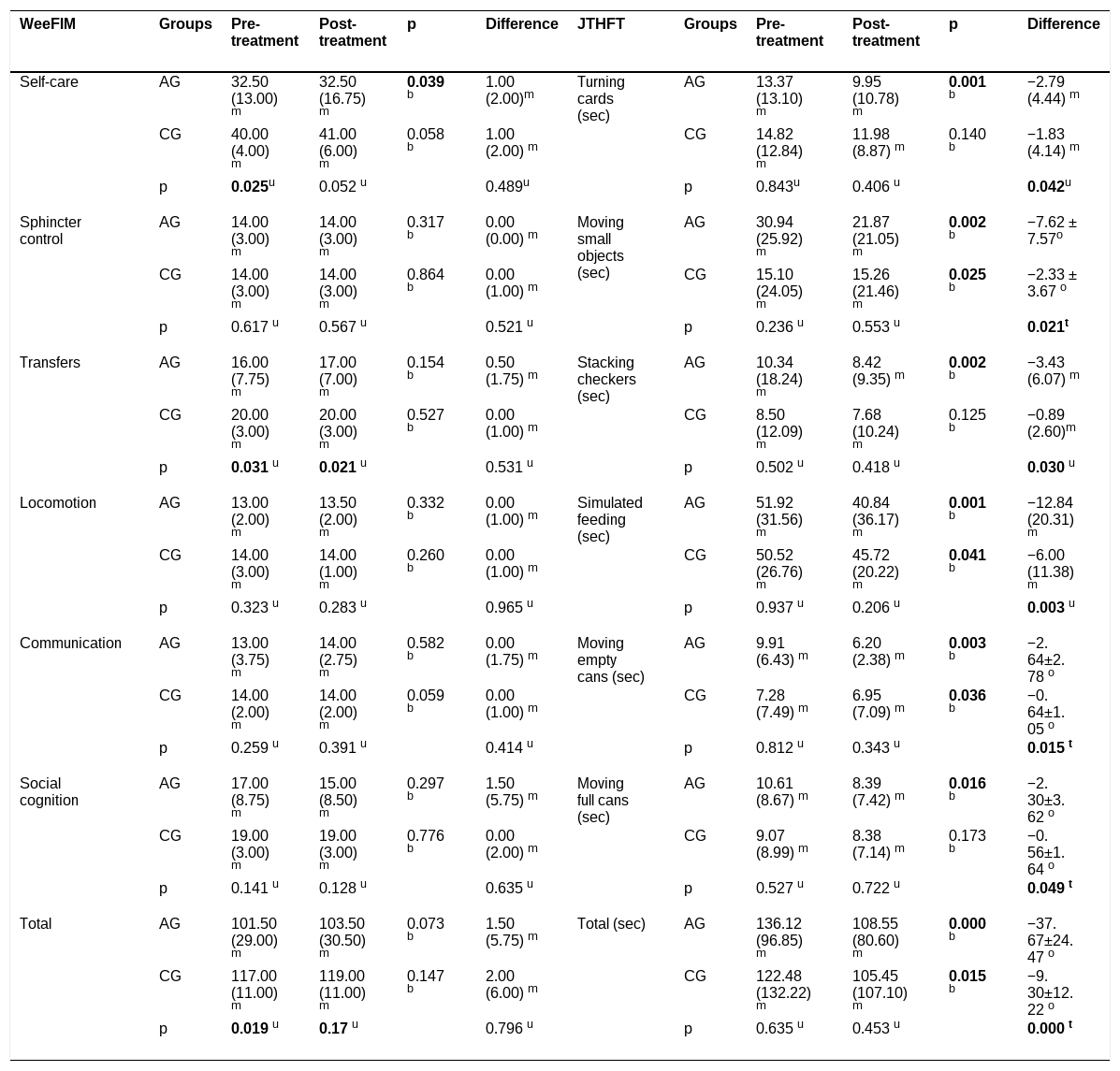
In the JTHFT, the sub-parameters of object manipulation, feeding, and picking up light objects significantly improved in the CG, whereas the AG showed significant improvements in all parameters. AG was superior to CG in all sub-parameters and overall scores (p<.05). Functional independence improved significantly only in the AG post-treatment for the sub-parameter of self-care. However no significant difference was found between the groups (p>.05). Jebsen Taylor hand function test and WeeFIM data are provided in Table 3.
Intragroup and intergroup comparison of functional independence and unimanual upper extremity function.
| WeeFIM | Groups | Pre-treatment | Post-treatment | p | Difference | JTHFT | Groups | Pre-treatment | Post-treatment | p | Difference |
|---|---|---|---|---|---|---|---|---|---|---|---|
| Self-care | AG | 32.50 (13.00)m | 32.50 (16.75) m | 0.039b | 1.00 (2.00)m | Turning cards (sec) | AG | 13.37 (13.10) m | 9.95 (10.78) m | 0.001b | −2.79 (4.44) m |
| CG | 40.00 (4.00) m | 41.00 (6.00) m | 0.058 b | 1.00 (2.00) m | CG | 14.82 (12.84) m | 11.98 (8.87) m | 0.140 b | −1.83 (4.14) m | ||
| p | 0.025u | 0.052 u | 0.489u | p | 0.843u | 0.406 u | 0.042u | ||||
| Sphincter control | AG | 14.00 (3.00) m | 14.00 (3.00) m | 0.317 b | 0.00 (0.00) m | Moving small objects (sec) | AG | 30.94 (25.92) m | 21.87 (21.05) m | 0.002 b | −7.62 ± 7.57o |
| CG | 14.00 (3.00) m | 14.00 (3.00) m | 0.864 b | 0.00 (1.00) m | CG | 15.10 (24.05) m | 15.26 (21.46) m | 0.025 b | −2.33 ± 3.67 o | ||
| p | 0.617 u | 0.567 u | 0.521 u | p | 0.236 u | 0.553 u | 0.021t | ||||
| Transfers | AG | 16.00 (7.75) m | 17.00 (7.00) m | 0.154 b | 0.50 (1.75) m | Stacking checkers (sec) | AG | 10.34 (18.24) m | 8.42 (9.35) m | 0.002 b | −3.43 (6.07) m |
| CG | 20.00 (3.00) m | 20.00 (3.00) m | 0.527 b | 0.00 (1.00) m | CG | 8.50 (12.09) m | 7.68 (10.24) m | 0.125 b | −0.89 (2.60)m | ||
| p | 0.031 u | 0.021 u | 0.531 u | p | 0.502 u | 0.418 u | 0.030 u | ||||
| Locomotion | AG | 13.00 (2.00) m | 13.50 (2.00) m | 0.332 b | 0.00 (1.00) m | Simulated feeding (sec) | AG | 51.92 (31.56) m | 40.84 (36.17) m | 0.001 b | −12.84 (20.31) m |
| CG | 14.00 (3.00) m | 14.00 (1.00) m | 0.260 b | 0.00 (1.00) m | CG | 50.52 (26.76) m | 45.72 (20.22) m | 0.041 b | −6.00 (11.38) m | ||
| p | 0.323 u | 0.283 u | 0.965 u | p | 0.937 u | 0.206 u | 0.003 u | ||||
| Communication | AG | 13.00 (3.75) m | 14.00 (2.75) m | 0.582 b | 0.00 (1.75) m | Moving empty cans (sec) | AG | 9.91 (6.43) m | 6.20 (2.38) m | 0.003 b | −2.64±2.78 o |
| CG | 14.00 (2.00) m | 14.00 (2.00) m | 0.059 b | 0.00 (1.00) m | CG | 7.28 (7.49) m | 6.95 (7.09) m | 0.036 b | −0.64±1.05 o | ||
| p | 0.259 u | 0.391 u | 0.414 u | p | 0.812 u | 0.343 u | 0.015 t | ||||
| Social cognition | AG | 17.00 (8.75) m | 15.00 (8.50) m | 0.297 b | 1.50 (5.75) m | Moving full cans (sec) | AG | 10.61 (8.67) m | 8.39 (7.42) m | 0.016 b | −2.30±3.62 o |
| CG | 19.00 (3.00) m | 19.00 (3.00) m | 0.776 b | 0.00 (2.00) m | CG | 9.07 (8.99) m | 8.38 (7.14) m | 0.173 b | −0.56±1.64 o | ||
| p | 0.141 u | 0.128 u | 0.635 u | p | 0.527 u | 0.722 u | 0.049 t | ||||
| Total | AG | 101.50 (29.00) m | 103.50(30.50) m | 0.073 b | 1.50 (5.75) m | Total (sec) | AG | 136.12 (96.85) m | 108.55 (80.60) m | 0.000 b | −37.67±24.47 o |
| CG | 117.00 (11.00) m | 119.00(11.00) m | 0.147 b | 2.00 (6.00) m | CG | 122.48 (132.22) m | 105.45 (107.10) m | 0.015 b | −9.30±12.22 o | ||
| p | 0.019 u | 0.17 u | 0.796 u | p | 0.635 u | 0.453 u | 0.000 t |
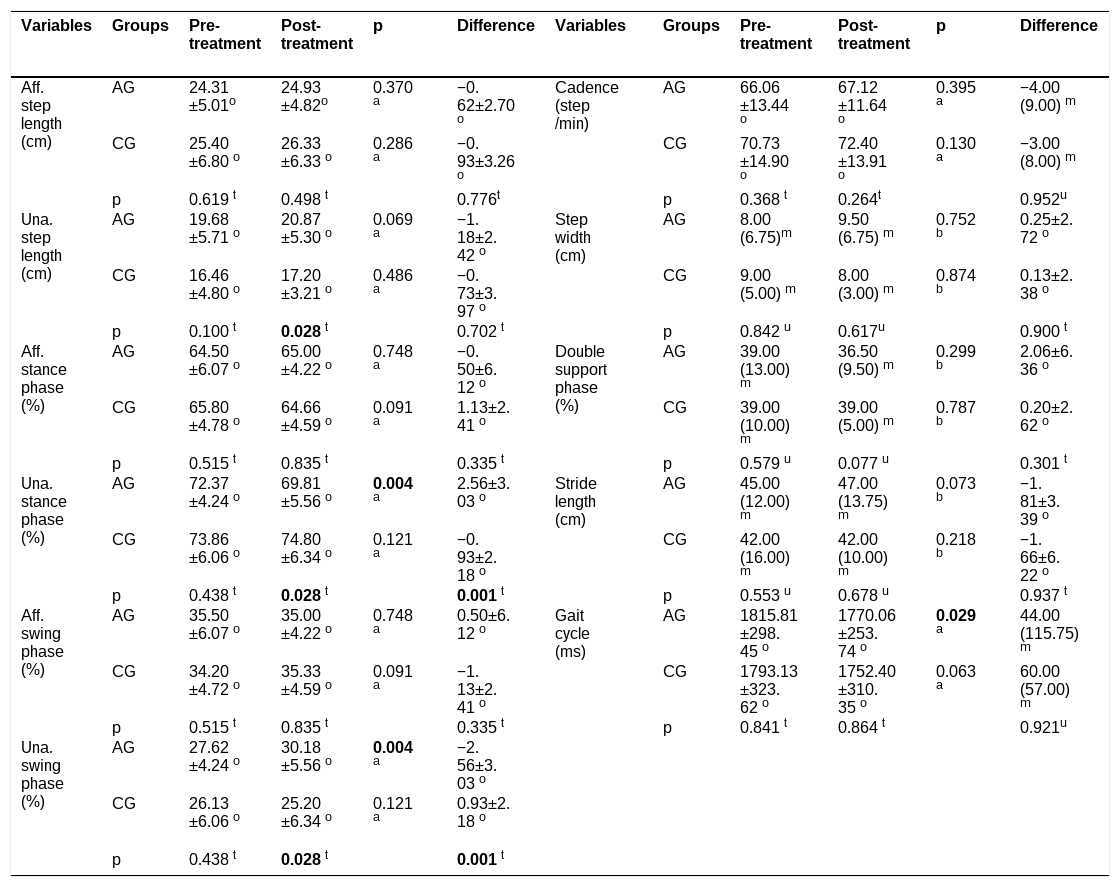
Gait parameters of the AG including the unaffected side stance and swing phase, and the gait cycle time significantly improved after treatment. AG was superior to CG in the unaffected side stance and swing phase. Gait parameters are provided at Table 4.
Intragroup and intergroup comparison of gait parameters before and after treatment.
| Variables | Groups | Pre-treatment | Post-treatment | p | Difference | Variables | Groups | Pre-treatment | Post-treatment | p | Difference |
|---|---|---|---|---|---|---|---|---|---|---|---|
| Aff. step length (cm) | AG | 24.31±5.01o | 24.93±4.82o | 0.370a | −0.62±2.70o | Cadence (step/min) | AG | 66.06±13.44 o | 67.12±11.64 o | 0.395 a | −4.00(9.00) m |
| CG | 25.40±6.80 o | 26.33±6.33 o | 0.286 a | −0.93±3.26o | CG | 70.73±14.90 o | 72.40±13.91 o | 0.130 a | −3.00(8.00) m | ||
| p | 0.619 t | 0.498 t | 0.776t | p | 0.368 t | 0.264t | 0.952u | ||||
| Una. step length (cm) | AG | 19.68±5.71 o | 20.87±5.30 o | 0.069 a | −1.18±2.42 o | Step width (cm) | AG | 8.00 (6.75)m | 9.50 (6.75) m | 0.752b | 0.25±2.72 o |
| CG | 16.46±4.80 o | 17.20±3.21 o | 0.486 a | −0.73±3.97 o | CG | 9.00 (5.00) m | 8.00 (3.00) m | 0.874 b | 0.13±2.38 o | ||
| p | 0.100 t | 0.028 t | 0.702 t | p | 0.842 u | 0.617u | 0.900 t | ||||
| Aff. stance phase (%) | AG | 64.50±6.07 o | 65.00±4.22 o | 0.748 a | −0.50±6.12 o | Double support phase (%) | AG | 39.00 (13.00) m | 36.50 (9.50) m | 0.299 b | 2.06±6.36 o |
| CG | 65.80±4.78 o | 64.66±4.59 o | 0.091 a | 1.13±2.41 o | CG | 39.00 (10.00) m | 39.00 (5.00) m | 0.787 b | 0.20±2.62 o | ||
| p | 0.515 t | 0.835 t | 0.335 t | p | 0.579 u | 0.077 u | 0.301 t | ||||
| Una. stance phase (%) | AG | 72.37±4.24 o | 69.81±5.56 o | 0.004 a | 2.56±3.03 o | Stride length (cm) | AG | 45.00 (12.00) m | 47.00 (13.75) m | 0.073 b | −1.81±3.39 o |
| CG | 73.86±6.06 o | 74.80±6.34 o | 0.121 a | −0.93±2.18 o | CG | 42.00 (16.00) m | 42.00 (10.00) m | 0.218 b | −1.66±6.22 o | ||
| p | 0.438 t | 0.028 t | 0.001 t | p | 0.553 u | 0.678 u | 0.937 t | ||||
| Aff. swing phase (%) | AG | 35.50±6.07 o | 35.00±4.22 o | 0.748 a | 0.50±6.12 o | Gait cycle (ms) | AG | 1815.81±298.45 o | 1770.06±253.74 o | 0.029 a | 44.00(115.75)m |
| CG | 34.20±4.72 o | 35.33±4.59 o | 0.091 a | −1.13±2.41 o | CG | 1793.13±323.62 o | 1752.40±310.35 o | 0.063 a | 60.00(57.00) m | ||
| p | 0.515 t | 0.835 t | 0.335 t | p | 0.841 t | 0.864 t | 0.921u | ||||
| Una. swing phase (%) | AG | 27.62±4.24 o | 30.18±5.56 o | 0.004 a | −2.56±3.03 o | ||||||
| CG | 26.13±6.06 o | 25.20±6.34 o | 0.121 a | 0.93±2.18 o | |||||||
| p | 0.438 t | 0.028 t | 0.001 t | ||||||||
In this study investigating the effects of robot-assisted therapy in addition to conventional physiotherapy on upper limb functions, trunk control, and gait parameters in individuals with unilateral cerebral palsy, it was found that there were positive effects on range of motion, selectivity, trunk control, and gait parameters. Participants who completed the study did not report any complaints or complications.
While there is a lack of research specifically on the number of treatment sessions in individuals with CP, studies on treatment frequency related to stroke have provided some insights. Zhang et al.25 suggested that treatment sessions should last for a minimum of 15 h in total, Zhao et al.26 recommended 20 sessions per week over a period of 4 weeks, and Lepski et al.27 reported that the average duration between sessions should not exceed 31 h. In our study, we concluded that the application of 18 sessions of RAT in conjunction with conventional physiotherapy intervention proved effective in enhancing upper extremity functions, trunk control, and gait parameters.
It was reported by Wood et al. (2012) that a type of robotic system with a contactless feedback mechanism could be effective on ROM (supination).28 In our study, we found positive effects of RAT on many joint ROMs. The Armeo Spring used in our research not only supports participants in performing activities they would not be able to do under normal conditions but also provides visual and auditory feedback. In addition to these advantages, we believe that the participants' intensive repetitive and task-oriented practice contributed to the increase in ROM.
Furthermore, RAT did not affect hand functions as reported by Bishop et al., whereas Picelli et al. observed improvements in hand functions in the less affected limb.29,30 In our study, we found improvements in hand functions of the affected limb. In Bishop et al.'s research, the Amadeo hand robotic device was used only for the distal part of the upper limb, whereas the Armeo Spring is for the proximal and distal parts of the limb. This can be the reason for the different results. The combined result of Bishop et al. and our study could be interpreted as an indication for the need to focus on both proximal and distal joints for the development of hand functions. The combined result of Picelli et al. and our study suggests that RAT yielded positive outcomes in both affected and less affected sides in individuals with CP. Future studies could focus on interventions that include training for both distal and proximal extremities.
In contrast to our findings, it was reported by Gilliaux et al. that RAT was not effective in improving daily life activities.31 One possible reason for this contradiction could be that the REAPlan arm robot prototype used in their study allowed movement of the upper extremity only in the horizontal plane, while the Armeo Spring, used in our study, allows movement in multiple directions with its five degrees of freedom.
In their review, Fahr et al.32 reported that some interventions may have a positive effect on selectivity, but the overall evidence level for CIMT, robot-assisted therapy, and upper extremity selectivity in children with CP is contradictory. Although there was no specific assessment method for selectivity in this review, they used the QUEST. In our study, we used a specific assessment method for selectivity called SCUES, and we found that RAT could be an effective method for improving selectivity.
In their study, Kim et al.33 reported a relationship between trunk control and upper extremity functions, and Balzer et al.34 found a correlation between trunk control and gait. Based on this information, it can be inferred that there is a relationship between upper extremity function, trunk control, and gait, but it is not clear which one influences the others. Studies focusing on trunk control have reported improvements in upper extremity functions.35 In the current study, it was concluded that improving upper extremity functions may lead to improvements in trunk control.
Best practices for CP were recommended by Jackman et al., with an emphasis on client-chosen goals and clinicians’ identification of barriers to goal achievement.36 Interventions should be designed to directly target the child’s specific goals, making them engaging and motivating. Throughout the process, children, young people, and their parents should remain the primary decision-makers. To achieve functional goals, an adequate dose of practice is essential, and a team-based approach should be used to collaboratively set goals and develop the intervention plan. RAT largely encompasses these features. Treatment goals are collaboratively established with the patient, and factors limiting the patient are identified and supported by the robot (e.g., facilitating movement by reducing the arm's weight through the device). Additionally, rehabilitation becomes more motivating through the use of games. The number of repetitions performed is significantly higher compared to conventional therapies, thereby enhancing motor learning. And also feedback, an important element of the motor learning process, was integrated into the intervention method of our study. Instant and customized feedback provided to the participants supported the learning processes and increased skill acquisition. This finding supports Jackman et al.'s36 emphasis on the critical role of feedback in motor learning.
Although the literature clearly indicates a relationship between upper limb and gait in unilateral CP individuals,16 no studies evaluating gait after RAT were found. Ortega et al. reported in their study that the inclusion of upper extremity rehabilitation in the rehabilitation program improves stability and coordination between extremities. With the improvement in coordination, it is suggested that assistance provided by the upper extremity to lower limb movements during walking reduces energy expenditure, leading to improved gait speed and parameters.37 In our study, we found the positive effects of RAT on gait parameters. Our results support Ortega et al.’s research but we had a limitation of not measuring energy expenditure.
Limitations and directions for further researchOur study holds a significant importance as a pioneering research investigating the effects of RAT targeting upper limb on gait parameters in individuals with CP. However, our study has some limitations. One of these is the omission of evaluating balance while investigating gait parameters. It is crucial for future research to encompass more comprehensive evaluations that also include balance. Another limitation of our study is that long-term follow-up of the participants was not conducted. The results obtained after the intervention were based on short-term evaluations and no information can be provided about the sustainability of these results.
When reviewing the literature, it was observed that the application durations of RAT were diverse. Therefore, conducting further studies to ascertain the optimal duration is recommended. A significant limitation of our study is the inability to adhere to these intensity recommendations due to limited access to robotic systems. Future research should aim to adhere to these intensity recommendations. Additionally, another limitation of our study is that it only included robot-assisted therapy application on the affected extremity and did not involve the unaffected extremity and the treatment duration is different between the groups. Future studies should investigate the effects of robot-assisted therapy of bilateral upper limbs on gait parameters.
ConclusionsIn our study investigating the effects of RAT in addition to conventional physiotherapy intervention, we found that robot-assisted therapy had a positive effect on upper limb functions and interventions targeting the upper limb could potentially impact gait parameters.
The results indicate that RAT enhances participants' motivation and exercise duration, leading to significant improvements in upper extremity functions, trunk stability, and walking, which are not achieved by conventional physiotherapy alone. Future research should compare the effects of various robot-assisted therapies with equivalent durations of conventional physiotherapy programs.
FundingThis research did not receive any specific grant from funding agencies in the public, commercial, or not-for-profit sectors.
The authors have no competing interest.