Cardiovascular diseases are the leading cause of global mortality, while musculoskeletal comorbidities contribute to increased disability. Characterizing musculoskeletal limitations in cardiac patients undergoing cardiovascular rehabilitation is crucial for ensuring treatment continuity.
ObjectiveTo characterize musculoskeletal symptoms and assess the reproducibility of the Nordic Musculoskeletal Questionnaire (NMQ) in cardiac patients undergoing different phases of cardiovascular rehabilitation.
MethodsThis cross-sectional study enrolled 100 patients from five cardiovascular rehabilitation centers (situated across the western, northern, and southern state regions) who responded remotely to sociodemographic questionnaires for sample characterization and to the NMQ on two separate occasions to verify its reproducibility according to COSMIN guidelines.
ResultsOf the 100 participants, 53% were women, the mean age was 64.8 years, and the mean BMI was in the overweight range. Most participants were from the western region of São Paulo State (66%).The NMQ demonstrated high reproducibility, with Kappa coefficients ranging from 0.78 to 0.98 and a high Cronbach’s alpha. Results were particularly significant in the knee and lumbar regions, highlighting the need for intervention strategies targeting this population.
ConclusionThe NMQ shows excellent reproducibility for assessing musculoskeletal sysymptoms in patients across different phases of cardiovascular rehabilitationand is a reliable tool for monitoring these symptoms.
Cardiovascular diseases (CVD) are the leading cause of mortality worldwide.1 It is estimated that, in addition to the high direct costs, indirect costs, such as productivity loss, contribute to the economic burden of CVD, especially in middle-income countries like Brazil. In 2015, the estimated costs of CVD totaled R$ 37.1 billion, representing approximately 0.7% of the country's Gross Domestic Product (GDP).2
Older adults are the population most affected by cardiovascular changes; the aging process is related to functional loss and the natural degeneration of body systems, such as reduced muscle mass (sarcopenia), reduced cardiorespiratory capacity, and nervous system changes that impair balance, motor coordination, and other conditions. Additionally, these disorders can exacerbate musculoskeletal conditions.3
A previous study showed that individuals with cardiovascular disease are 1.91 times more likely to report chronic musculoskeletal pain. Furthermore, these musculoskeletal comorbidities increase morbidity and functional disability, making continued care difficult, especially due to mobility and physical activity limitations.4 Further primary studies with larger sample sizes are needed to better estimate the prevalence of these disorders, quantify this association.These studies may also help reduce heterogeneity and clarify musculoskeletal characteristics.5
Characterizing musculoskeletal limitations in cardiac patients is essential to identifying causal factors of these conditions and enabling the implementation of prevention, treatment, and rehabilitation strategies. Furthermore, early identification of these symptoms is crucial to promoting adherence and treatment continuity, as musculoskeletal limitations can compromise adherence and even lead to the interruption of cardiovascular rehabilitation.1
The Nordic Musculoskeletal Questionnaire (NMQ) is a widely used and straightforward self-assessment tool with reliability studies in other populations, such as students and the general population, to measure the incidence of musculoskeletal symptoms.6 However, no studies have assessed the reproducibility of this questionnaire specifically in cardiac patients.
The NMQ providesa comprehensive framework, allowing for the identification of musculoskeletal symptoms in nine anatomical regions, along with related functional limitations and healthcare-seeking behaviors.7 It is self-administered, low-cost, and requires minimal training, making it especially suitable for integration into cardiovascular rehabilitation programs, where time and resources may be limited. Importantly, the structured format of the NMQ facilitates comparisons across studies and populations, and its simplicity supports its use among older adults and individuals with low literacy levels — characteristics often observed in cardiac populations.8 Systematic assessment using a standardized tool such asthe NMQ may help tailor interventions to improve outcomes in cardiac care.6
Thus, this study aimed to characterize these musculoskeletal symptoms and assess the reproducibility of the Nordic Musculoskeletal Questionnaire (NMQ) in cardiac patients participating in various phases of cardiovascular rehabilitation.
MethodsStudy designThis was a cross-sectional, observational study conducted in accordance with the Consensus-Based Standards for the Selection of Health Measurement Instruments (COSMIN)9 guidelines for evaluating the psychometric properties of health measurement instruments. The study was carried out in five cardiovascular rehabilitation centers located in the southeastern, wester, and midwestern regions of São Paulo State.
ParticipantsData collection was conducted between May 2023 and August 2024 through an online questionnaire. Cardiac patients undergoing a supervised cardiac rehabilitation program (phases II, III, and IV), with a confirmed diagnosis of cardiovascular disease and eligibility for cardiac rehabilitation according to national guidelines,10 were included. These phases were selected because they correspond to the outpatient stages offered by the partner centers participating in the study. Phase I, which refers to the inpatient stage, was excluded due to its acute nature, shorter duration, reduced patient autonomy, and limited physical activity, making it incompatible with the self-administered online questionnaire used for data collection. A convenience sampling strategy was used: participants were recruited through contact lists provided by the partner rehabilitation centers, and those who met the inclusion criteria—being aged ≥18 years, available to complete the questionnaire, and having provided informed consent—were invited to participate.10
All participants were informed about the study's objectives and procedures. Those who agreed to participate signed the Informed Consent Form - ICF (Annex 1), in compliance with Resolution 510/2016 on Research Ethics Involving Human Subjects, approved by the Research Ethics Committee of the University of Oeste Paulista (CAAE: 63,527,322.6.0000.5515).
Exclusion criteriaIndividuals who only partially responded to the questionnaire, thereby precluding the analysis of the instrument's psychometric properties, were excluded.
Participant contactThe coordinators of cardiovascular rehabilitation centers across the southeastern, western, and central regions of São Paulo State were initially contacted by email and telephone. During this contact, the study objectives, methodology, and procedures were explained in detail, and patient contact information was requested from the centers. After the coordinators agreed to participate and the research procedures were formalized, patients attending the cardiovascular rehabilitation centers were contacted by instant messaging applications or telephone to explain the study and clarify any questions.
During this contact, it was emphasized that participation was entirely voluntary and that participants would remain anonymous. Next, volunteers received a link to access the Google Forms application, which contained part one of the study and a virtual Free and Informed Consent Form (FICF) on the first page, explaining the research details.
For participants who reported difficulties in accessing or completing the questionnaire due to limitations related to reading ability or the use of technology, the researcher-initiated contact via telephone or instant messaging applications. In these cases, explanatory audio messages and images were used to enhance the participants’ understanding of the questions. Based on the verbal or written responses provided by the participants, the researcher recorded the answers directly into the questionnaire to ensure both data completeness and standardization.
To ensure appropriate conclusions about the questionnaire's measurement properties, we followed COSMIN9 guidelines. For studies assessing internal consistency, agreement, and reliability of a questionnaire, these guidelines propose the following classification for sample sizes: adequate (≥100 participants), good (50–99 participants), moderate (30–49 participants), and small (<30 participants). Thus, this study aimed to include a minimum sample of 100 participants.11
Sample characterizationInitially, participants completed a data collection form designed to characterize the sample. This form included information on age, sex, body mass index, ethnicity, marital status, employment/retirement status, living arrangements, city of residence, educational level, current medications, smoking habits, alcohol consumption, and stage of rehabilitation. Additionally, to further characterize the cohort, information was gathered regarding underlying diseases, clinical conditions, or specific reasons for their enrollment in the cardiovascular program.
Nordic musculoskeletal questionnaire – NMQSubsequently, the Nordic Musculoskeletal Questionnaire – NMQ,12 translated and culturally adapted for Brazilian Portuguese, was administered. It consists of multiple-choice questions related to the occurrence of musculoskeletal symptoms (pain, tingling/numbness) in various anatomical segments of the body (neck, shoulder, elbow, wrist and hand, thoracic spine, cervical spine, lumbar spine, hips, thighs and buttocks, knees, ankles, and feet). Respondents reported whether they had experienced symptoms in the previous 12 months and seven days, as well as whether these symptoms had prevented them from performing routine activities in the previous year.6 The NMQ was administered online using the Google Forms platform, in its complete structure, without any modifications. As it is a simple, self-administered, and easy-to-understand instrument, no adaptations were necessary for digital use. The original body diagram was also included to facilitate participant comprehension. Seven days later, all participants were contacted again and completed the NMQa second time, also through the online platform.
Statistical analysisData analysis was performed using the Statistical Package for Social Science for Windows - SPSS (version 20.0; SPSS Inc; Chicago, IL, USA). The Shapiro-Wilk test was used to determine the normality of the data. For descriptive data, parametric variables were expressed as mean (SD), non-parametric variables were presented as median and interquartile range, and categorical variables were expressed in absolute numbers, percentages, and frequency.
Reproducibility was estimated through a test-retest procedure, with a one-week interval between administrations, using identical procedures to those adopted in the first application.13 To analyze reproducibility, the reliability domain was used, which includes measurement properties such as internal consistency, reliability, and measurement error.14
Internal consistency was assessed using Cronbach’s alpha coefficient for the total questionnaire score. The coefficient ranges from 0 to 1, with higher values indicating greater questionnaire reliability. Values between 0.75 and 0.95 were considered acceptable.15
Reproducibility between administrations for the measurement of musculoskeletal symptoms was analyzed using the Kappa index and its respective 95% confidence intervals. The Kappa index was interpreted according to the following classification: poor (< 0.2); fair (0.2–0.4); moderate (0.4–0.6); substantial (0.6–0.8); almost perfect (> 0.8). To analyze measurement error, positive and negative agreement of the responses between the two questionnaire applications was calculated. Positive agreement refers to cases in which both administrations indicated the presence of a characteristic, whereas negative refers to cases in which both indicated its absence.16
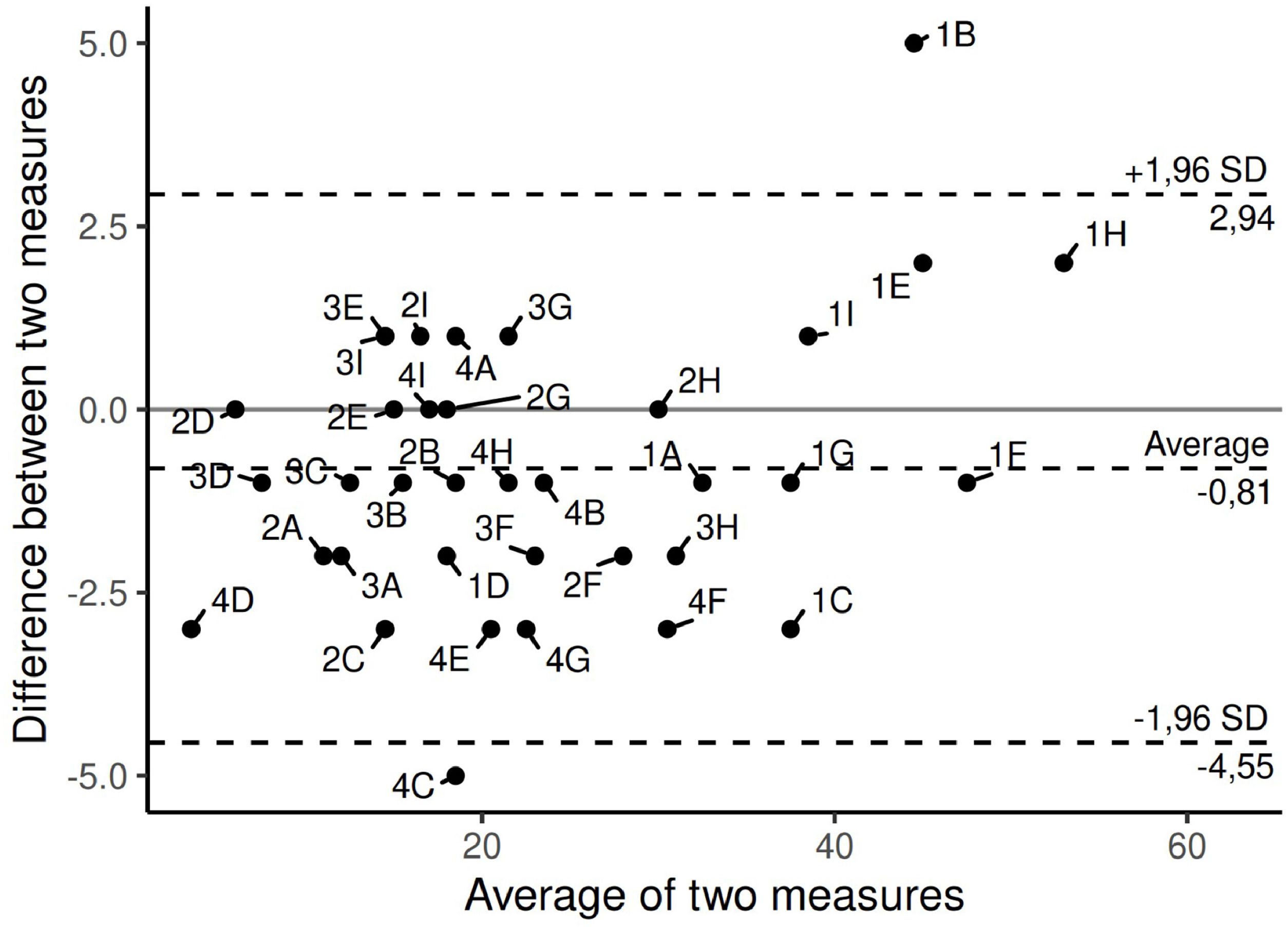
To assess the agreement and reproducibility between two administrations of the instrument (test-retest), the approach proposed by Bland and Altman (1986)16 was used. Initially, affirmative responses to the Nordic Musculoskeletal Questionnaire were converted into absolute values for each question. Then, the difference between the test and retest and the respective mean were calculated for each item. From these values, bias (mean of the differences) and the 95% limits of agreement (bias ± 1.96 × standard deviation of the differences) were determined. Graphical representation was performed using a Bland–Altman plot, on which the lines corresponding to the bias and limits of agreement were drawn, allowing visual inspection of the dispersion of the points and identification of potential trends. Each point was labeled according to the corresponding question to ensure traceability of the results. Graphs and statistical calculations were generated using R software (version 4.3.3); the ggplot2 package was used to construct the visualization, and the ggrepel package was used to add labels.
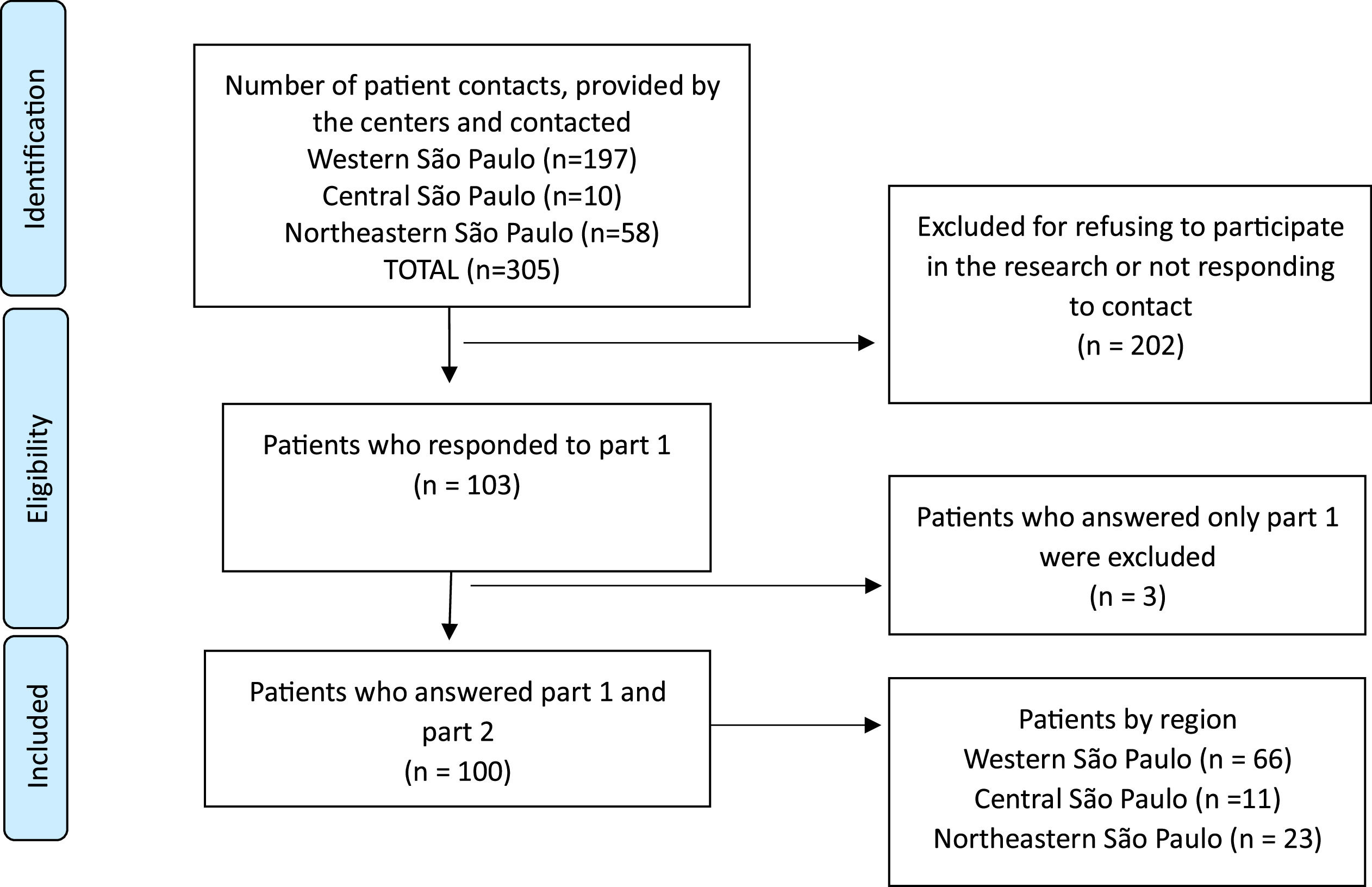
ResultsA total of 100 patients agreed to participate in the study and completed both the test and retest assessments. Of these, 66% were from the western region of São Paulo State, 22% from the northeastern region, and 9% from the central region.Detailed data are presented in Fig. 1.

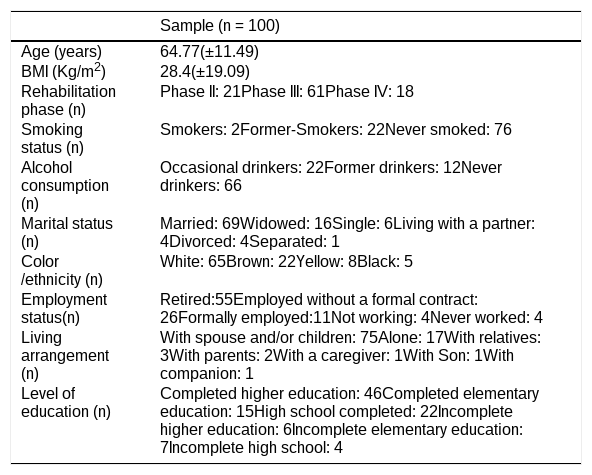
The sample consisted of 53% women, with a mean age of 64.77 ± 11.49 years. The mean BMI was in the overweight range, and most participants were in Phase III of cardiovascular rehabilitation. Table 1 presents sociodemographic data, assessments, and applied tests, along with their means and standard deviations.
Sample characteristics of participants. Continuous variables are presented as mean ± standard deviation, and categorical variables as absolute numbers.
n= Absolute number; Kg= kilograms; m=meters.
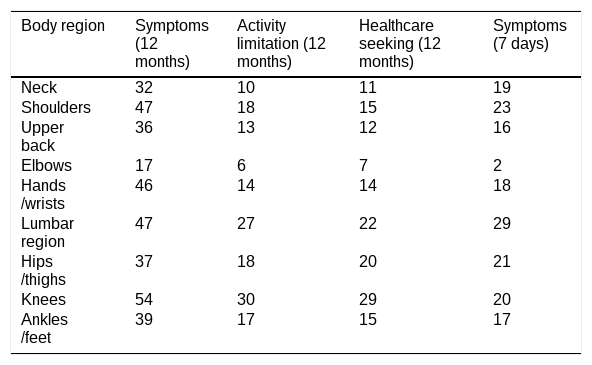
At baseline, the NMQ provided relevant information on musculoskeletal symptoms, such as pain, tingling, and numbness, reported over the previous 12 months, as detailed in Table 2. Overall, 91% of patients reported symptoms in at least one body region. Regarding activity limitations, 10 participants reported limitations due to at least one symptom in one body region. A total of 58 individuals consulted a healthcare professional because of pain in various body regions. In relation to symptoms in the previous seven days, 62% of patients reported pain.
Number of participants reporting musculoskeletal symptoms and related outcomes by anatomical region according to the Nordic Musculoskeletal Questionnaire (NMQ).
NMQ: Nordic Musculoskeletal Questionnaire. Symptoms (12 months): participants reporting pain, tingling, or numbness in the past 12 months; Activity limitation (12 months): participants reporting limitation in daily activities due to symptoms; Healthcare seeking (12 months): participants who sought healthcare for the condition; Symptoms (7 days): participants reporting symptoms in the last 7 days.
The knees (54%) and lumbar regions (47%) were the most affected regions across the evaluated domains of the questionnaire, including symptoms, activity limitation, and healthcare seeking. In addition to these regions, the shoulders and wrists/hands also showed a high prevalence, particularly for reported symptoms over the previous 12 months.
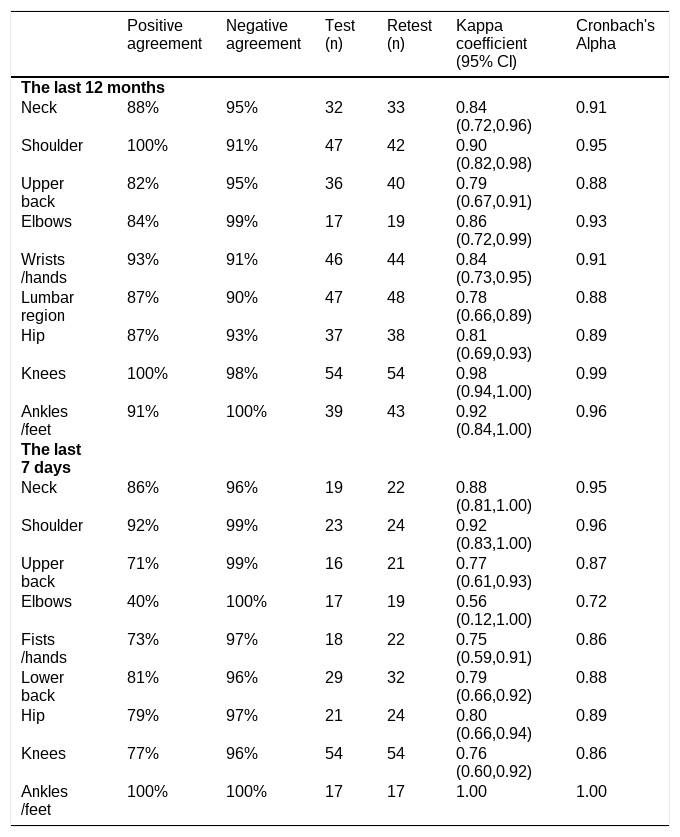
The reproducibility analysis of the Nordic Musculoskeletal Questionnaire (NMQ) showed substantial response consistency for both timeframes (past 12 months and last 7 days), as indicated by Kappa coefficients and Cronbach’s Alpha.
In the 12-month recall period (Table 3), Kappa coefficients ranged from 0.78 to 0.98, indicating strong agreement across the evaluated anatomical regions. The highest reliability (Kappa > 0.90) was observed in the shoulders, knees, and ankles/feet, demonstrating high reproducibility for these regions and strong reliability in symptom reporting. Cronbach’s Alpha value was also high for these areas, reinforcing the internal consistency of the questionnaire.
Reproducibility of the Nordic Musculoskeletal Questionnaire (NMQ).
CI = Confidence Interval; n: number of participants reporting symptoms (positive responses) in each administration (test and retest).
In the 7-day recall period (Table 3), the Kappa coefficient ranged from 0.56 to 1, with the ankle/foot presenting the maximum value of 1, indicating perfect agreement, meaning no variability between responses. Lower values, such as that observed for the elbow (Kappa = 0.56), reflected moderate reproducibility for this region, suggesting that the NMQ may be less sensitive in detecting short-term changes in this specific area, possibly due to the low prevalence of reported pain or discomfort in this particular group. Cronbach’s Alpha was generally high, reaching 1.0 for the ankle/foot, indicating maximum consistency.
In the agreement analysis between the two measurements (test and retest) (Fig. 2), most points fell within the statistically determined limits of agreement, suggesting strong agreement between the instrument administrations. The 95% limits of agreement were estimated at −4.55 (lower limit) and +2.94 (upper limit), calculated based on the mean of the differences ± 1.96 times the standard deviation. The observed bias was −0.81, indicating a slight tendency toward a reduction in the number of affirmative responses in the second administration.

Some questions showed larger differences. Notably, question 1B was above the upper limit, whereas question 4C was below the lower limit. These findings may indicate variability in participants’ interpretation of these questions. Furthermore, the dispersion of the data does not indicate a clear proportional bias, with the points distributed relatively homogeneously along the mean axis. Questions 2D, 2E, 2 G, 2H, 4A and 4I showed 100% agreement between the periods evaluated.
DiscussionOur findings indicate that the Nordic Musculoskeletal Questionnaire (NMQ) demonstrates strong reliability in assessing musculoskeletal symptoms in cardiac patients undergoing cardiovascular rehabilitation. This study is particularly relevant as it assesses the reproducibility of a questionnaire for musculoskeletal conditions, evaluating its applicability to cardiac patients undergoingrehabilitation.
Our sample consisted mostly of older adults with a mean BMI in the overweight range and a high level of education, who reported a high prevalence of these symptoms. This aligns with other studies indicating that cardiac patients undergoing rehabilitation show a high prevalence of musculoskeletal symptoms, affecting >50% of this population, compared to 20–40% in the general population over 60 years of age.17,18
Considering the age group, it is common for these individuals to experience a higher incidence of such symptoms due to the aging process, which may include chronic pain, joint stiffness, and reduced mobility.5 Additionally, for cardiac patients, this issue is even more challenging, as the use of nonsteroidal anti-inflammatory drugs (NSAIDs) is often contraindicated due to the high risk of adverse cardiovascular events associated with these medications.19 Research, such as the study by Correa et al.20 has shown that physical activity can be an effective strategy for alleviating musculoskeletal symptoms.
In this study, we observed that patients had different levels of education, but most had a high level of education. This may have facilitatedthe online administration of the questionnaire,supporting participants proper understanding and completion of the questionnar.. Nevertheless, this finding reinforces the importance of health education and adapted communication strategies to ensure that all patients clearly understand how rehabilitation practices can improve quality of life and treatment adherence.21
Furthermore, most of the evaluated patients reported being in Phase III of cardiovascular rehabilitation, which corresponds to a supervised rehabilitation period in a less monitored environment, mainly focusing on maintaining functional gains and preventing new complications.5,22
For this reason, continuity of treatment is essential, particularly considering the chronic and fluctuating nature of musculoskeletal symptoms observed in this study. Nearly 50% of patients reported symptoms, especially in the knee and lumbar regions, over the past 12 months; however, this prevalence dropped to approximately 30% when considering only the previous seven days. This variation suggests that symptoms may wax and wane over time, reflecting a pattern of intermittent occurrence rather than persistent discomfort. Similar findings were reported by Marzolini et al.,18 who found that 50% of patients undergoing cardiac rehabilitation experienced musculoskeletal comorbidities that impacted their ability to exercise, most commonly involving the same regions and often attributed to arthritis or soft tissue injuries such as strains and sprains.
The onset, persistence, and worsening of these symptoms may be related to excess weight. In our sample, the mean BMI was classified as overweight, a factor that may exacerbate symptoms. Therefore, these factors should be considered in interventions. Studies such as that by Li et al.23 indicate that regular exercise can reduce pain in older adults with comorbidities, including heart disease, and that incorporating strength and mobility exercises is essential. This improves adherence to the rehabilitation program and prevents acute pain episodes, avoiding treatment discontinuation. Although pain may not hinder initial access to rehabilitation programs, it may affect treatment effectiveness and continuity.24
However, there are still gaps regarding the prescription of specific exercises in this context. In orthopedics, for example, studies such as that by Ferro et al.25 highlight the importance of tailored exercise prescriptions for patients with chronic pain, including strengthening, flexibility, and endurance to maximize functional benefits.20
Similarly, the fact that 58 patients sought healthcare professionals for pain management in various body areas underscores the importance of continuous and multidisciplinary follow-up. Although more than half sought support, many patients did not. Collaboration among healthcare professionals is essential to provide an integrated treatment, significantly improving the overall quality of life of these cardiac patients, particularly by addressing musculoskeletal symptoms.7
Regarding the reproducibility of the NMQ in cardiac patients, our findings suggest that the questionnaire is effective in capturing and reporting musculoskeletal symptoms in this population, particularly when administered online. The results demonstrated high Kappa coefficients and strong internal consistency (Cronbach's alpha) for both the 12-month and 7-day assessments. Interestingly, the highest Kappa values were observed for the knee and lumbar regions, which were also the areas with the highest reported symptom prevalence. This correlation supports the reliability of the instrument in identifying commonly affected anatomical sites in this group. In addition, given the questionnaire’s content and construct validity and its purpose of identifying musculoskeletal symptoms, we consider it to be an appropriate tool for assessing pain and dysfunction in cardiac rehabilitation patients. These results are consistent with our initial hypothesis that musculoskeletal symptoms would be prevalent in this sample.
In addition to the high Kappa coefficients and strong internal consistency (Cronbach’s alpha) observed for both the 12-month and 7-day assessments, the Bland–Altman agreement analysis further confirmed the reproducibility of the NMQ. Most data points fell within the 95% limits of agreement (LoA: –4.55 to +2.94), with a mean bias of –0.81, indicating overall good concordance between test and retest, and only a slight tendency for participants to report fewer affirmative responses in the second administration. Although the overall agreement was strong, some specific items showed discrepancies: question 1B (shoulders, 12 months) was above the upper LoA, likely reflecting long-term recall bias and the high prevalence of shoulder symptoms in this population, while question 4C (upper back, 7 days) was below the lower LoA, probably due to real short-term fluctuations in thoracic symptoms influenced by postural or exertional factors.26
Evidence from other studies corroborates these findings, showing that reliability between self-administered questionnaires and face-to-face interviews is generally moderate to good for most body regions (Kappa values between 0.51 and 0.68), with minor discrepancies particularly in the neck, shoulder, wrist/hand, and back regions, but without compromising the overall utility of the instrument.27 In addition, prevalence differences may emerge depending on the administration context (e.g., before or after medical examinations). Nevertheless, the sensitivity of the NMQ remains high, supporting its role as a robust tool for musculoskeletal surveillance.28
Notably, several items (2D, 2E, 2 G, 2H, 4A, and 4I) demonstrated 100% agreement, highlighting the robustness of the NMQ in certain anatomical regions. These findings align with evidence from previous studies showing that the NMQ generally presents moderate to almost perfect Kappa values (0.57–1.0) and strong internal consistency (Cronbach’s alpha = 0.896), and that adaptations to different languages, including Brazilian Portuguese and Turkish, maintain these psychometric properties.12,29
Although the standard error of measurement (SEM) and smallest detectable change (SDC) are commonly recommended for evaluating measurement error, their application is more suitable for continuous outcomes. In the present study, because the NMQ generates categorical responses, we prioritized the Bland–Altman agreement analysis to capture variability between test and retest. This approach is supported by COSMIN guidelines9,14 as an appropriate strategy for reproducibility studies of categorical instruments. Nevertheless, we acknowledge the absence of SEM and SDC as a limitation and suggest that future investigations could incorporate these indices when adapting or extending the NMQ for use in continuous scoring formats.11,13,16
Overall, the combination of high reproducibility, strong internal consistency, perfect agreement for several items, and the Bland–Altman confirmation of LoA reinforces the NMQ as a reliable and valid tool for assessing musculoskeletal symptoms, with practical applications in epidemiological research, clinical monitoring, and patient management in cardiac rehabilitation populations.12,29
In addition, some limitations are related to the study design and population. The retrospective nature of the Nordic Musculoskeletal Questionnaire (NMQ), particularly regarding the 12-month recall period, may have introduced recall bias, as participants might have had difficulty accurately recalling the frequency, intensity, or impact of symptoms over such an extended timeframe. Additionally, musculoskeletal symptoms can fluctuate due to factors such as disease progression, physical activity levels, or adherence to rehabilitation protocols, which may not be fully captured by a single retrospective assessment. There were also limitations related to participant accessibility, as several contact attempts did not result in responses, possibly due to unfamiliarity with digital platforms or geographic barriers. Despite these challenges, the estimated sample size of 100 participants was achieved, enabling robust data analysis. It is also worth noting that, although the NMQ is a widely used and validated tool, its sensitivity to changes over time and responsiveness to interventions in specific populations, such as individuals in cardiac rehabilitation, remain to be further explored. Future longitudinal studies or randomized clinical trials are recommended to evaluate how this instrument performs in tracking musculoskeletal symptoms in response to targeted rehabilitation strategies. Additionally, future research could include subgroup analyses (e.g., by sex or rehabilitation phase) to explore potential differences in symptom prevalence or questionnaire reproducibility.
The literature indicates that the NMQ is widely used to assess musculoskeletal symptoms in various populations. However, there is no consensus on a gold-standard instrument for this type of assessment in any population. Therefore, this study addresses an important gap by supporting the use of a standardized and validated questionnaire for assessing musculoskeletal symptoms in patients undergoing cardiovascular rehabilitation, even in the absence of a definitive reference standard,.6
ConclusionThe Nordic Musculoskeletal Questionnaire proved to be a reliable tool for identifying musculoskeletal symptoms in older cardiac patients when administered digitally. It can effectively support the triage of patients by helping clinicians prioritize and guide subsequent individualized assessments, without replacing comprehensive clinical evaluation.
Declaration of generative AI and AI-assisted technologies in the writing processDuring the preparation of this work, ChatGPT, Google Translate, Grammarly, and Zotero/Reference Management Software were used to adjust the grammar of the text and translation into English, optimize the collected data, with the qualitative analysis of the medications reported by patients, and online reference management programs to select the included articles and adjust the references. After using these tools/services, all authors reviewed and edited the content as needed and took full responsibility for the publication's content.
The authors declare that they have no known competing financial interests or personal relationships that could have appeared to influence the work reported in this paper.
This study was carried out with financial support from the Coordination for the Improvement of Higher Education Personnel (CAPES) through the granting of scholarships and research incentives.