


Cesarean delivery often results in postoperative pain. Electrophysical resources have been explored for pain relief, yet understanding the characteristics of women and clinical contexts is essential for generalizability. The quality of intervention descriptions can influence reproducibility and practical application.
AimTo verify the characteristics of the women and clinical contexts in which electrophysical resources for post-cesarean pain relief are tested and to assess the quality of intervention descriptions.
MethodsThis scoping review based on the PRISMA for Scoping Reviews that included studies about electrophysical resources for post-cesarean pain relief. It analyzed the characteristics of the participants, clinical contexts and integrity of intervention by Template for Intervention Description and Replication (TIDieR). Analysis was performed independently by two authors, who summarized the results descriptively and through TIDieR scores.
FindingsSixteen studies were included. Only 18.7% reported participants’ education levels, and none presented data on ethnicity. TENS was the most used electrophysical resource, applied in 75% of the studies, and most contexts were hospital-based. Information on adverse effects was missing in 43.7% of studies, and only 25% assessed women’s satisfaction. The mean TIDieR score was 13.8 (± 2.1) out of a maximum of 24 items. Items on modifications, adherence, and fidelity were not reported in any study.
ConclusionThe studies provided limited descriptions about participant's characteristics, and did not provide information about adverse effects or satisfaction with the treatment. The description of the interventions lacked sufficient detail to allow for full replication, particularly regarding modifications, adherence, and fidelity of the protocols.
Cesarean rates have been increasing worldwide. The average rate increased to 19% from 1990 to 2018, with this rate being even higher in less developed countries, reaching 22.9%.1 The pain present after cesarean section makes it difficult for the woman to recover and can hinder the mother's contact with the newborn, as well as being an obstacle to proper positioning for breastfeeding, for self-care, care for the newborn, and for performing daily activities.2,3
Various therapeutic modalities have been used to relieve pain after cesarean, which can be pharmacological and non-pharmacological. However, potential maternal and neonatal adverse effects resulting from the use of pharmacological resources for pain relief must be considered before prescribing them.4 It is understood that non-pharmacological resources tend to be cheaper and offer various possibilities for indication.5
Dutra et al.5 investigated the effects of non-pharmacological therapies for postpartum analgesia. However, no tool was used to analyze the quality of the intervention reports. Zimpel et al.3 published a systematic review aimed at analyzing the effects of complementary therapies on postpartum pain relief. As in previous studies, no instrument was applied to verify the integrity of the intervention reports. Finally, another systematic review6 analyzed the effects of complementary medicine on pain relief and wound healing after cesarean. This study reviewed articles on herbal medicines, massage, reflexology, and acupressure and did not include electrical, thermal, or non-thermal resources.
The literature presents an insufficient description of participant characteristics, such as sociodemographic data and comorbidities, in studies. The Cochrane review3 highlights the need for future studies to include information about impairment or disability, vital signs, need for analgesics, pain after discharge, women's satisfaction, breastfeeding, interaction with the baby, walking at discharge, length of hospital stay and using validated scales. Dutra et al.5 and Niasi et al.6 do not provide detailed information about the characteristics of the participants in their reviews but collected information about vital signs and additional requests for analgesics by the women. The authors highlighted the lack of detailed reports on these measures in the studies included in the reviews. A more complete and detailed understanding of these participant characteristics is essential to identify the groups that are benefiting from these interventions and to address existing gaps in this area.
The analysis of how the study designs are applied is relevant for clinical practice purposes. Accordingly, Ciechanowicz et al.⁴ conducted a scoping review to examine how outcome measures were reported in studies evaluating interventions for post-cesarean pain. The authors identified substantial heterogeneity in outcome measurement, including wide variation in outcome domains, measurement instruments, and assessment time points. However, that review focused on variability in clinical outcomes and did not examine the integrity or completeness of intervention protocols.
In this sense, it is worth highlighting that the quality of the report of the interventions and population performed is an important step in research investigating the various therapeutic resources as a form of treatment, however, this report is not always based on standardized instruments. Such interventions are often described incompletely by the authors, limiting the potential for replication and implementation in clinical practice.7
In order to improve the reporting of interventions and minimize the problems described above, the Template for Intervention Description and Replication (TIDIER) was proposed in 2014.7 The aim of this tool is to serve as a guide to improve the replicability of interventions. In addition to supporting replicability, it helps reduce research waste by ensuring that interventions are described in sufficient detail to allow clinical reproducibility. In this sense, it is essential that studies not only have a low risk of bias but also provide detailed information on materials, infrastructure, dosage, any modifications made to the treatment, and proper implementation fidelity.8
This scoping review aims to verify the characteristics of the women and clinical contexts in whom electrophysical resources for post-cesarean pain relief have been tested, as well as to assess the quality of the descriptions provided by the studies that utilized these resources.
METHODSStudy designThis scoping review was conducted following the methodology by the Joanna Briggs Institute (JBI) for scoping reviews.9 The protocol for this scoping review is guided by the JBI Manual for Evidence Synthesis for scoping reviews and the PRISMA Extension for Scoping Reviews (PRISMA-ScR)10 presented in Appendix 1. The protocol is registered with the Open Science Framework: osf.io/q325s.
Eligibility criteria- •
Type of study: randomized and quasi-randomized trials, case series and observational and cross-sectional studies.
- •
Population: women in the postpartum period.
- •
Type of intervention: electrophysical resources isolated or combined for post-cesarean pain relief, that could be classified in electrical stimulation modalities, thermal agents and non-thermal agents.11
- •
Types of outcomes: pain in post-cesarean
Gray literature was not included in this review to avoid the risk of bias.12 Also, the study aimed to map reporting practices of electrophysical interventions in studies published in peer-reviewed journals with standardized publication formats. This decision, related to the scope and feasibility of the review, allowed for a more consistent and comparable assessment of the TIDieR checklist items.
Information sources and search strategyThe electronic search was carried out in the following databases: Cinahl, Embase, Pedro, PubMed/MEDLINE, Scopus and Web of Science. The research was carried out on April 16 (2024), without using any type of filter. The Rayyan Software13 was used for citation management, in which the search results were exported to this software according to its features.
The PCC strategy was used to define the search string:
- •
Population: women in the postpartum period suffering from post-cesarean pain.
- •
Concept: pain relief resources.
- •
Context: postoperative period of cesarean section.
The search strategy, including all identified keywords and index terms, was adapted for each included database and/or information source and can be consulted as supplementary material for this review.
Study selection/screeningDuring the study selection process, two independent reviewers (ACSB and CMAS) conducted the initial screening of titles and abstracts, following a pilot phase to calibrate the inclusion criteria to ensure the rigor of the study selection process and to verify a consistent understanding of the criteria. Any discrepancies were resolved by consensus or by consulting a third reviewer (FAS or DPRS).
Data charting/collection/extractionAn Excel spreadsheet was created to record the characterization information collected from each primary study. The data extracted from the studies included in the review encompassed various aspects of their characterization. Information regarding the publication included details such as the authors, year of publication, country, comparison groups, and the number of participants. The types of studies included in the review were analyzed, involving the categorization of the studies based on their design. Regarding the study population, the extracted data covered variables like mean age (± SD), parity, education level, health conditions that characterize a high-risk pregnancy., and postpartum time.
The characteristics of the electrophysical resources were recorded, including pharmacological resources, type of electrophysical resource (modalities), parameters, frequency of use (F), number of sessions (NS) and duration (D), mode of application, adverse effects, application context (AC), instruments used (I), and the time of the last pain assessment (P).
As in the article selection phase, a calibration test was conducted with three articles to ensure uniformity in data collection and resolve any doubts raised by the reviewers.
The Template for Intervention Description and Replication (TIDieR) checklist was used to assess the reporting of interventions. This checklist aims to improve the reporting of interventions in clinical trials and consists of 12 items. Each item receives 2 points if fully reported, 1 point if partially reported, and 0 points if not reported. The total score can range from 0 to 24 points, across the following domains: (1) brief name describing the intervention, (2) why, (3) what materials, (4) what procedures, (5) who provided, (6) how, (7) where, (8) when and how, (9) cut-off, (10) modifications, (11) how well (planned) and (12) how realistic.7
To ensure calibration/leveling between reviewers, data from three complete articles were first extracted and scored. Next, the data were read together, and consensus was established for each item. The reviewers used the article Hoffmann et al. ,7 which contains examples of each item in the TiDiER guideline, as a guide to classify the item as complete, partial, or incomplete.
To analyze the methodological quality of the included studies, we selected evaluation scales according to the study design. Specifically, we used the Physiotherapy Evidence Database (PEDro) scale. The PEDro scale consists of 11 items, but only 10 are scored, as item 1 is not included in the total score. The remaining items are scored as yes (1) or no (0), with a total score ranging from 0 to 10 points. A score ≥ 5 points was considered high quality.14 This process ensured accuracy and consistency in the assessment of methodological quality.
All data and scales were applied independently by the two reviewers. In the event of disagreement, a third party was consulted for a final decision, as in the other stages.
Synthesis and presentation of resultsData on the characteristics of the studies, the population, as well as the scale scores, were stored using Excel and analyzed descriptively, through mean, standard deviation, frequencies, and percentages. The results were reported through tables and figures.
To describe the interventions based on the Template for Intervention Description and Replication (TIDieR), the results were presented by included studies according to the score of each item and total. Regarding the description per item of the TIDieR, the items in which the studies provided full (2 points) or partial (1 point) detail were considered as completed and those that did not report (0 point) the description corresponding to the items in any way were considered as unfilled.
In this context, the total score on the TIDieR for each article was calculated, and the percentage for each TIDieR item was presented according to the completeness of the items filled in by the included articles.8,15
To verify the existence of agreement between the internal validity of the studies identified and the completeness of the reporting of the interventions, the Pearson Correlation Coefficient (r) was calculated between the total score of the PEDro Scale and the total score of the TIDieR. The r values were classified as: little or no relationship 0 to 0,25, weak correlation 0.25 to 0,50, moderate between 0.50 and 0.75 and strong r > 0.75.16
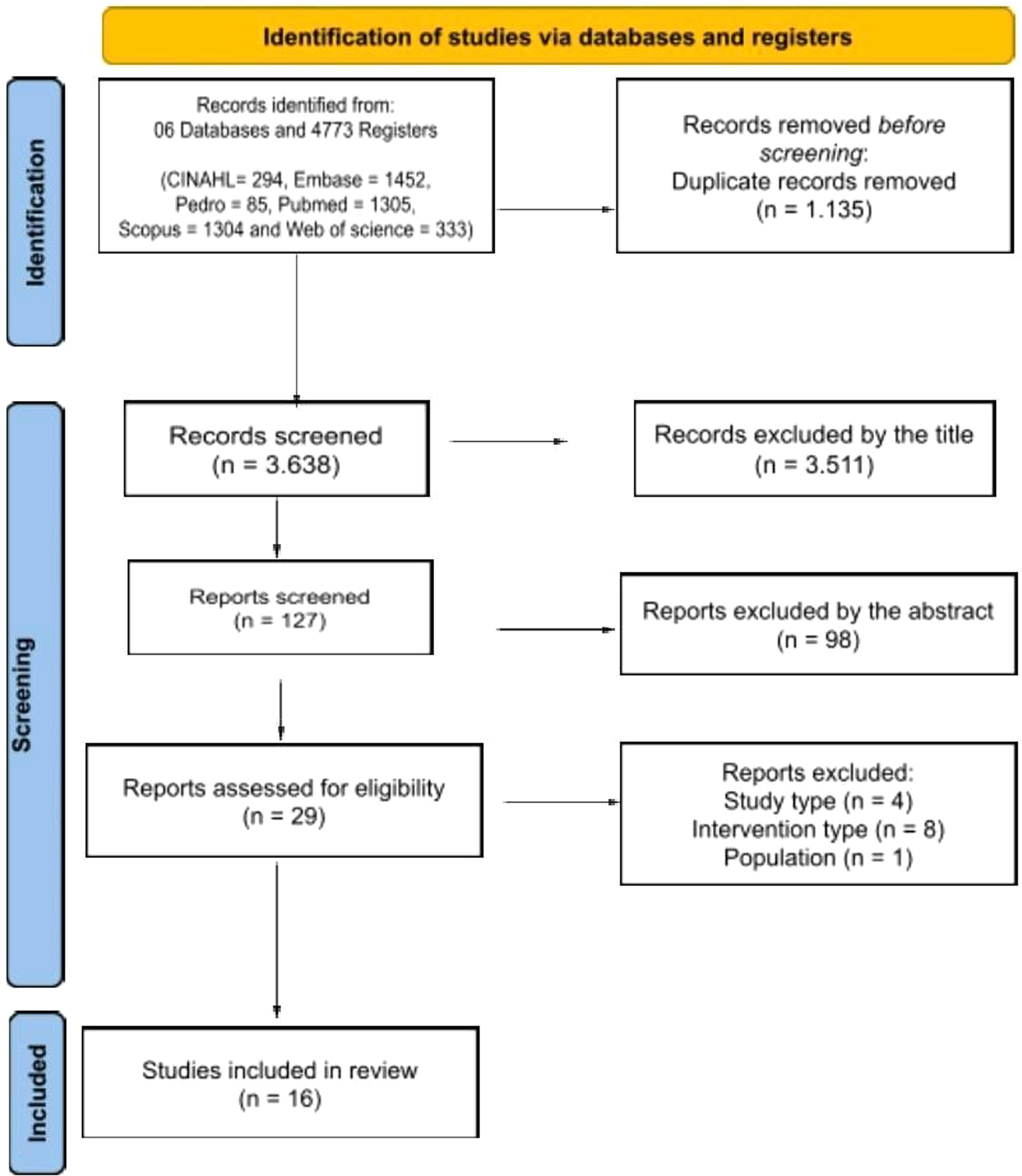
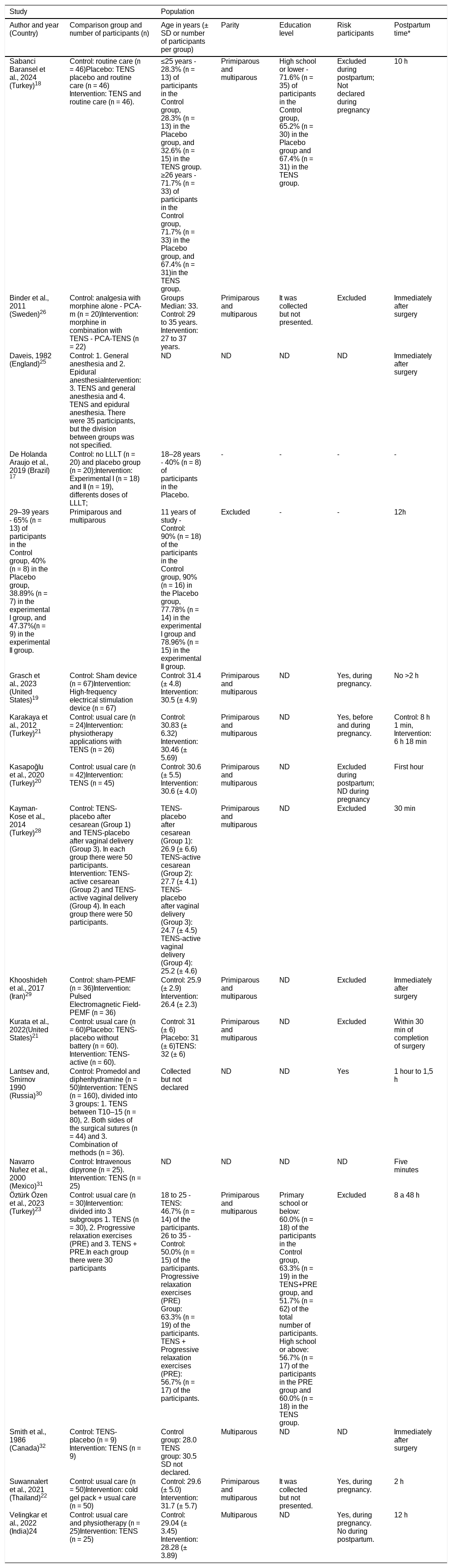
ResultsA total of sixteen studies were selected for full-text analysis. The Fig. 1 illustrates all the selection stages. The characteristics of the studies can be observed in Table 1.
Characteristics of the studies and the population.
| Study | Population | |||||
|---|---|---|---|---|---|---|
| Author and year (Country) | Comparison group and number of participants (n) | Age in years (± SD or number of participants per group) | Parity | Education level | Risk participants | Postpartum time* |
| Sabanci Baransel et al., 2024 (Turkey)18 | Control: routine care (n = 46)Placebo: TENS placebo and routine care (n = 46)Intervention: TENS and routine care (n = 46). | ≤25 years - 28.3% (n = 13) of participants in the Control group, 28.3% (n = 13) in the Placebo group, and 32.6% (n = 15) in the TENS group.≥26 years - 71.7% (n = 33) of participants in the Control group, 71.7% (n = 33) in the Placebo group, and 67.4% (n = 31)in the TENS group. | Primiparous and multiparous | High school or lower - 71.6% (n = 35) of participants in the Control group, 65.2% (n = 30) in the Placebo group and 67.4% (n = 31) in the TENS group. | Excluded during postpartum; Not declared during pregnancy | 10 h |
| Binder et al., 2011(Sweden)26 | Control: analgesia with morphine alone - PCA-m (n = 20)Intervention: morphine in combination with TENS - PCA-TENS (n = 22) | Groups Median: 33.Control: 29 to 35 years.Intervention: 27 to 37 years. | Primiparous and multiparous | It was collected but not presented. | Excluded | Immediately after surgery |
| Daveis, 1982(England)25 | Control: 1. General anesthesia and 2. Epidural anesthesiaIntervention: 3. TENS and general anesthesia and 4. TENS and epidural anesthesia. There were 35 participants, but the division between groups was not specified. | ND | ND | ND | ND | Immediately after surgery |
| De Holanda Araujo et al., 2019 (Brazil)17 | Control: no LLLT (n = 20) and placebo group (n = 20);Intervention: Experimental I (n = 18) and II (n = 19), differents doses of LLLT; | 18–28 years - 40% (n = 8) of participants in the Placebo. | - | - | - | - |
| 29–39 years - 65% (n = 13) of participants in the Control group, 40% (n = 8) in the Placebo group, 38.89% (n = 7) in the experimental I group, and 47.37%(n = 9) in the experimental II group. | Primiparous and multiparous | 11 years of study - Control: 90% (n = 18) of the participants in the Control group, 90% (n = 16) in the Placebo group, 77.78% (n = 14) in the experimental I group and 78.96% (n = 15) in the experimental II group. | Excluded | - | - | 12h |
| Grasch et al., 2023 (United States)19 | Control: Sham device (n = 67)Intervention: High-frequency electrical stimulation device (n = 67) | Control: 31.4 (± 4.8)Intervention: 30.5 (± 4.9) | Primiparous and multiparous | ND | Yes, during pregnancy. | No >2 h |
| Karakaya et al., 2012 (Turkey)21 | Control: usual care (n = 24)Intervention: physiotherapy applications with TENS (n = 26) | Control: 30.83 (± 6.32)Intervention: 30.46 (± 5.69) | Primiparous and multiparous | ND | Yes, before and during pregnancy. | Control: 8 h 1 min, Intervention: 6 h 18 min |
| Kasapoğlu et al., 2020 (Turkey)20 | Control: usual care (n = 42)Intervention: TENS (n = 45) | Control: 30.6 (± 5.5)Intervention: 30.6 (± 4.0) | Primiparous and multiparous | ND | Excluded during postpartum; ND during pregnancy | First hour |
| Kayman-Kose et al., 2014 (Turkey)28 | Control: TENS-placebo after cesarean (Group 1) and TENS-placebo after vaginal delivery (Group 3). In each group there were 50 participants.Intervention: TENS-active cesarean (Group 2) and TENS-active vaginal delivery (Group 4). In each group there were 50 participants. | TENS-placebo after cesarean (Group 1): 26.9 (± 6.6)TENS-active cesarean (Group 2): 27.7 (± 4.1)TENS-placebo after vaginal delivery (Group 3): 24.7 (± 4.5)TENS-active vaginal delivery (Group 4): 25.2 (± 4.6) | Primiparous and multiparous | ND | Excluded | 30 min |
| Khooshideh et al., 2017 (Iran)29 | Control: sham-PEMF (n = 36)Intervention: Pulsed Electromagnetic Field-PEMF (n = 36) | Control: 25.9 (± 2.9)Intervention: 26.4 (± 2.3) | Primiparous and multiparous | ND | Excluded | Immediately after surgery |
| Kurata et al., 2022(United States)21 | Control: usual care (n = 60)Placebo: TENS-placebo without battery (n = 60).Intervention: TENS-active (n = 60). | Control: 31 (± 6)Placebo: 31 (± 6)TENS: 32 (± 6) | Primiparous and multiparous | ND | Excluded | Within 30 min of completion of surgery |
| Lantsev and, Smirnov 1990(Russia)30 | Control: Promedol and diphenhydramine (n = 50)Intervention: TENS (n = 160), divided into 3 groups: 1. TENS between T10–15 (n = 80), 2. Both sides of the surgical sutures (n = 44) and 3. Combination of methods (n = 36). | Collected but not declared | ND | ND | Yes | 1 hour to 1,5h |
| Navarro Nuñez et al., 2000 (Mexico)31 | Control: Intravenous dipyrone (n = 25).Intervention: TENS (n = 25) | ND | ND | ND | ND | Five minutes |
| Öztürk Özen et al., 2023(Turkey)23 | Control: usual care (n = 30)Intervention: divided into 3 subgroups 1. TENS (n = 30), 2. Progressive relaxation exercises (PRE) and 3. TENS + PRE.In each group there were 30 participants | 18 to 25 - TENS: 46.7% (n = 14) of the participants.26 to 35 - Control: 50.0% (n = 15) of the participants.Progressive relaxation exercises (PRE) Group: 63.3% (n = 19) of the participants. TENS + Progressive relaxation exercises(PRE): 56.7% (n = 17) of the participants. | Primiparous and multiparous | Primary school or below: 60.0% (n = 18) of the participants in the Control group, 63.3% (n = 19) in the TENS+PRE group, and 51.7% (n = 62) of the total number of participants.High school or above: 56.7% (n = 17) of the participants in the PRE group and 60.0% (n = 18) in the TENS group. | Excluded | 8 a 48 h |
| Smith et al., 1986(Canada)32 | Control: TENS-placebo (n = 9)Intervention: TENS (n = 9) | Control group: 28.0TENS group: 30.5SD not declared. | Multiparous | ND | ND | Immediately after surgery |
| Suwannalert et al., 2021 (Thailand)22 | Control: usual care (n = 50)Intervention: cold gel pack + usual care (n = 50) | Control: 29.6 (± 5.0)Intervention: 31.7 (± 5.7) | Primiparous and multiparous | It was collected but not presented. | Yes, during pregnancy. | 2 h |
| Velingkar et al., 2022 (India)24 | Control: usual care and physiotherapy (n = 25)Intervention: TENS (n = 25) | Control: 29.04 (± 3.45)Intervention: 28.28 (± 3.89) | Multiparous | ND | Yes, during pregnancy. No during postpartum. | 12 h |
n = Number of participants; TENS = Transcutaneous Electrical Nerve Stimulation; PCA-m = Analgesia with morphine alone; PCA-TENS = Morphine in combination with TENS; PEMF = Pulsed Electromagnetic Field; PRE = Progressive relaxation exercises; SD = Standard deviation; ND = Not declared; *Postpartum time when resources were applied after surgery;.
A total of 1582 puerperal women took part in the studies. The average age was 29.21 (±2.20) years. Marital status was reported in only 12.5% (2) of the studies17,26 and 18.7% (3) of the studies17,18,23 reported the education level. No study reported data on participants’ ethnicity. The absence of ethnicity reporting limits the assessment of whether the proposed electrophysical resource protocols are generalizable across different cultural and ethnic populations. Regarding parity, 69% (11) of the studies included both primiparous and multiparous women.17–23,26–29
With regard to information on health conditions, 56.2% of studies (9) reported excluded women who had any health condition considered to be at risk in the postpartum period.17,18,20,21,23,24,26,28,29 The remaining studies reported that this was not an exclusion criterion, with 12.5% of the studies (2)22,30 including women at risk both during pregnancy and postpartum; the same number reporting that they had included women who had health risks during pregnancy.19,27 This limited reporting of clinical context is a significant barrier to implementation, as it affects the feasibility and applicability of electrophysiological resources. The lack of contextual information also restricts the generalizability of the findings in the postpartum care setting.
All the studies took place in a hospital setting. However, it was not clear whether the intervention was realized in the surgical center, the anesthetic recovery room or the ward, for example. Only 25% of the studies (4) provided information on the participants' vital signs.22,27,29,30 Just two studies followed up women beyond the maternity ward.19,29
The most used electrophysical resource was TENS (75%; 12 studies).18,20,21,23–28,30–32 All the studies reported that the resource was placed in the first 24 h postpartum. The average number of sessions was 2.9 (± 3.7).
No information about possible adverse effects could be found in 43.7% (7 studies)18,23,25,26,30–32; another 43.7% of the studies (7) stated that no effects occurred.17,19,20,22,24,27,28 Regarding women’s satisfaction with the treatment, it was assessed in just 25% (4) of the studies. Velingkar et al.24 Baransel et al.18 Kurata et al.21 evaluated satisfaction with TENS and Khooshideh et al.29 with Pulsed Electromagnetic Fields. Further information about electrophysical resources is in Table 2.
Characteristics of electrophysical resources and evaluation of results.
| Author, and year (Country) | Pharmacological resources | Type of electrophysical resources (modalities) | Parameters | Frequency of use (F), number of session (NS) and duration of each session (D) | Mode of application | Adverse effect | Application context (AC), Instruments used to assess pain (I) and Time of last pain assessment (P) |
|---|---|---|---|---|---|---|---|
| Sabanci Baransel et al., 2024 (Turkey)18 | Nonsteroidal anti-nflammatory | Electrical Stimulation Agents (TENS) | Frequency: 100 Hz.Pulse durations: 100 μs.Current amplitude: Increased starting from 0 mA. | F: TENS was applied twice, at 10 to 12 and 14 to 16 h postpartum;NS: 2;D: 30 min | Electrodes:Two pairs of Cefar Easy Touch, a total of 4 electrodes were used in a sterile package for each participant.Location: On the upper and lower border of the cesarean birth incision line. | ND | AC: Hospital;I: VAS REEDA Postpartum Comfort Questionnaire (PPCQ)P: 16 h post surgery |
| Binder et al., 2011(Sweden)26 | Opioid analgesic (Morphine) | Electrical Stimulation Agents (TENS) | Frequency: 70 Hz.Pulse duration: not described.Current amplitude: adjust the amplitude to her sensory level. | F: One continuous applicationNS: One continuouslyD: 24 h | Electrodes: 2 + 2 electrodes (35 × 45 mm).Location: Two electrodes on each side along the wound, 2–3 cm away from the wound as described by the manufacturer. Two other electrode pads were placed on top of the wound immediately after closure. | ND | AC: HospitalI: VASP: 24 h after surgery |
| Daveis, 1982(England)25 | Opioid analgesic (papaveretum, or distalgesic) | Electrical Stimulation Agents (TENS) | Frequency: 25 Hz.Pulse duration: 200 μs.Current amplitude: Controlled by the patient, could be varied from 0 to 40 V.TENS was started in the operating room as soon as possible after skin suturing. | F: NDNS: NDD: ND | Electrodes: Disposable adhesive mylar tapc electrodes were used.Location: At the incision site and extending from the anterior superior iliac spine to the pubis, parallel to the inguinal ligament line. The patient was encouraged to adjust the amplitude control of the TENS unit as desired at intervals of no <15 min. | ND | AC: HospitalI: VASP: 24 h after surgery |
| De Holanda Araujo et al., 2019 (Brazil)17 | Anti-inflammatory (Tenoxican), Anticholinergic (scopolamine butylbromide) Analgesic (Dipyrone) and Antiphysetic with antiflatulent action (simethicone) | Non thermal (Low-level laser therapy) | Experimental I: 4 J/cm2 and 0.24 J/point in 8 s.Experimental II: 2 J/cm2 and 0.12 J/point in 4 s. Spot diameter was 0.06,310 cm2 and irradiance was 0.47 W/cm2.Placebo: LLLT was performed in presence of electricity, but without energy emission of energy. | F: 12 h postpartum and 24 h postpartumNS: 2D: The number of points was determined based on the cesarean incision size | Application: Punctual, non-contact and with a laser spot positioned perpendicular to the skin on the cesarean incision line. The number of points applied depended on the extent of the surgical wound, considering a distance of 1 cm between the application points.Patient positioning: Supine position. | Not observed | AC: HospitalI: Numeric Rating Scale (NRS)P: 48 h post surgery |
| Grasch et al., 2023 (United States)19 | Oral opioid | Electrical Stimulation Agents (High-Frequency electrical stimulation device) | Frequency: 20.000 Hz.Pulsed electrical current. | F: The 1st application within 2 h of arrival at the recovery area. The 2nd occurred 12 (10–14) hours after the first and the last application occurred (10–14) hours after the second.NS: 3D:12 min | Application: For each treatment, the probes were placed in 6 different locations for 2 min.Location: Perpendicular to the skin line, approximately 2.5 cm from the abdominal skin incision. The probes were initially placed with 1 probe superior and 1 inferior to the incision, then lifted and moved to a new location every 2 min, moving longitudinally along the length of the incision. During the final 2 min, a probe was placed at each lateral edge of the incision. | Not observed | AC: Hospital, but womens were contact in 6 week postpartum.I: Brief Pain InventoryP: 48 h postpartum |
| Çıtak Karakaya et al., 2012 (Turkey)27 | Analgesics (Meperidine or others) or Anti-inflammatories | Electrical Stimulation Agents (TENS) | Frequency:120 HzPulse duration: 60 μs.Current amplitude: Intensity according to the patient until a strong tingling sensation was felt, without causing contraction or discomfort. | F: ND.NS: ND.D: 30 min. | Electrodes: Self-adhesive.Location: On each side of the incision. | Not observed | AC: HospitalI: VASP: 48 h after surgery |
| Kasapoğlu et al., 2020 (Turkey)20 | Analgesics (Diclofenac sodium and paracetamol) | Electrical Stimulation Agents (TENS) | Frequency: 100 HzPulse duration: 75 μs.Current amplitude: Gradually increased from 10 to 30 mA, as long as the patient could tolerate it. | F: One session a day for two days.NS: 2.D: 30 min | Location: They were placed below and above the abdominal incision. Before the procedure, patients were informed about the tingling that would occur. | Not observed | AC: HospitalI: Visual Numeric Scale (VNS)P: 48 h after surgery |
| Kayman-Kose et al., 2014 (Turkey)28 | Analgesic non-opioid (Diclofenac sodium) | Electrical Stimulation Agents (TENS) | Frequency: 100 Hz.Pulsed duration: Not declared.Current amplitude: From 0 mA and stabilized at the current value for which the patient felt optimal relief without any discomfort in the treatment group | F: One applicationNS: 1D: 30 min | Women undergoing cesarean section received TENS as soon as they were transferred to their beds.Equipment: For TENS, high-frequency equipment with two output channels and four electrodes was adopted.Location: they were placed above and below the incision line in women who had a cesarean section. The electrode location was chosen according to the electrode placement guide. | Not observed | AC: HospitalI: VAS and VNS (verbal numerical scale)P: 8 h after surgery |
| Khooshideh et al., 2017 (Iran)29 | Analgesic (Diclofenac suppositories) | Non Thermal Agents (Pulsed Electromagnetic Fields) | Frequency: 27.1 MHz, a pulse rate of 1000 pulses per second.Pulse duration: 100 μs.Peak spatial power density: 75 mW/cm2. | F: Continuously for 7 daysNS: One continuouslyD: Continuously | Equipment: RecoveryRx; BioElectronics Corp (active PEMF) and an exactly similar device, without any electromagnetic activity, manufactured by the same company (Sham-PEMF). The PEMF devices used in this study consisted of an elliptical coil that was 12 cm in size and a battery-powered radiofrequency energy generator. The circuit consisted of low voltage (3 V) digital or analog electronics controlling all timing functions to produce the therapeutic radiofrequency field with the antenna field directly over the para site. to be treated.Location: In the surgical wound. | Exudate and edema: Higher rates in the sham-PEMF group.Infection or erythema: Not observed in either group. | AC: HospitalI: VASP: 7 days postpartum |
| Kurata et al., 2022(United States)21 | Intrathecal opioids, Anti-inflammatories (Ketorolac intravenously, ibuprofen orally) Analgesics (acetaminophen, oxycodone. | Electrical Stimulation Agents (TENS) | Frequency: 120 Hz.Pulse duration: 260 μs.Current amplitude: At the patient's maximum sensory level.Mode: normal mode (N). | F: Continuously applicationNS: One continuouslyD: Continuously | Equipment: In the placebo group, participants were connected to an identical-appearing TENS unit but without delivery of electrical stimulation because the unit did not have a battery. In all TENS units, the power indicator lights were covered and the battery compartment sealed to assist in blinding and to prevent the patient from adjusting settings other than intensity.Location: Adhesive electrodes were placed bilaterally above and below the lateral aspects of the skin incision, for a total of four electrodes If there was a bandage over the incision, the electrodes were placed below the bandage. | Itching, irritation or rash and discomfort | AC: HospitalI: VASP: 72 h postpartum |
| Lantsev and Smirnov 1990(Russia) | Analgesics (promedol and diphenhydramine) | Electrical Stimulation Agents (TENS) | ND | F: Multiple sessions a day. 60-minute sessions with a break between sessions until the pain reappears.NS: 15.D: 1 hour. | Equipment: A low-frequency pulsed current generating device was used with electrodes made of copper foil measuring 15 × 1.5 cm and fixed to the skin with adhesive tape.Location: 3 possible application sites (T10–15, around the surgical suture 2–3 cm apart and a combination of methods). | ND | AC: HospitalI: VASP: 48 horas postpartum |
| Navarro Nuñez et al., 2000 (Mexico)31 | Analgesics (Dipirona, nalbufina, midazolam) | Electrical Stimulation Agents (TENS) | Frequency: 100 pulses per second.Pulse duration: 100 μs.Current amplitude: 30 mA. | F: Continuously.NS: One continuously.D: 4 h. | Location: On the skin 5 cm from the surgical incision on both sides. | ND | AC: HospitalI: Pain was measured by the pressure exerted by the patient's hand on a balloon connected to a resistance graduated on a scale in millimeters of mercury.P: 4 h post surgery |
| Öztürk Özen et al., 2023(Turkey)23 | Analgesic (Diclofenac, paracetamol) | Electrical Stimulation Agents (TENS) | TENS Group: Frequency: 120 Hz; Pulse width: 100 μs; Current amplitude: Intensity according to the patient.PRE group: Exercises based on stretching and then the relaxation of different muscle groups, accompanied by deep breathing.TENS + PRE group: The administration of the interventions was the same as in groups where only TENS and only PRE applications were carried out. | F: TENS and PRE groups: Two and three applications per day(Two at 4-h intervals on the first day and three at 8-h intervals on the second day, were held).NS: 5.D: 30 min of TENS. | Patient positioning: Supine position.Location: Two TENS electrodes were placed 2 cm above the cesarean incision and the other two electrodes 2 cm below the incision. | ND | AC: HospitalI: VASP: 7 days postpartum |
| Smith et al., 1986(Canada)32 | Analgesics (Demerol, codeine, acetaminophen) Antihistamine (Phenergan) | Electrical Stimulation Agents (TENS) | Frequency: 85 Hz, spike waveform impulses of 80 ysec duration.Current amplitude: 0 to 75 mA.The placebo stimulator was identical to the real one, but the current activated only the indicator light and not the electrode leads. | F: Continuously. Turned off only occasionally, for short intervals (<15 min), while the patient washed.NS: One continuously.D: Continuously. | Location: Electrodes were placed parallel to and on either side of the incision approximately 1.5 cm from the incision. Impulses were delivered to the skin 1 × 4 by a pair of 2.5 cm x 14 cm pre-gelled sterile electrodes. | ND | AC: HospitalI: McGill Pain QuestionnaireP: 72 h after surgery |
| Suwannalert et al., 2021 (Thailand)22 | Analgesics opioids (Meperidine or tramadol) | Thermal Agents (Cryotherapy) | Application of a cold gel pack on the surgical incision, with a temperature from −19 to 27 degrees, with changes every two hours to maintain the temperature, for a continuous period of 6 h. | F: One continuous application.NS: One continuously.D: 6 h. | The cold gel pack covered with a two-layer gauze was applied to the surgical site. The bag should be changed every 2 h to maintain the temperature. Assessment every 30 min in the first hour due to the possibility of skin irritation. | Not observed | AC: HospitalI: VASP: 24 h after surgery |
| Velingkar et al., 2022 (India)24 | Antibiotics and analgesics | Electrical Stimulation Agents (TENS) | Frequency: 100 Hz.Pulse duration: ND.Current amplitude: Gradually increased from 0 mA and adjusted according to the participant’s requirement and tolerance capacity until a pleasant tingling sensation was felt without muscle contraction.. | F: One session per day.NS: 4.D: 30 min. | Equipment: The TENS device with two output channels was operated with nine volt batteries.Electrodes: Two pairs of TENS adhesive electrodes measuring 50 × 50 mm were used.Location: 2 cm above and 2 cm below the Pfannenstiel incision. The electrode placement sites were cleaned with alcohol and cotton before application and after the end of the intervention.Position: Participants were positioned in the supine position with a pillow placed under their knees during TENS administration. | Not observed | AC: HospitalI: NPRSP: 96 h after surgery |
TENS = Transcutaneous Electrical Nerve Stimulation; Hz = Hertz; mA = Milliampere; μs = microseconds; J/CM2 = Joules per square centimeter; ND: Not declared; PEMF = Pulsed Electromagnetic Field; F = Frequency of use; NS = Number of session; D = Duration of each session; AC = Application context; I = Instruments used to assess pain; P = Time of last pain assessment; VAS = Visual analogue scale; PPCQ = Postpartum Comfort Questionnaire; NRS = Numeric Rating Scale; VNS= Visual Numeric Scale.
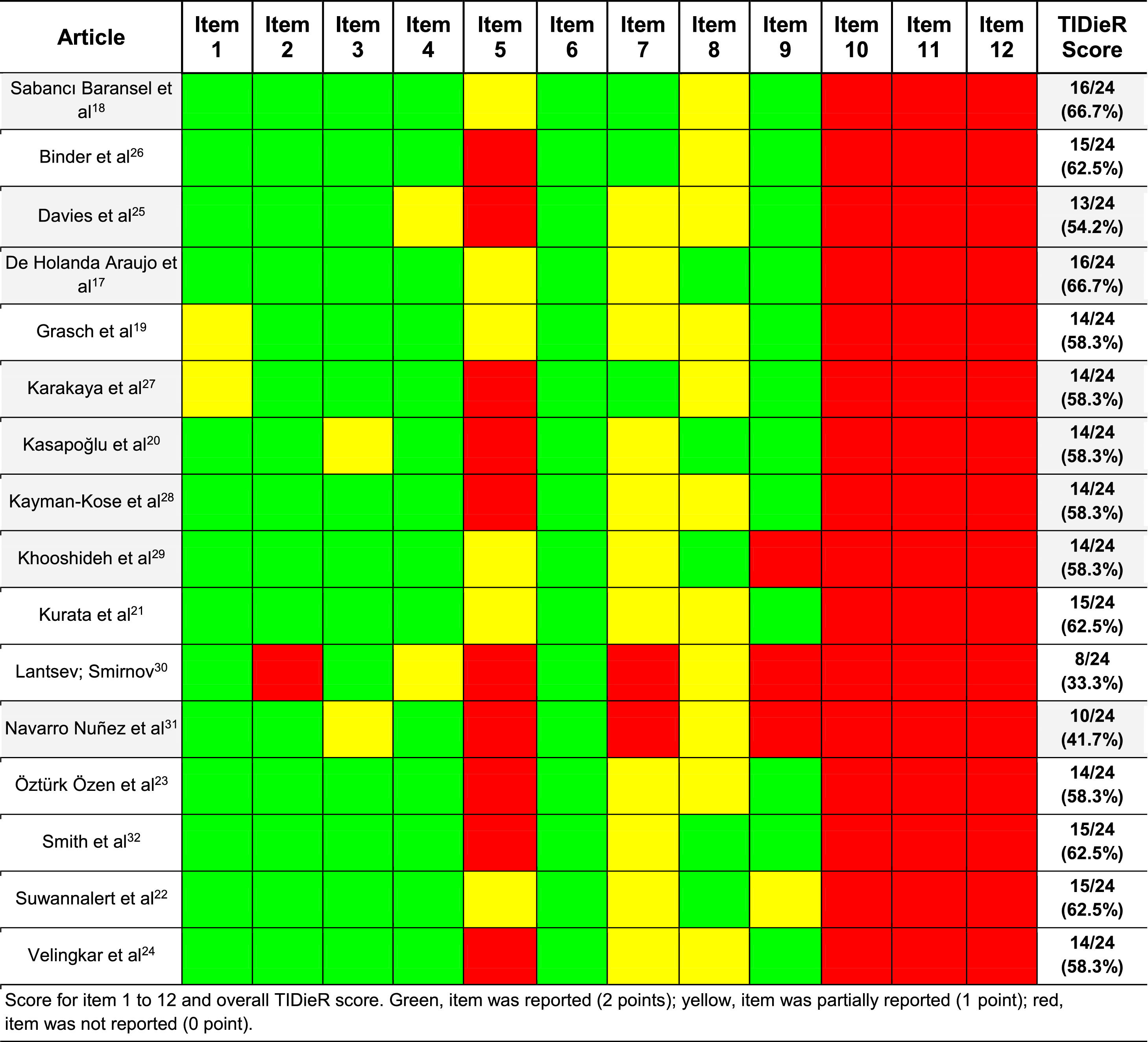
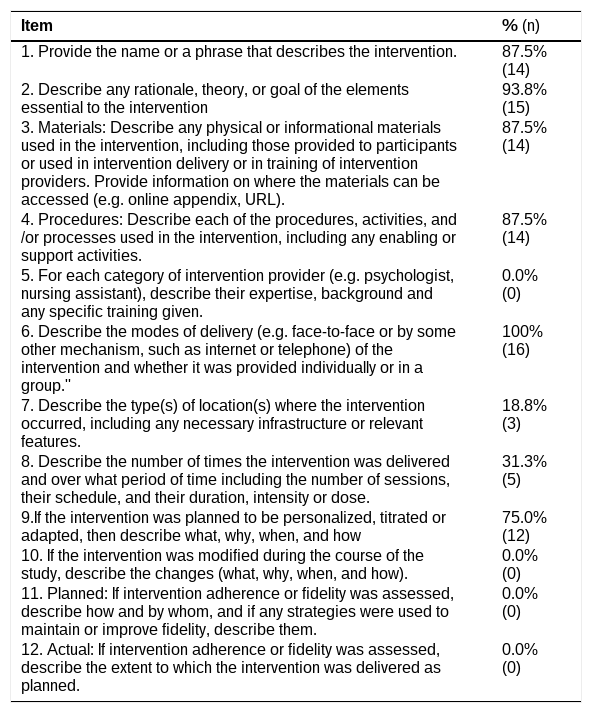
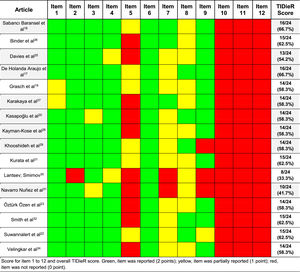
The mean score on the TIDieR scale was 13.8 (± 2.7) which corresponds to 66.7% of the maximum score of 24 points. The score ranged from a minimum of 830 to a maximum of 15 points.17,18 Further details can be found in Table 3. The percentage referring to each item on the TIDieR checklist ranged from 0% (lowest value achieved) to 100% (highest value achieved) are presented in Table 4.
Percentage per item from the TIDieR of the included studies.
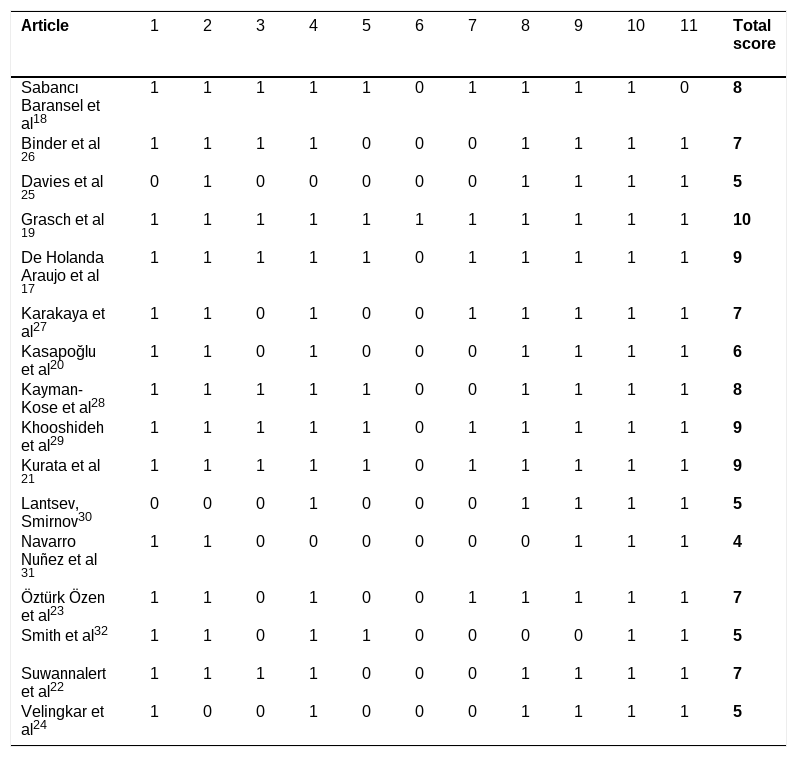
Regarding the methodological quality of the studies, only one31 of them scored <5 points on the PEDro scale, which is considered low methodological quality. The most scored items were "the results of between-group statistical comparisons are reported for at least one key outcome" in 100% of the studies. Table 5 details the results found. Considering the study designs included in the review, other scales for evaluating the methodological quality of study designs, such as observational studies or case series, were not used.
PEDro scale score of included studies.
| Article | 1 | 2 | 3 | 4 | 5 | 6 | 7 | 8 | 9 | 10 | 11 | Total score |
|---|---|---|---|---|---|---|---|---|---|---|---|---|
| Sabancı Baransel et al18 | 1 | 1 | 1 | 1 | 1 | 0 | 1 | 1 | 1 | 1 | 0 | 8 |
| Binder et al26 | 1 | 1 | 1 | 1 | 0 | 0 | 0 | 1 | 1 | 1 | 1 | 7 |
| Davies et al25 | 0 | 1 | 0 | 0 | 0 | 0 | 0 | 1 | 1 | 1 | 1 | 5 |
| Grasch et al19 | 1 | 1 | 1 | 1 | 1 | 1 | 1 | 1 | 1 | 1 | 1 | 10 |
| De Holanda Araujo et al17 | 1 | 1 | 1 | 1 | 1 | 0 | 1 | 1 | 1 | 1 | 1 | 9 |
| Karakaya et al27 | 1 | 1 | 0 | 1 | 0 | 0 | 1 | 1 | 1 | 1 | 1 | 7 |
| Kasapoğlu et al20 | 1 | 1 | 0 | 1 | 0 | 0 | 0 | 1 | 1 | 1 | 1 | 6 |
| Kayman-Kose et al28 | 1 | 1 | 1 | 1 | 1 | 0 | 0 | 1 | 1 | 1 | 1 | 8 |
| Khooshideh et al29 | 1 | 1 | 1 | 1 | 1 | 0 | 1 | 1 | 1 | 1 | 1 | 9 |
| Kurata et al21 | 1 | 1 | 1 | 1 | 1 | 0 | 1 | 1 | 1 | 1 | 1 | 9 |
| Lantsev, Smirnov30 | 0 | 0 | 0 | 1 | 0 | 0 | 0 | 1 | 1 | 1 | 1 | 5 |
| Navarro Nuñez et al31 | 1 | 1 | 0 | 0 | 0 | 0 | 0 | 0 | 1 | 1 | 1 | 4 |
| Öztürk Özen et al23 | 1 | 1 | 0 | 1 | 0 | 0 | 1 | 1 | 1 | 1 | 1 | 7 |
| Smith et al32 | 1 | 1 | 0 | 1 | 1 | 0 | 0 | 0 | 0 | 1 | 1 | 5 |
| Suwannalert et al22 | 1 | 1 | 1 | 1 | 0 | 0 | 0 | 1 | 1 | 1 | 1 | 7 |
| Velingkar et al24 | 1 | 0 | 0 | 1 | 0 | 0 | 0 | 1 | 1 | 1 | 1 | 5 |
Subtitle: 1. Were inclusion criteria described? 2. Were participants randomly allocated to groups? 3. Was allocation concealed? 4. Were groups similar at baseline for the most important prognostic indicators? 5. Were all participants blinded? 6. Were all therapists who administered therapy blinded? 7. Were all assessors who measured at least one key outcome blinded? 8. Were measures of at least one key outcome obtained from >85% of the participants initially allocated to groups? 9. Did all participants (for whom outcome measures were available) receive the treatment or control condition as allocated or was data for at least one key outcome analyzed by intention to treat? 10. Were the results of between-group statistical comparisons reported for at least one key outcome? 11. Did the study provide both point measures and measures of variability for at least one key outcome?.
Correlation Between Internal Validity and Intervention Reporting Completeness
The agreement between the internal validity of the identified studies and the completeness of intervention reporting, as measured by the PEDro Scale and the TIDieR was little (r = 0.21; p = 0.43).
DiscussionThis review examined the context and characteristics of the population in studies investigating electrophysical resources for pain relief after cesarean section and assessed the completeness of intervention reporting. We found that not all the population's characteristics of interest in clinical setting were described in the studies, like marital status, education level and ethnicity, as well as clinical data such as parity, vital signs and risk status. Similarly, there was a lack of evaluation regarding patient satisfaction with the treatment and the potential adverse effects of the interventions. This study also showed that the published studies are of good methodological quality, but on the other hand the integrity of the reporting has some limitations, which could imply difficulties in the replication of the protocols.
Considering the sixteen selected studies, 6 were published in the last 5 years.17–21,23,27,29 The country that published the most on the subject was Turkey, considered to be one of the Top 5 countries in terms of the number of cesarean sections, with rates reaching 50.8% of births. Other countries such as the Dominican Republic (58.1%), Brazil (55.7%), Cyprus (55.3%) and Egypt (51.8%) are part of this group.1
All the studies took place in a hospital environment and two of them followed up these women beyond the period of hospitalization, which may limit the care of women who have persistent pain after the surgical procedure, considering that the incidence of chronic pain after cesarean section can vary from 4% to 41.8%.33,34
This study highlighted the lack of information on the characteristics of the population, like level of education, ethnicity, income and socioeconomic status, which in some cases could have an impact on the analysis of some outcomes, such as pain. Individuals with higher education levels tend to have a greater awareness of their pain, as increased knowledge may enhance self-awareness, allowing them to report their symptoms more faithfully35; cultural and ethnic differences can influence how individuals perceive, report and manage pain.36–38
Previous experiences of pain can increase anxiety and fear related to future pain. Anticipation and worry about pain can increase the perception of actual pain, making the post-operative experience more uncomfortable.39,40 In addition, parity, i.e., the experience of having previous births, can affect physiological aspects such as the quality of healing and muscle recovery, which can influence post-operative pain.41,42 However, previous studies have not identified a clear association between parity and postpartum pain, or with complaints of functional limitations.2 It is inferred that the prospect of welcoming a new child, combined with contextual factors such as marital, family and professional support, can moderate the experience of pain and recovery.43
The most investigated resource was TENS. About the description of the parameters, one study did not describe any information,30 one described the frequency and did not inform the pulse duration.28 The lowest frequency used was 25 Hz25 and the highest 120 Hz.21,27 The intensity of the current rose gradually and was individualized according to the patient's report, which was verified when we applied the TIDIeR scale, where 72% of the studies scored on item 9 of the scale, which refers to whether the intervention was planned to be personalized, titrated or adapted. It is important to emphasize that the absence of information in studies using electrophysical resources could generate a bias, especially for the synthesis of evidence in systematic reviews. It can be difficult to summarize the results without complete information on the parameters. Furthermore, a full description of the protocols makes it easier to reproduce and interpret the data.44
Just one study reports the adverse effect promoted to TENS. It was itching, irritation or rash and discomfort.21 Khooshide et al.29 related the adverse effects of The Pulsed Electromagnetic Fields, like exudate and edema, infection and erythema, but in the sham group. None other studies describe the adverse effects. Although the potential to cause adverse effects is lower with electrophysical resources compared to pharmacological ones, some individual characteristics, such as skin sensitivity, allergies should be considered.
To further analyze the interventions used in the included studies, this review used the TIDieR scale to identify which aspects were not fully reported.8 None of the studies reported if modifications were made to the interventions, making it unclear whether adjustments were needed or if the original protocol was followed. However, 100% of the studies clearly reported the mode of delivery and whether it was provided individually or in a group.
Adherence and fidelity of the interventions were not reported in any of the studies. The number of women who started and completed the protocols was provided, but there were no detailed reports on whether adherence was evaluated, who was responsible for this, and whether specific strategies were used to maintain or improve fidelity. Some authors described that the study team received training before starting the treatment .18,19,23,24 However, there is no formal data on patient adherence or methods for evaluating fidelity. These attributes extend beyond simply reporting how many participants received the intervention and refer to ‘how well’ the intervention was received or delivered.7 Assessing the fidelity with which an intervention was implemented in a primary study helps the clinician to trust and replicate in detail the protocol that has been published.45
From a clinical perspective, the lack of information on tailoring, modifications, and fidelity also limits the availability of alternatives for healthcare professionals. Health professionals are left without evidence-based guidance on how to safely adapt protocols for patients with low tolerance, high sensitivity, or other individual considerations. Therefore, the absence of these items suggests the need for greater rigor in the description of future studies as a way of understanding how fidelity is ensured and monitored to improve the replicability of the results.
The methodological quality of the studies was good, with a single study scoring 4 points on the Pedro scale.31 Fifteen studies were randomized clinical trials, but therapist blinding was the lowest scoring item. Not blinding the therapists allows them to bring their own beliefs about the treatments, and they may be more enthusiastic about applying one treatment compared to another. On the other hand, when it comes to studies involving physiotherapy interventions, meeting this requirement becomes practically impossible.46 In studies involving physiotherapy interventions, such as electrophysical resources, blinding of therapists is often not feasible and reflects an inherent characteristic of the intervention rather than poor study conduct. Physiotherapy interventions differ significantly from pharmacological ones, so research teams often choose to blind evaluators and, when possible, patients regarding outcomes.
No correlation was observed between TIDieR and PEDro scores. Although it could be expected that clinical trials with higher methodological quality would also present more reproducible interventions, this was not observed in the present study. This finding should be interpreted with caution, as the analysis was exploratory and based on a small sample. In addition, this apparent lack of association may be explained by the fact that PEDro and TIDieR assess distinct constructs such as methodological quality and completeness of intervention reporting, respectively, which justifies the absence of a more robust correlation.
One possible explanation is that methodological quality scales primarily emphasize internal validity domains such as randomization, blinding, and statistical reporting, while placing limited requirements on the operational detail of the intervention itself. In practice, trial reports often prioritize methodological rigor and outcome analysis over detailed procedural descriptions, particularly when reporting guidelines are not explicitly required. As a result, interventions may be methodologically sound but insufficiently described for clinical implementation or replication. In this context, these instruments should be viewed as complementary in the evaluation and reporting of studies. The combined use of standardized methodological scales and reporting guidelines may improve the transparency of intervention descriptions and support the replication of clinical protocols.15
Physiotherapeutic interventions can be considered complex to report and thus to adequately assess their efficacy. It is necessary to report how the evaluation process and the interventions carried out are detailed. Such information implies how the results will be interpreted and favors reproducibility.47,48 It is noteworthy that, even 10 years after the publication of the TIDieR scale, many authors still do not fully report their interventions, particularly regarding fidelity and adherence, as found in the present scoping review.
This is the first study to analyze the integrity of descriptions regarding electrophysical resources for pain relief in women undergoing cesarean section. However, this study has some limitations. The quality of description of some reports made it difficult to carry out a more standardized analysis of the interventions. Furthermore, important variables, such as long-term outcomes and adherence to interventions, were not consistently reported among the studies, which may have limited our ability to draw more robust conclusions. In addition, the exclusion of grey literature may have resulted in the omission of institutional protocols or clinical guidelines used in hospital settings but not published in peer-reviewed journals. Finally, although this review assessed the completeness of the descriptions of the interventions, it did not assess the effectiveness of electrophysical resources.
ConclusionThe included studies provided limited descriptions of participant characteristics and did not provide information about adverse effects or satisfaction with the treatment. Althought the methodological quality of the clinical trials was generally good, the reporting of interventions did not fulfill all requirements necessary for replication of the methods to be possible.
Future studies should incorporate analysis that considers the characteristics of the population and the study setting and should improve the reporting of electrophysical resources by providing detailed descriptions of the treatment parameters. In addition, assessing women’s satisfaction with the interventions and reporting potential adverse effects are essential to enhance clinical applicability. To promote transparency and reproducibility in future studies, journals should consider mandating the use of the TIDieR checklist during the submission process.
Ethics committee for research with human beingsNot applicable.
Declaration of generative AI and AI-assisted technologies in the writing processDuring the preparation of this work the authors used Chat GPT 4.0 to clarify and improve the language. After using this tool, the authors reviewed and edited the content as needed and took full responsibility for the content of the publication.
FundingThis study was financed in part by the Coordenação de Aperfeiçoamento de Pessoal de Nível Superior – Brasil (CAPES PRINT) – Finance Code 88887889651/2023-00.
The authors declare no competing interests.