

Despite strong evidence supporting exercise and education for knee osteoarthritis, access to these interventions remains limited in low- and middle-income countries. Implementation studies are needed to evaluate whether evidence-based programs can be delivered within routine primary care.
ObjectivesTo examine the feasibility of implementing a physical therapist-led, group-based exercise and education program for people with knee osteoarthritis in Brazilian primary health care, and to explore participants’ perceived barriers and facilitators to implementation and exploratory clinical outcomes.
MethodsA mixed-methods implementation study was conducted in Brazilian Primary Health Care across municipalities with varying levels of the Human Development Index and health care contexts. Eighty-four adults with knee osteoarthritis participated in a 12-week group-based program combining structured physical exercise and health education, delivered by primary care physical therapists trained through the PEAK-Portuguese e-learning course. The intervention combined group-based structured physical exercise and health education. Implementation outcomes included recruitment, adherence, fidelity, acceptability, satisfaction, and adverse events. Qualitative interviews were analyzed using content analysis to identify participants' perceived barriers and facilitators to implementation. Exploratory clinical outcomes included pain intensity, knee-related health status, function, global perceived effect, medication use, physical activity participation, and use of assistive walking devices.
ResultsOf 110 eligible individuals, 96 agreed to participate (recruitment 87.3%), 84 started the program, and 70 completed the 12-week program (retention of 83%). Adherence was high, with participants missing an average of 1.39 sessions (SD = 1.35). Intervention fidelity exceeded 90%. All participants reported being satisfied with the treatment. No intervention-related adverse events were reported. Three overarching themes were identified: (1) experiences and perceptions of treatment, including improved symptoms, psychological well-being, knowledge acquisition, reduced medication use, and weight loss; (2) implementation facilitators, including free access, proximity to home, professional support, educational materials, and a supportive group environment; and (3) implementation barriers, including scheduling conflicts, distance to the treatment site, initial difficulty performing some exercises, and transient pain during the first sessions, which were generally perceived as minor or temporary. Exploratory clinical outcomes suggested improvements in pain intensity, knee-related health status, function, global perceived effect, medication use, physical activity participation, and use of assistive walking devices after 12 weeks.
ConclusionsThe implementation of physical therapist-led, group-based exercise and health education programs for people with knee osteoarthritis was feasible and well accepted within Brazilian Primary Health Care. High recruitment, retention, adherence, fidelity, participants' satisfaction, and the absence of intervention-related adverse events support its integration into routine care, while exploratory clinical outcomes suggested improvements in health outcomes.
Knee osteoarthritis (KOA) is a highly prevalent musculoskeletal condition among adults and is a leading cause of pain, disability, psychological distress, and reduced participation in daily activities and social roles.1 Worldwide, the burden of disability attributable to KOA has increased by 105% over the last 26 years.2 In Brazil, KOA is responsible for around 65% of work-related disabilities, being considered the third leading cause of work medical leaves and sickness benefits.2 This results in negative consequences for the country's socio-economic system3 and public health.4,5
Clinical practice guidelines recommend physical exercise, health education, and weight control (if necessary) as first-line treatment for KOA.6–9 However, these evidence-based strategies are underutilized in clinical practice, particularly in low- and middle-income countries such as Brazil.10,11 Key barriers include limited awareness of up-to-date scientific evidence among health professionals,12 persistent use of low-value treatments,13 and a lack of public policies that favor these patients' access to adequate treatment.14
In Brazil, additional contextual factors within the Brazilian Unified Health System (Sistema Único de Saúde – SUS) may further influence the implementation of guideline-recommended care. Recent analyses of the Global Burden of Disease show that rehabilitation needs in Brazil increased by approximately 24% between 1990 and 2019, with musculoskeletal conditions accounting for most physical rehabilitation needs.15 Osteoarthritis is one of the main contributors to this burden. This growing demand for rehabilitation services, combined with population aging and regional inequalities in health care resources, poses important challenges for the delivery of evidence-based interventions in routine primary care.15 These contextual factors reinforce the need for scalable and accessible models of care that can be integrated into the public health system.
To overcome these barriers, some countries have implemented structured training programs to upskill physical therapists in line with clinical guidelines.14 One initiative is the Physical Therapy Exercise and Physical Activity for Knee Osteoarthritis (PEAK) course. The PEAK course seeks to enable physical therapists to implement best practices for managing patients with KOA,16 and is available free of charge in English, Spanish, Chinese, and Portuguese. The distinguishing feature of this program is its free online training, which facilitates access for physical therapists and health care professionals worldwide and aims to equip them to provide face-to-face or remote care for patients with osteoarthritis.16 In the Portuguese version of the course (PEAK-Portuguese), Brazilian physical therapists reported positive experiences, with good acceptance and favorable perceptions regarding the recommended practices for managing KOA.17 However, there are still no data on the implementation of these practices within SUS.
To date, there are no similar training programs widely implemented within Brazil’s SUS, particularly in primary care. There remains a pressing need for scalable, accessible training to promote evidence-based physical therapy and structured group interventions for individuals with KOA in the public health system. Therefore, the specific research questions for this study were:
- 1.
What is the feasibility of implementing a group-based exercise and health education program, supervised by physical therapists trained in the PEAK-Portuguese e-learning course, for individuals with KOA in Brazilian primary care, considering recruitment success, adherence to treatment, fidelity, acceptability, participants' satisfaction, and adverse events?
- 2.
What are the barriers and facilitators to the implementation of the program, according to the participants' perspectives?
- 3.
What are the exploratory clinical outcomes, including pain intensity, physical function, medication use, physical activity participation, and use of assistive walking devices, in individuals with KOA participating in the program?
This study employed a mixed-methods design, integrating quantitative and qualitative data to evaluate the feasibility, adherence, fidelity, acceptability, participants' satisfaction, safety, and exploratory clinical outcomes of a group-based exercise and health education program for individuals with KOA in Brazilian primary care. Integration of quantitative and qualitative findings was conducted during the interpretation stage, in which qualitative data on barriers and facilitators were used to explain the quantitative implementation and feasibility outcomes. The intervention was described following the recommendations of the Template for Intervention Description and Replication checklist,18 while reporting of implementation outcomes followed the recommendations of the Standards for Reporting Implementation Studies and was guided by the Consolidated Framework for Implementation Research.19 The study was approved by the ethics committee of Federal University of São Carlos (CAAE: 60443422.0.0000.5504), and all subjects signed an Informed Consent Form in accordance with the criteria established by resolution 466/12 of the National Health Council and the Helsinki Declaration for research with human beings. Implementation outcomes related to physical therapists and municipal leadership will be reported separately to better understand provider- and system-level implementation processes.
Overview of SUSThe SUS is Brazil’s publicly funded universal health system, providing free and equitable health care to approximately 75% of the population.20 It is organized into three levels of complexity: primary, secondary, and tertiary care, with Primary Health Care (PHC) serving as the user's first contact.21 PHC is available nationwide and is estimated to resolve around 80% of health problems.22 A central component of PHC is the family health strategy, which delivers multidisciplinary care at the community and family level, focusing on prevention and health monitoring.21 The Basic Health Unit (BHU) is the local facility that provides essential health services and is responsible for a specific geographic area, although users can receive care at BHUs outside their area of residence.23 Within BHUs, the family health strategy teams provide services such as medical consultations, nursing care, vaccinations, and monitoring of chronic musculoskeletal diseases.21 Physical therapists play a fundamental role in these settings, especially in treating people with KOA, and may be attached to one or more BHUs, particularly in the context of the family health strategy.24
Implementation sitesThe PEAK program was initially implemented in two municipalities in Brazil: São Carlos (São Paulo) and Santa Cruz (Rio Grande do Norte). São Carlos is a medium-sized city located in southeastern Brazil, with an estimated population of 265,294 in 2024 and a human development index of 0.805.25,26 The municipality has 11 BHUs, where 10 physical therapists provide care within the PHC system. Santa Cruz is a smaller municipality in northeastern Brazil, with a population of 38,996 in 2024 and an human development index of 0.635.27,28 The city has 6 BHUs, served by 2 physical therapists working in PHC.
These two settings were selected to represent different regional and socioeconomic contexts, providing insight into the feasibility and adaptability of the intervention across diverse areas of the Brazilian SUS.
Eligibility criteriaThe study included individuals with a diagnosis of KOA according to the American College of Rheumatology, of both sexes, aged 18 or over, with no restriction on body mass index (BMI) or disease severity,29 and who were able to read and understand Portuguese. Individuals were not included in the study if they presented clinical conditions more prominent than KOA, such as uncontrolled hypertension or decompensated cardiorespiratory, neurological, and/or musculoskeletal disorders, that could interfere with the initial assessment, prevent participation in physical activities, or hinder continuation in the proposed intervention.
Recruitment and sample size calculationPhysical therapists working in primary care in São Carlos and Santa Cruz were trained through the PEAK-Portuguese e-learning course17 between September and November 2023 and were invited to recruit individuals with KOA for this study. All BHUs with physical therapy services in the participating cities were invited to participate. In collaboration with local health service managers, the PEAK program was implemented in BHUs willing to adopt it and that had primary care physical therapists who agreed to participate and complete the training. Those who attended the training were expected to deliver the intervention as part of routine primary care services, and no financial incentives were provided. Only physical therapists who agreed to participate in the study and completed the training delivered the intervention in their respective BHUs. Between January and September 2024, these professionals identified and recruited SUS users with KOA from physical therapy waiting lists or existing groups within their BHUs to participate in the study. All participants underwent a clinical screening, in which a history of the disease was collected. If a participant was not interested in taking part in the study, they could still receive treatment without being excluded from the program.
The sample size was calculated using GPower 3 software.30 Implementation outcomes were the primary focus of the study, whereas clinical outcomes were included as exploratory measures to complement the program evaluation. For the quantitative component, the sample size estimation was based on pain intensity, an exploratory clinical outcome selected because established estimates of variability and a minimal clinically important difference were available. The calculation aimed to ensure sufficient precision to estimate within-group changes in pain intensity, considering a clinically meaningful difference of two points on the Numerical Pain Rating Scale, a standard deviation of two points, 80% power, a two-sided significance level (alpha) of 5%, and an anticipated dropout rate of 15%. For the qualitative analysis, all program compilers were invited to participate in interviews to maximize diversity of perspectives. The number of participants followed data saturation principles,31 and thematic saturation was confirmed when similar elements were repeatedly identified in the interviews and no new themes emerged. At this stage, the researcher (HJAS) discussed the data with the research team and data collection was interrupted.
ProceduresWe engaged municipal health departments to approve and support the implementation of PEAK. physical therapists completed the 4-week PEAK-Portuguese e-learning course (https://chesmeducation.org/courses/physiotherapy-exercise-and-physical-activity-for-knee-osteoarthritis-peak-portuguese/),17 then attended face-to-face workshops covering assessment, protocol delivery, fidelity monitoring, and adaptation documentation using the FRAME framework.32 Eight physical therapists (3 men, 5 women) delivered the sessions. Detailed analyses of physical therapists, including provider-level implementation outcomes and their potential influence on implementation processes, will be reported in a separate manuscript.
During the workshop, the research team and physical therapists discussed and adapted the original PEAK Program treatment protocol. The initial format (five individual consultations over 12 weeks) was changed to a group-based model, with one session per week during the same period. This change occurred at the program delivery level and represented a contextual modification within the SUS, aimed at increasing participant reach, improving feasibility, and optimizing limited physical therapy resources, while maintaining fidelity to the program’s core components (education, exercise, and self-management strategies).
The trained professionals followed the recommendations of the PEAK Program's care protocol33 for physical exercise and health education. The details and objectives of the PEAK-Portuguese program are available in another publication17 and the details of the interventions carried out are provided in the Supplementary Material.
Assessments and data collectionImplementation outcomes were assessed at predefined time points, as described in Table 1. Recruitment success was assessed during participant enrolment; adherence to treatment, fidelity, and adverse events were monitored throughout the intervention; and acceptability and participants' satisfaction were assessed after treatment. Administrative records, attendance logs, session checklists, a study-specific semi-structured questionnaire, and participant self-reports were used, as appropriate. These outcomes were selected to evaluate the feasibility and practical implementation of the program in a primary care setting.33
Detailed description of the outcomes of the study.
| Outcome measures | Assessment tool | Description of the test | Scoring | Evaluation time |
|---|---|---|---|---|
| Implementation Outcomes (primary outcomes) | ||||
| Recruitment success | Study-specific indicator (administrative records) | Proportion of eligible participants who signed the informed consent form. | Percentage of eligible participants recruited; ≥70% indicates feasibility. | Pre |
| Adherence to treatment | Study-specific indicator (attendance records) | Proportion of participants who completed the 12-week intervention, monitored by session attendance logs. The number of absences per participant was recorded and analyzed to assess adherence patterns. | Percentage of participants completing the program (≥70% threshold). The number and pattern of absences are described to better understand adherence | Week 12 |
| Fidelity | Session checklists | The extent to which participants followed the core exercise and education components | Percentage sessions completed as intended; >90% indicates high fidelity | Week 12 |
| Acceptability and Participants' Satisfaction | Study-specific semi-structured questionnaire | Seven-item questionnaire assessing participants' perceptions of the intervention, including treatment satisfaction, relevance of the health education content, ease and enjoyment of the exercise program, fulfillment of expectations, perceived improvement in daily activities, and usefulness of the educational booklet. | Responses recorded as “Yes” or “No.” The proportion of positive responses for each item was calculated; ≥70% positive responses indicated acceptable feasibility | Week 12 |
| Adverse events | Study-specific question (self-report) | Adverse events were assessed using the following question: Did you experience any side effects, increased pain, or other negative symptoms during or after taking part in the sessions? | The absence of severe adverse events supports feasibility; mild/moderate events are reported descriptively. | Week 12 |
| Qualitative Outcome | ||||
| Patient experiences, barriers, and facilitators | Semi-structured interview (study-specific guide) | At the end of the 12-week intervention, participants were interviewed with the following open-ended question: "Please describe your experiences and perceptions regarding the treatment."; "What did you think about the group exercise and health education?"; "What can you tell me about the health education?"; "Please comment on the barriers you encountered during the treatment, including physical environment, services, systems, and policies."; "Please comment on the facilitators during the treatment, including supportive strategies, environment, professional support, services, systems, and policies that helped your participation."; "Is there anything else you would like to share about the treatment?" | Data were analyzed qualitatively using thematic/content analysis; no numerical score assigned. | Week 12 |
| Clinical Outcomes (exploratory outcomes) | ||||
| Pain intensity | Numerical pain rating scale | The scale was placed in front of the patient, who was asked to rate their pain intensity at rest and during the 30-second sit-and-stand test and the 40-meter walk test. This self-reported pain score is a valid and reliable measure among people with chronic low back pain.29 | The scale ranges from 0 (no pain) to 10 (maximum pain intensity). | Pre and week 12 |
| Knee-related health condition | Western Ontario and McMaster Universities Osteoarthritis Index (WOMAC) | This self-report questionnaire assesses the problems experienced by people with lower limb OA in the previous 72 hrs. It contains 24 questions in three domains: pain, stiffness, and physical function. The translated and validated version for Brazilian Portuguese was used.30 | Each question is scored from 0 to 4. The maximum score is 96. High scores indicate a worse status. | Pre and week 12 |
| Functional test | 30-second “Sit and Stand Test | A chair with no arms is placed against a wall to prevent oscillations. Patients sit in the middle of the chair, with their back straight and feet resting on the floor in line with their shoulders. The participant is asked to rise from sitting to standing as many times as possible in 30 s.31 | Total number of repetitions within 30 s. | Pre and week 12 |
| 40-meter walk test (4 × 10 m) | The participants were asked to walk as fast as safely possible for 10 m to a reference cone, then turn and walk back to a second cone, return, and repeat the process until they reached the 40-meter mark. The score is based on the individual's walking speed; the higher the speed, the better the result.31 | The total value was obtained from the time, in seconds, required to complete the fixed distance of 40 m | Pre and week 12 | |
| Knee-related health condition | Western Ontario and McMaster Universities Osteoarthritis Index (WOMAC) | This self-report questionnaire assesses the problems experienced by people with lower limb OA in the previous 72 hrs. It contains 24 questions in three domains: pain, stiffness, and physical function. The translated and validated version for Brazilian Portuguese was used.30 | Each question is scored from 0 to 4. The maximum score is 96. High scores indicate a worse status. | Pre and week 12 |
| Perception of the overall effect | Global perception scale | Participants were asked: Compared to the beginning of the treatment, how would you describe your knee today?32 | Likert scale of 11 points: −5 (extremely worse), 0 (without modification), and + 5 (completely recovered) | Week 12 |
| Medication use | Medication diary | Participants recorded the use of analgesic and anti-inflammatory medications in a medication diary during the study period. | Frequency or number of medications used during the reporting period. | Pre and week 12 |
To evaluate qualitative outcomes at the end of treatment, individual face-to-face semi-structured interviews (Table 1) were conducted using open-ended questions to explore participants' experiences, barriers, and facilitators related to the treatment. The interview guide, including the initial questions, remained unchanged throughout data collection. The interviewer used prompts when necessary. All interviews were audio-recorded via cell phone, fully transcribed, and participants were assigned pseudonyms to ensure confidentiality.
To evaluate exploratory clinical outcomes, each participant underwent two assessments: at baseline (AV1); and at follow-up 12 weeks after the treatment (AV2). The main outcomes are presented in Table 1. Participants’ treatment expectations were measured at baseline using a 5-point Likert scale.33 Also, the participants were provided with a medication diary to record any use of oral or topical medications, including name, dosage, and frequency. Additionally, participants reported how many days per week they engaged in regular physical exercise. The use of assistive walking devices (e.g., cane, walker) was also recorded. All these variables were assessed at AV1 and at AV2.
Quantitative and qualitative data collection were carried out by the same researcher (HJAS), a male doctoral student in physical therapy with five years of experience as a blinded assessor in KOA clinical trials34 and qualitative studies.9,17
All data were collected digitally using Google Forms and automatically compiled into a secure electronic database in Google Sheets. To ensure confidentiality and data protection, the information was stored in a password-protected, cloud-based system (Google Drive) accessible only to authorized members of the research team.
Data analysisImplementation outcomes were analyzed descriptively to assess the program's feasibility and implementation. Recruitment, adherence, fidelity, acceptability, participants' satisfaction, and adverse events were summarized according to the predefined criteria described in Table 1. These outcomes were analyzed using descriptive statistics and interpreted against the a priori feasibility thresholds.
For the qualitative analysis, content analysis as proposed by Bardin was used.35,36 It consists of carrying out a systematic and objective analysis of the content of a set of data, seeking to understand its meaning and identifying patterns or trends in three phases: (1) pre-analysis, which consists of preparing the material and developing the indicators that support interpretation; (2) exploration of the material, where records and themes are identified based on the readings; and (3) the results and interpretation process. The analysis produced a descriptive overview of the participants' perceptions of the proposed treatment.
Qualitative data were analyzed using a hybrid thematic analysis approach that combined deductive and inductive strategies. The initial analytical framework included three dimensions (barriers to treatment, facilitators of treatment, and experiences and perceptions of treatment), defined a priori by the research team, informed by previous research and the conceptual framework of the PEAK program. Subsequently, coding and theme development within these dimensions were conducted inductively from the participants' narratives, allowing patterns and subthemes to emerge from the data. Categories within these dimensions were then created according to the interpretation of the results. In the pre-analysis phase, a researcher (HJAS) familiarized himself with the material. After initial contact, the data in its original format was selected for analysis, during which notes were taken and the data was grouped according to its respective categories. In the exploration phase, HJAS coded the data. In this phase, words and phrases relevant to the study were grouped. Finally, in the interpretation phase, the findings were organized within the analytical framework and divided into categories. The contexts of the participants' responses were used to break down the data and identify relationships between perceived expectations, lived experiences and the categories defined. These contexts refer to the particularities of each implementation scenario, such as the characteristics of the local supply of services, the organization of care and the population profile. These variations were considered in the qualitative analysis with the aim of understanding how different conditions influenced the participants' perceptions, their experiences and the mechanisms involved in implementing the program. A qualitative results analysis session with the co-authors (MBP and BTS) was conducted to further refine the dimensions and categories, thereby developing the final results report.
Exploratory clinical outcomes were analyzed using quantitative descriptive and inferential analyses among all participants who initiated the intervention. To address any missing data, the expectation-maximization imputation method was applied. To assess data distribution and homogeneity of variance, the Kolmogorov-Smirnov test and Levene's test were performed, respectively. To compare intra-group differences, the paired t-test was used. The mean differences and their corresponding 95% confidence intervals (CI) were calculated and reported for each group. These results were interpreted in relation to the predetermined MCID values for all clinical outcomes. All statistical analyses were conducted by an independent researcher who was not involved in recruitment procedures, assessments or intervention during the study.
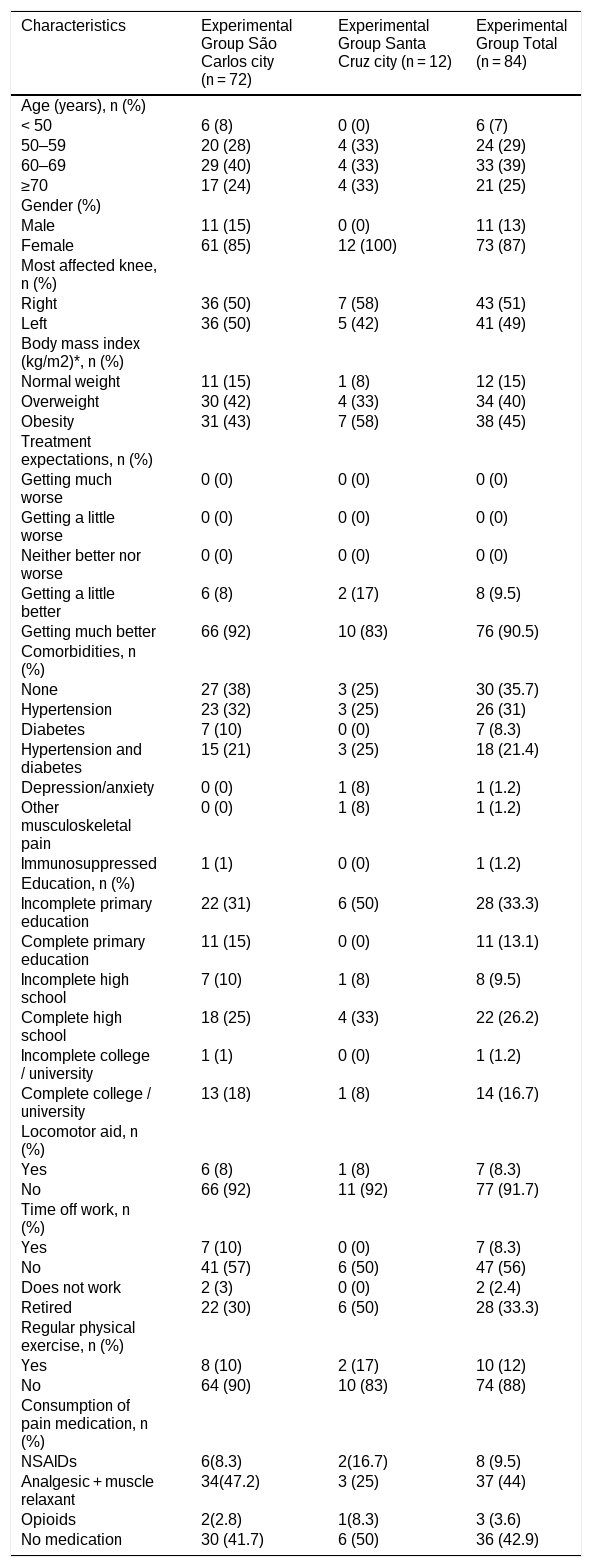
ResultsSociodemographic data and clinical characteristicsMost participants were female (87%), aged between 60 and 69 years (39%), overweight or obese (85%) and had high expectations of improvement with treatment (90.5%). The characteristics of the participants are presented in Table 2.
Clinical and demographic characteristics of the participants at the initial assessment.
BMI classification according to World Health Organization (WHO) criteria: normal weight (18.5–24.9), overweight (25.0–29.9), obese (≥ 30.0); NSAIDs: Non-steroidal anti-inflammatory drugs.
In total, 110 individuals were considered eligible for the study across the two municipalities. Of these, 96 agreed to participate and were enrolled in the study, resulting in an overall recruitment rate of 87.3%. In Santa Cruz, 14 individuals were eligible, and 12 were enrolled (85.7%); two did not participate: one did not receive medical clearance to participate in the exercise program, and the other reported being unavailable. In São Carlos, 96 individuals were eligible and 84 were enrolled (87.5%); four individuals were unable to participate due to scheduling incompatibility and eight could not be contacted by telephone.
Following the baseline assessment, 84 participants initiated the intervention program across the two municipalities. During the intervention period, 14 of these participants (17%) withdrew from the program. The main reasons for dropping out were unavailability of time (n = 2); personal issues (n = 2); no response (n = 9); and death from a cause unrelated to the intervention or study procedures (n = 1). Consequently, 70 participants completed the 12-week intervention and were included in the post-intervention assessments.
We attempted to re-contact the participants who dropped out of the study to gather more information, but were unsuccessful. Seventy participants (83%) were interviewed in person at the end of three months of treatment, resulting in successful recruitment.
Adherence to treatmentParticipants' adherence to the program over 12 weeks was high, with an average of 1.39 (SD 1.35) missed sessions out of the 12 scheduled. Participants attended ≥80% of sessions, in line with feasibility benchmarks, and self-reported engaging in an additional 2.82 (SD ± 1.32) exercise days per week outside supervised classes.
FidelitySession fidelity checklists indicated that core education and exercise components were delivered in >90% of sessions across sites.
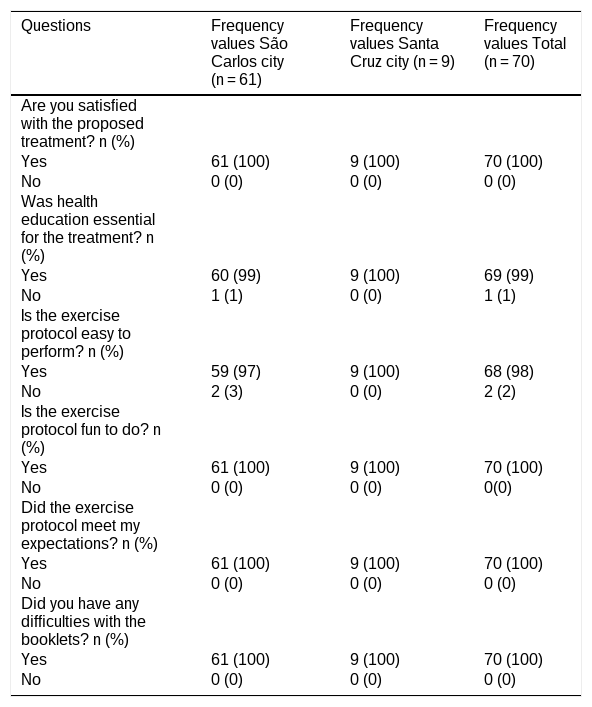
Satisfaction and acceptabilityAll participants reported being satisfied with the treatment (100%; n = 70). Most participants reported that health education was essential to the treatment (99%; n = 69) and that the exercises were easy and enjoyable (99%; n = 69). The treatment met the expectations of all participants, and no participant had any difficulty with the health education booklet. All the feasibility data are presented in Table 3.
Results of the patient-related experience measure and the survey of satisfaction (n = 70).
No participant reported any adverse event attributable to the treatment. Minor transient discomfort during the initial sessions was noted qualitatively but resolved without any modification to participation.
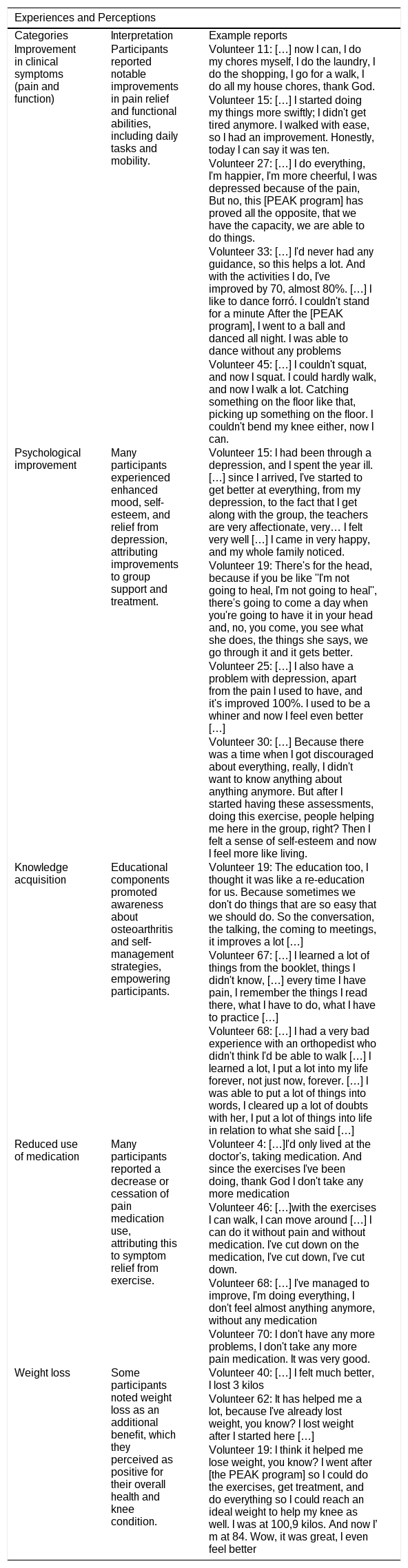
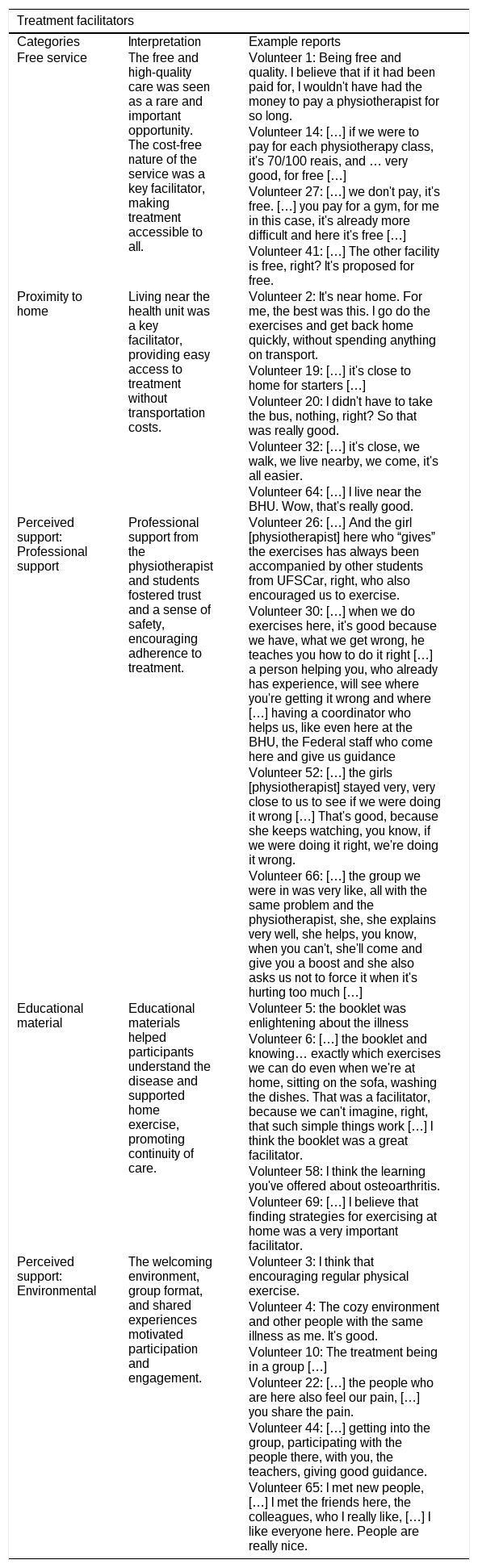
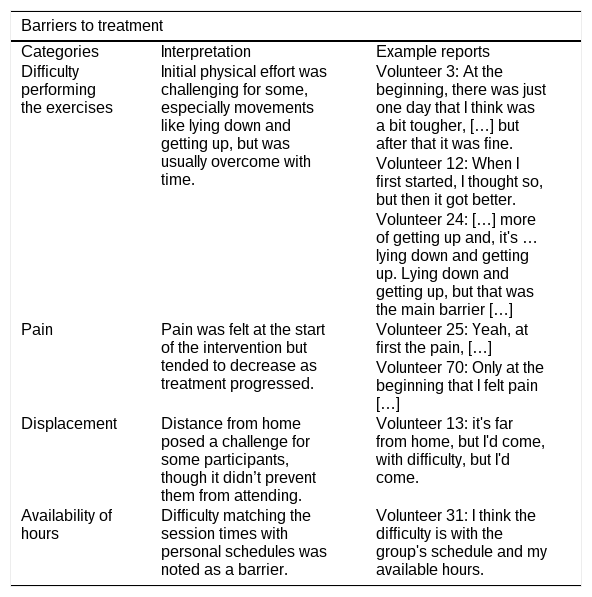
Qualitative outcomesSeventy individuals were interviewed in person. From the interpretation of the results, 14 categories were generated within three dimensions: experiences and perceptions related to treatment, barriers to treatment, and facilitators of treatment. All the dimensions and categories are listed in Boxes 1, 2 and 3. All the reports are transcribed in the Supplementary Material.
Dimension 1: experiences and perceptions of treatmentThe experiences and perceptions of treatment were organized into five main categories: (1) clinical symptoms (pain and function); (2) psychological improvement; (3) knowledge acquisition; (4) reduced use of medication; and (5) weight loss. Participants reported substantial pain relief and functional gains, with many describing the ability to perform daily tasks, walk longer distances, and even resume recreational activities without assistive devices. Psychological improvements were also highlighted, including reduced depression, increased self-esteem, and greater motivation to engage in life activities. Knowledge gained from the PEAK program and the booklet helped participants better understand KOA and manage symptoms independently. Another notable outcome was the reduced reliance on medication, as several participants reported reducing or discontinuing analgesics after exercises. Lastly, some participants experienced weight loss, which they perceived as contributing to symptom improvement and overall well-being. No participant reported negative experiences or perceptions of the treatment. These improvements complement the quantitative findings of reduced pain and enhanced function, providing personal narratives that illustrate the program's practical impact on daily life. Examples of these experiences are provided in Box 1.
Dimension 2: facilitators of treatmentThe facilitators dimension was organized into five main categories: (1) free service (no cost and perceived quality of the program); (2) proximity to home (easy access and reduced commuting); (3) perceived professional support (expert guidance, encouragement, and personalized follow-up); (4) educational material (clarification on KOA and strategies for home exercises); and (5) perceived environmental support (group setting, social interaction, and welcoming atmosphere). These facilitators were crucial for treatment adherence, as participants emphasized that gratuity and accessibility reduced financial and logistical barriers; professional and social support increased trust and motivation; the booklet enhanced understanding and autonomy; and the group environment fostered bonding and continued engagement. Together, these facilitators shed light on the contextual factors that support the high adherence rates observed in the quantitative analysis, particularly among participants with limited financial or transportation resources. Illustrative quotes for these categories are presented in Box 2.
Dimension 3: barriers to treatmentFour categories were identified in this dimension: (1) difficulty performing the exercises (initial challenges with specific movements); (2) pain (particularly at the beginning of the program); (3) Commuting (distance from home to the treatment site); and (4) availability of hours (scheduling conflicts with group sessions). Overall, no significant barriers to implementing the program were reported. Most participants reported no obstacles during treatment; when difficulties arose, they were mostly related to individual factors, such as pain or specific exercises, which tended to improve over time with adaptation. Only two participants reported logistical barriers, including session schedules and the distance to the treatment site. Identifying these barriers helps contextualize the few instances of missed sessions in the quantitative data and points to areas for future program adjustments. Examples of these difficulties can be found in Box 3.
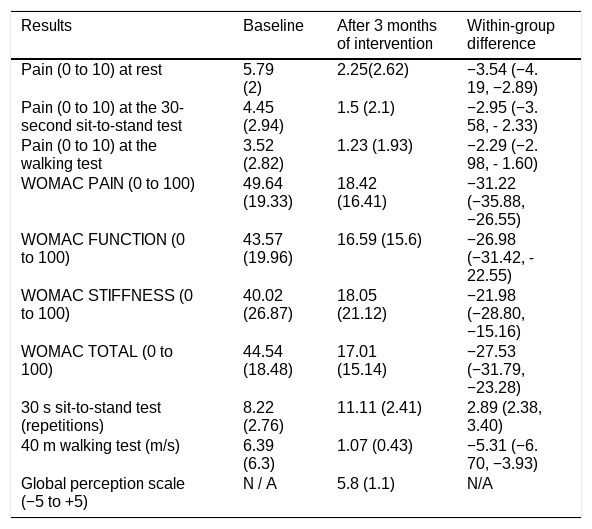
Changes over timeExploratory clinical outcomesTable 4 shows the exploratory clinical outcomes (pain intensity, knee-related health condition, functional tests and perception of overall effect) of the sample at baseline and after 12 weeks of treatment. Pain intensity reduced after three months of intervention, with a within-group difference of −3.54 (95% CI: −4.19, −2.89) for pain at rest, −2.95 (95% CI: −3.58, −2.33) for pain during the 30-second sit-to-stand test, and −2.29 (95% CI: −2.98, −1.60) for pain during the 40-meter walk test. For WOMAC subscales, symptoms improved after the intervention; mean differences were −31.22 (95% CI: −35.88, −26.55) for pain, −26.98 (95% CI: −31.42, −22.55) for function, −21.98 (95% CI: −28.80, −15.16) for stiffness, and −27.53 (95% CI: −31.79, −23.28) for total score. Improvements were also observed in physical performance, with a mean difference of 2.89 repetitions (95% CI: 2.38, 3.40) in the 30-second sit-to-stand test and −5.31 m/s (95% CI: −6.70, −3.93) in the 40-meter walk speed. Patient-perceived global improvement at three months was 5.8 (SD 1.1) on a − 5 to +5 scale.
Results of clinical variables.
WOMAC Pain subscale, range 0 to 20, MCID 8.74; WOMAC Stiffness subscale, range 0 to 8, MCID 12%; WOMAC Function subscale, range 0 to 68, MCID 12%; WOMAC Total Index, range 0 to 96, MCID 12%; 30-seconds sit-to-stand test, repetitions (cycles), MCID 2; Accelerated walking test of 40 m, speed (meters per second), MCID 0.2. And the MCID for pain intensity 1.75.
Descriptive results of the participants' reports in relation to the dimension of experiences and perceptions with the treatment.
Descriptive results of participants' reports in relation to the Facilitators dimension of treatment.
Descriptive results of participants' reports in relation to the dimension of Barriers to treatment.
At baseline, 48 participants (64%) were taking some form of medication to control knee pain. After three months, this number dropped to 22 participants (26%). Seven participants (8.3%) reported using locomotor aids at baseline. After three months, no participants reported using locomotor aids. Before the intervention, only 10 participants (12%) reported performing regular knee strengthening exercises. After the intervention, 65 participants (93%) reported practicing these exercises regularly. At three-month follow-up, participants reported performing strengthening exercises an average of 2.82 days per week (SD 1.32).
DiscussionThis study showed that a physical therapist-led, group-based exercise and health education program for individuals with KOA can be delivered with high feasibility and acceptability in Brazilian primary health care across two socioeconomically distinct municipalities. Physical therapists trained via the PEAK-Portuguese e-learning course successfully integrated the program into routine service delivery, with high participant recruitment and satisfaction that met or exceeded predefined feasibility thresholds. Qualitative findings reinforced the strong acceptability of the program. Key facilitators included free access to care, proximity of services, and ongoing supervision by trained physical therapists. The group format contributed to peer support and motivation, while also encouraging health-seeking behaviors such as dietary consultation for weight control and supporting psychosocial well-being. Barriers were few, including early-session pain, difficulty performing certain exercises, travel distance, and scheduling conflicts. These were generally mitigated over time through program adaptations and participant acclimatization, suggesting that these were modifiable challenges rather than structural impediments. Exploratory clinical outcomes indicated within-group improvements; however, given the absence of a control group, these changes should be interpreted with caution.
This study represents one of the first reported implementation context study of a structured, evidence-based exercise and health education program for KOA delivered by trained physical therapists in a low- and middle-income country context, specifically within Brazil’s SUS. Our findings align with the results of other implementation initiatives, which reinforced that structured education and exercise programs for people with KOA can be incorporated into health care services, such as The Active with OsteoArthritis37 and Good Life with OsteoArthritis from Denmark.38 However, unlike most of these initiatives developed in high-income countries, this study evaluated implementation within the public health system of a middle-income country, where factors such as service organization, workforce availability, and access barriers can influence the delivery of the intervention. In the context of SUS, characterized by a great diversity of regional realities and a strong demand for qualifications, the training of physical therapists has been fundamental and accessible, generating a significant impact on daily practice. In this sense, we offer a free, evidence-based online course that aligns with SUS's training needs.
We used mixed methods to identify in-depth barriers and facilitators in the implementation of public health policies.39 This can be useful for informing evidence-based decision-making and implementing appropriate public health interventions.40 Also, we had participants from two cities in different regions of Brazil, with varying human development index, population sizes, and cultural and environmental characteristics.
Participants reported largely positive experiences with the program, reflecting high acceptance of the intervention. More than just an exercise program, the intervention was designed to provide an opportunity to better understand the condition and to learn practical strategies for managing symptoms independently. The educational component appears to have boosted participants' confidence and fostered self-management of knee osteoarthritis, supporting evidence that combining health education with physical exercise improves patient engagement and facilitates behavioral changes for disease management.9,41,42 We also observed high participant adherence to the 12-week intervention, with increased weekly exercise practice, as evidenced by quantitative results and participant reports. Studies indicate that patient education43 and professional support44 are positive factors in adherence to physical exercise. We believe that the supervision of trained physical therapists, together with health education, contributed significantly to improved adherence, greater program acceptability, and the overcoming of difficulties faced. In addition, many participants in our study reported the importance of physical therapist supervision to ensure exercises were performed correctly and to learn how to perform them to manage KOA. Another strategy favoring adherence was the implementation of exercise groups. Practicing exercises in groups can be more stimulating, fun, and motivating, and can help create bonds and commitment, sharing experiences.45,46
Corroborating the literature, our results showed that individuals were more motivated and engaged in treatment with exercises that were fun and easy to perform. From a service delivery perspective, implementing groups also offers a potential strategy to reduce PHC waiting lists for KOA treatment, thereby addressing a persistent capacity constraint.47,48
Care provided at no cost to participants and the proximity of the treatment site to the participants' homes were significant facilitators, reducing both financial and transport-related barriers to participation. Access barriers, particularly transportation difficulties, emerged as contextual factors that may influence participation in exercise-based programs within SUS. Although adherence among participants who completed the intervention was high, qualitative findings highlighted that geographic accessibility may represent a challenge for some individuals. One participant reported difficulties attending sessions because the program was offered in a different BHU territory from her usual area of care. Despite successfully accessing the intervention, this required additional effort and logistical planning.
These findings should be interpreted within the context of the SUS territorialization strategy, which aims to organize health services according to population needs, geographic characteristics, and local resources.49 When services are unavailable within users' territories or transportation options are limited, access barriers may affect participation, particularly during broader implementation and scale-up. Therefore, expanding the availability of evidence-based exercise programs across BHU territories may facilitate equitable access and reduce logistical barriers while maintaining the high adherence observed among participants who can engage with the intervention.
Although the absolute number of participants differed between municipalities, the recruitment rates were similar between Santa Cruz (85.7%) and São Carlos (87.5%). The smaller number of participants in Santa Cruz was primarily due to the lower number of eligible individuals identified in that municipality, rather than to recruitment or feasibility issues. In contrast, São Carlos had a larger population covered by primary health care units, increasing the pool of potentially eligible participants. These findings suggest that the program was feasible in both municipalities despite differences in local context. Furthermore, the consistently high implementation outcomes, including acceptability, appropriateness, fidelity, and participant adherence, indicate that the implementation strategy was robust and adaptable across different primary health care settings. Differences in recruitment between municipalities likely reflect contextual factors, such as population size, service organization, and characteristics of the local health system, which are known to influence the implementation of health interventions across settings.50,51 Collectively, these findings support the program's potential for scalability within the Brazilian primary health care system, although future studies in more diverse regions are warranted to further evaluate its generalizability and long-term sustainability.
Another important aspect was the flexibility in exercise prescription. Physical therapists were encouraged to adapt the exercises to the realities of the local services and the participants' capabilities. Such adaptations are expected when implementing complex interventions in real-world clinical practice settings and can enhance the predictability of these interventions without necessarily compromising their fidelity. This aligns with literature emphasizing that successful implementation often requires context-driven adaptation, but it also underscores the need to monitor fidelity alongside flexibility.52
Although clinical outcomes were not the primary focus of this study, exploratory analyses suggested improvements in pain and physical function following participation in the program.52 Our results are consistent with the literature that health education and physical exercise (regardless of type, duration, and delivery methods) are feasible and potentially beneficial for individuals with KOA, regardless of severity. 53–55 However, as this study was designed to evaluate the implementation rather than the effectiveness of the intervention, these findings should be interpreted with caution and considered solely as exploratory evidence. Qualitative reports of improvements in mobility, the performance of daily activities, and symptom management complement these results by demonstrating how participants perceived the intervention's impact on their routines.37,38
Some limitations should be considered. First, the absence of a control group limits the interpretation of the clinical results. Second, although contextual adaptation facilitated implementation, differences in intervention delivery across physical therapists and primary care services may have influenced the observed outcomes. Third, although retention was 83%, the dropout rate exceeded that anticipated in the sample size calculation, which may have reduced the statistical power of the exploratory analyses. Moreover, the acceptability findings were based only on participants who completed the intervention. While these participants reported positive experiences, the higher-than-expected dropout rate suggests that barriers to engagement and retention may have existed among those who discontinued participation. Because the reasons for dropout were not systematically investigated, future implementation studies should explore the perspectives of non-compliers to better understand barriers to participation and inform strategies to improve adherence and long-term implementation. Finally, this study primarily evaluated participants' perspectives and did not include other key stakeholders involved in the implementation process, such as physical therapists, managers, and decision-makers.50,51
Future studies should investigate the barriers and facilitators faced by physical therapists and municipal managers during implementation, and include more implementation-related outcomes (maintenance of clinical effect, adherence to self-management, sustainability, long-term effects, etc.). These evaluations are essential for improving program implementation and ensuring more effective results.
ConclusionsThis study showed that a physical therapist-led, group-based exercise and health education program for individuals with KOA can be implemented with high feasibility and acceptability in Brazilian primary health care settings. Facilitators supporting implementation included free access to care, proximity to services, professional support, educational resources, and the supportive group environment, which helped reduce financial and logistical barriers and promoted participant engagement. These findings support the potential for broader implementation of the program within SUS, including municipalities with diverse socioeconomic contexts. Exploratory clinical outcomes indicated improvements in pain and physical function, although these findings should be interpreted with caution.
FundingThis study was supported by the Fundação Coordenação de Aperfeiçoamento de Pessoal de Nível Superior (no 001). Hugo Jario Almeida Silva was financially supported by Conselho Nacional de Desenvolvimento Científico e Tecnológico, Brazil (Process No. 140216/2021-9); and by the Sao Paulo Research Foundation (FAPESP), process 2026/00103-4. Julya Perea was supported by the São Paulo Research Foundation (FAPESP, Grant number: 2022/03302-7). Gabriel Ferreti was supported by the São Paulo Research Foundation (FAPESP, Grant number: 2022/15594-2). Angélica Ferrari was supported by the São Paulo Research Foundation (FAPESP, Grant number: 2023/00175-7). Luiz Hespanhol was supported by the Sao Paulo Research Foundation (FAPESP), process 2025/10208-5; and by the National Council for Scientific and Technological Development – Brazil (CNPq), process 310943/2023-0. Tania Salvini is a researcher for the National Council for Scientific and Technological Development, Brazil (no. 302169/2018-0).
Data sharing statementAll data collected during the review process were compiled electronically. Data integrity and validity were verified. The data that underlie the results reported in this paper were shared (text, tables, figures, e-supplements). Requests for data or any form of analysis should be directed to Hugo Jario de Almeida Silva or Tania Salvini.
Patient involvement statementStudy participants were not involved in the design, conduct, interpretation, or translation of the current research.
Hugo Jario Almeida Silva, Tania Salvini and Bruno T Saragiotto created the PEAK-Portuguese course.
The authors acknowledge all participants, physiotherapists, community collaborators, and the Health Departments of São Carlos and Santa Cruz for their valuable support, commitment, and contributions to this study. We particularly thank the primary health care teams, community partners, local leaders, and other collaborators who supported the engagement of participants, facilitated the implementation of the intervention, and contributed to the successful delivery of the program within the Brazilian Unified Health System (SUS).We also extend our special gratitude to Rana S. Hinman and Kim Bennell for their pivotal role in establishing the international collaboration and facilitating the availability of the PEAK course in Portuguese, which was instrumental to the development and implementation of this study.