
Photobiomodulation therapy (PBMT) has shown benefits for musculoskeletal disorders, but its additive effects when combined with the Multimodal Therapeutic Intervention Program (MTIP) in chronic nonspecific neck pain (CNSNP) remain uncertain.
ObjectiveTo compare the effectiveness of PBMT combined with an MTIP on functional capacity, pain intensity, catastrophizing, and kinesiophobia in individuals with CNSNP.
MethodsThis was a two-arm, parallel, single-blind, superiority randomized controlled trial. Sixty-two participants with CNSNP were randomly allocated to either PBMT+MTIP or MTIP only. Both groups received an 8-week MTIP program; only the experimental group received additional infrared laser PBMT. The primary outcome was functional disability (Neck Disability Index). Secondary outcomes included pain intensity at rest and during movement (Numerical Pain Rating Scale), catastrophizing (Pain-Related Catastrophizing Thoughts Scale), kinesiophobia (Tampa Scale for Kinesiophobia), functional disability (Copenhagen Neck Functional Disability Scale), and global perceived effect. Outcomes were assessed at baseline, post-intervention, and one-month follow-up. Linear mixed models were used for analysis.
ResultsFifty-six participants completed the 8-week follow-up, and fifty-two completed the 1-month follow-up. Statistically significant differences favoring the MTIP group were found in functional disability post-intervention (4.06, 95% CI 2.83 to 5.28) and at the one-month follow-up (3.23, 95% CI 1.97 to 4.48). Pain intensity at rest also showed statistically significant differences favoring the MTIP group post-intervention (0.54, 95% CI 0.14 to 0.95) and at the one-month follow-up (0.79, 95% CI 0.37 to 1.21).
ConclusionUnder the specific PBMT dosage conditions, adding PBMT to MTIP did not yield further improvements over MTIP alone in individuals with CNSNP.
Therapeutic exercise is the first-line approach for alleviating pain and improving functionality in individuals with chronic nonspecific neck pain (CNSNP).1,2 No specific type of exercise has shown clear superiority. Practices such as motor control exercises, yoga, Pilates, Tai Chi, Qigong, and strengthening exercises effectively reduce pain intensity and disability, and resistance training combined with mindfulness-based exercises is also advised.3,4 Overall, systematic reviews suggest that, despite the low quality of many original studies, various exercise modalities offer short-term relief for chronic pain and functional benefits for individuals with CNSNP.5
Manual therapy, including joint mobilization techniques, is often recommended to manage CNSNP, as it can help reduce pain, improve range of motion, and enhance function.6,7 It may also influence spinal excitability, motor neuron activity, inflammatory mediators, and cortical function.6,7 Combining manual therapy with therapeutic exercise is recommended and has a 91% likelihood of being the most effective approach during the initial consultation.8,9 Overall, multimodal treatments that integrate manual therapy (mobilization or manipulation) with therapeutic exercises are more effective than solitary interventions for CNSNP.10
In recent years, low-level laser therapy (LLLT), now known as photobiomodulation therapy (PBMT), has emerged as a promising treatment for neck pain and disability.11 PBMT relies on the interaction of light with natural chromophores, in which light is absorbed by mitochondrial cytochromes, thereby catalyzing oxidative phosphorylation and the production of adenosine triphosphate (ATP). Additionally, it promotes the dissociation of nitric oxide from cytochrome c oxidase, thereby facilitating cellular respiration. Furthermore, PBMT increases reactive oxygen species while decreasing reactive nitrogen species, thereby enhancing intracellular signaling pathways related to tissue regeneration, inflammatory responses, and pain relief.11,12 The mechanisms involved include anti-inflammatory effects such as the suppression of interleukin-6 (IL-6), reduced mRNA expression of kinin receptors, and pro-inflammatory cytokines like tumor necrosis factor-alpha (TNF-α) and interleukin-1 beta (IL-1β), as well as decreased expression of cyclooxygenase-2 (COX-2). Additional effects include neural blockade, stimulation of lymphatic activity, tissue repair, and reduction of muscle spasm. These outcomes are achieved through enhanced migration and activation of cells to the injured area, decreased production of inflammatory cytokines by neutrophils, increased neutrophil phagocytosis, and elevated release of growth factors.13
Although the cellular mechanisms of PBMT are well understood, gaps remain in our understanding of its clinical effects on CNSNP.11 PBMT appears to reduce pain immediately after application, with relief lasting up to 22 weeks after treatment completion in individuals with CNSNP.14 It shows promising results, particularly in pain relief and functional improvements for these individuals.11 However, when combined with therapeutic exercises, PBMT typically provides significant benefits mainly for pain intensity, without leading to clinically relevant changes.15 These findings are notably influenced by considerable heterogeneity and potential bias present among studies exploring PBMT for CNSNP. In addition to the lack of robustness in clinical findings, the heterogeneity among studies, and the risk of bias, this study is warranted given the limited number of investigations that closely reflect real-world clinical practice. Specifically, few studies have used the most effective therapeutic resources, including therapeutic exercises and manual therapy, to develop a Multimodal Therapeutic Intervention Program (MTIP) that integrates PBMT for individuals with CNSNP. Therefore, this study evaluated whether PBMT, in addition to an MTIP, is superior to the program alone in improving functional capacity and reducing pain intensity, catastrophizing, and kinesiophobia in individuals with CNSNP.
MethodsThis is a single-blind, superiority randomized controlled trial (RCT) with two parallel arms and blinded assessors. It was conducted at the Human Movement Laboratory of Nove de Julho University in São Paulo, Brazil. Data collection and interventions occurred between July 2023 and March 2025. The study followed the guidelines established by the Consolidated Standards of Reporting Trials (CONSORT),16 recommendations for studies involving PBMT17 and received approval from the Human Research Ethics Committee of Universidade Nove de Julho (CAAE: 58,616,022.1.0000.5511). The research protocol was prospectively registered in the ClinicalTrials.gov registry (NCT05400473) and published.18
Sample calculationThe sample calculation was conducted a priori using Ene software (version 3.0; Autonomous University of Barcelona, Spain). It was based on detecting differences of 7 points between the groups, assuming a standard deviation of 7.19,20 Therefore, considering a statistical power of 80% and an alpha of 5%, a minimum of 30 individuals per group was estimated.
Eligibility criteriaPosters, lectures at public health units, and consultations with individuals on the waiting list for rehabilitation clinics in São Paulo were used to recruit participants. Male and female, aged between 18 and 65 years, with CNNP, defined as pain in the posterior cervical region between the superior nuchal line and the first thoracic spinous process and/or shoulder girdle, experienced neck pain for >90 days and had a Neck disability index (NDI) score ≥ 5 and a Numerical Pain Rating Scale (NPRS) score ≥ 3 at rest or during active cervical movement.21,22
The study excluded individuals with neck pain due to nerve root involvement, assessed through clinical examination of dermatomes, myotomes, and reflexes, prior spine surgery, those who received physiotherapy for neck pain within the last three months, severe spinal disorders such as fractures, tumors, or inflammatory and infectious diseases, any contraindications to PBMT, as well as rheumatic, metabolic, neurological, or cardiopulmonary diseases. Additionally, individuals with artificial cardiac pacemakers, sensory deficits, skin conditions- especially at the application site- and a history of tumors or cancer within the past five years were also excluded.21,22
Randomization and concealed allocationThe clinical research coordinator, who was not involved in the treatment or outcome evaluation stages of the study, conducted the randomization process using a randomly generated sequence divided into 16 blocks of 4 codes, while maintaining a 1:1 allocation ratio between the (PBMT + MTIP) and (MTIP) groups, created with software (Excel, Microsoft Corporation, Washington). The random codes were placed in opaque, sealed envelopes, sequentially numbered from 1 to 64, to ensure the confidential assignment of participants to the study groups. After completing the eligibility assessment, a researcher opened the envelopes and directed participants to the designated researchers for their respective groups.
The clinical research coordinator for the study trained two investigators to administer the assessment instruments, ensuring no bias during data collection. Each investigator brought an average of 15 years of experience in managing recruitment, eligibility assessment, and data collection, while another oversaw randomization and allocation concealment. None participated in other phases of the study. Blinding of participants and physical therapists was not feasible. During the initial session, participants were informed of their assigned intervention. Sessions took place in a private university laboratory room, with 30-minute intervals to minimize participant contact. Additionally, participants were instructed not to discuss the interventions with anyone else.
AssessmentAssessment proceduresParticipants who met the study’s inclusion criteria were informed about its objectives and methods before signing the informed consent form. Initially, data on the participants' sociodemographic characteristics were collected, including age, sex, weight, height, academic level, physical activity, and time since diagnosis. Following this, assessment instruments related to the study outcomes, such as functional capacity, pain intensity, catastrophizing, and kinesiophobia, were administered. At the conclusion of the intervention protocols and one month later, the same outcomes and overall perceived effects were reassessed. Additionally, potential adverse effects of the interventions were recorded throughout the study, particularly during each assessment.
Primary outcomesFunctional disability is assessed using the NDI, which is a widely recognized tool for evaluating neck pain-related functional disability. The index encompasses daily activities, the impact of pain, and psychosocial factors. It consists of 10 items, each rated from 0 to 5. A higher score indicates a greater level of functional disability, with a minimal clinically important difference (MCID) of 7 points.22
Secondary outcomesThe NPRS is a tool that ranges from 0 to 10 points and measures pain intensity at rest. It considers the pain experienced over the past seven days (NPRS-r) and during active cervical spine movement (NPRS-m). A higher score indicates greater pain intensity, and the MCID is 2.5 points.23
Catastrophic thoughts were evaluated using the Pain-Related Catastrophizing Thoughts Scale (PRCTS). This scale assesses dysfunctional thoughts related to pain, emphasizing rumination and hopelessness, which are strongly linked to disability and pain perception. A higher score signifies a greater level of catastrophizing.24
The Tampa Scale for Kinesiophobia (TSK) assesses kinesiophobia using 17 items that encompass fear of movement, avoidance of activity, and somatic focus. A higher score signifies a greater level of kinesiophobia. The MCID is 4 points.25
The Copenhagen Neck Functional Disability Scale (CNFDS) was used to assess the impact of neck pain on function and daily activities. A higher score indicates a greater level of functional disability. The MCID is 10 points.26
The World Health Organization Disability Assessment Schedule (WHODAS) 12-item version evaluates various aspects of functioning, including cognition, mobility, self-care, social interaction, daily activities, and social participation, as they relate to pain. A higher score reflects a greater level of disability and impaired functioning. The MCID is 9 points.27
The Global Perceived Effect Scale (GPES) was used to evaluate participants' self-reported progress after the intervention. The GPES is an 11-point scale ranging from −5 (indicating worsening) to 0 (indicating no change) to +5 (indicating improvement), with higher scores reflecting a greater perceived change.28
Intervention proceduresTwo physical therapists, each with >15 years of experience in managing chronic pain, performed all interventions for both groups. Participants were randomly assigned to either the PBMT + MTIP group or the MTIP group. The protocol for both groups consisted of two phases, each lasting four weeks, for a total of eight weeks, with two sessions per week on non-consecutive days. Each session lasted sixty minutes.
Before the first treatment session, participants in both groups attended a one-on-one education session lasting about 30 min, led by the treating physical therapist. The session used standardized verbal and visual materials from the Retrain Pain Foundation and covered the mechanisms of chronic pain, coping strategies, strategies to prevent hypervigilance, beliefs and myths about pain, and information on other treatment options, surgeries, and diagnostic tests.29
The MTIP was divided into two phases. Phase 1 included 11 interventions, while Phase 2 included 24. Phase 1 (weeks 1 to 4) focused on reducing pain, improving cervical mobility, postural alignment, and basic motor control by combining manual therapy techniques with low-load cervical and scapular exercises. Phase 2 (weeks 5 to 8) expanded the program to 24 interventions, increasing resistance and complexity through cervical stabilization, strengthening the neck and shoulder girdle, dynamic neuromuscular control tasks, and functional exercises using elastic bands and therapeutic balls. These interventions were performed in three sets of 8 to 12 repetitions or 10 to 15 s each, with a 120-second rest between sets (see Appendix 1 for details)18,30,31
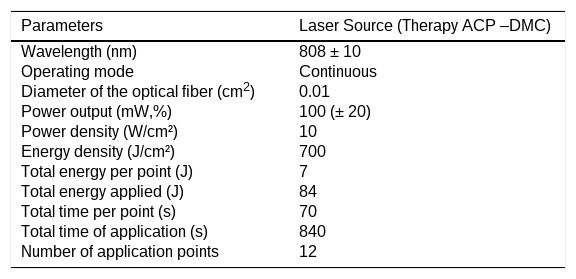
After each MTIP session, participants in the PBMT + MTIP group received PBMT infrared laser therapy (ACP, DMC) according to the parameters outlined in Table 1. This dosage adheres to the standards established by the World Association for Photobiomodulation Therapy (WALT).32
Representation of the physical parameters used during photobiomodulation therapy.
Abbreviations: nm, Nanometer; mW, Milliwatt; W/cm, Watts per centimeter; J/cm², Joules per square centimeter; J, Joules; s, second.
The research participant had their cervical region exposed for the procedure. Participants were seated with lateral support, and their arms rested at their sides. The physical therapist positioned themselves behind the participant’s cervical spine, placing the PBMT device perpendicular to each of the 12 predefined points in the cervical region at points bilaterally at the exit of the nerve roots: 2 points at C2, 2 points at C3, 2 points at C4, 2 points at C5, 2 points at C6, and 2 points at C7. The applicator remained stationary, positioned perpendicularly, and supported by the muscles, 2 cm lateral to the spinous processes from C2 to C7.
Statistical analysisThe statistical analysis adhered to intention-to-treat principles. Histograms were created to assess the normality of the data, with all results indicating normal distributions. Results were presented as means and standard deviations (SD). Adjusted between-group mean differences (MD) and 95% confidence intervals (CI) were calculated using mixed linear models that accounted for group interaction, time, and group-by-time interaction. A statistically significant difference was defined as p < .05. SPSS version 22.0b (IBM SPSS Corp.) was used for the statistical analysis.
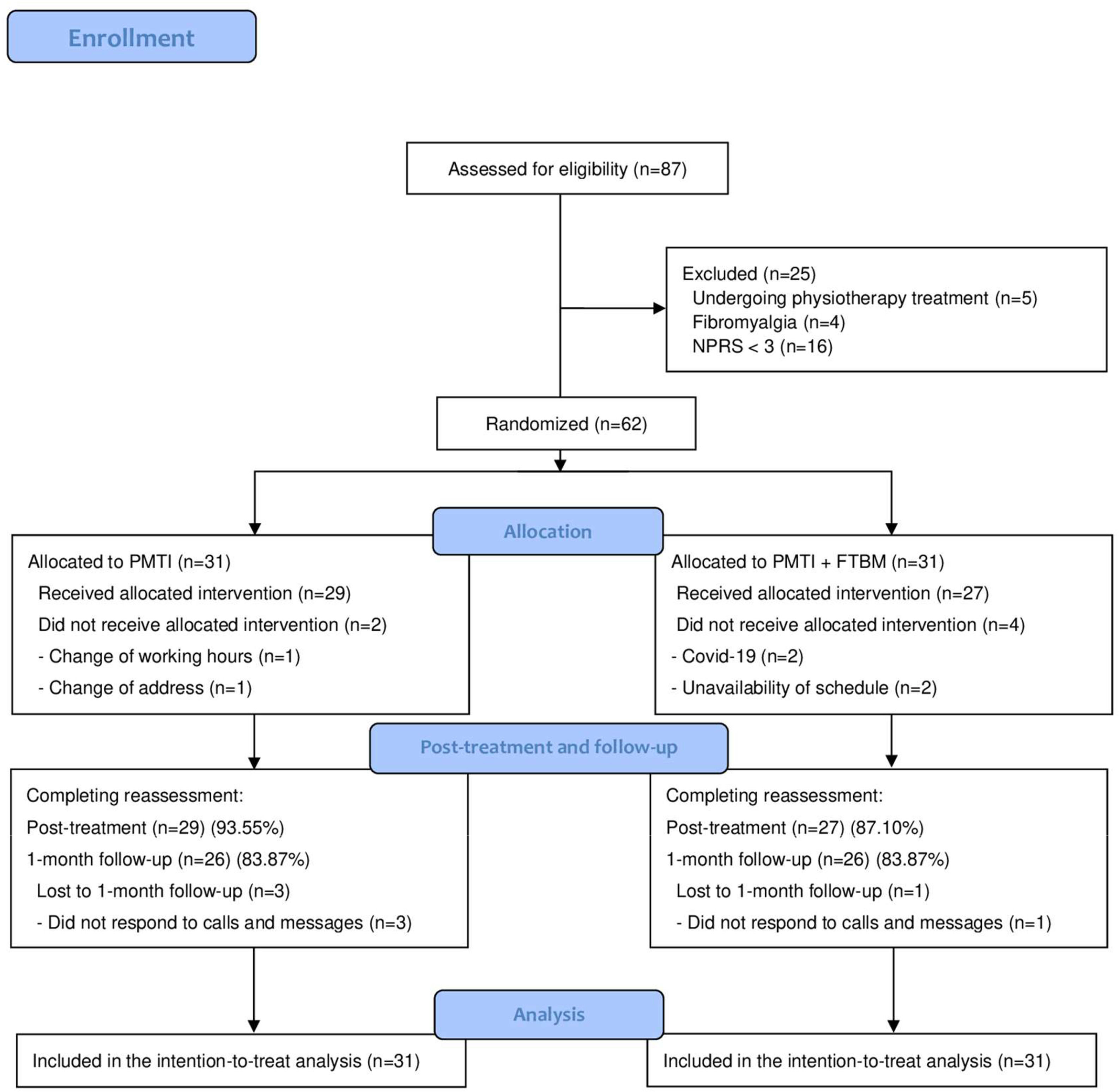
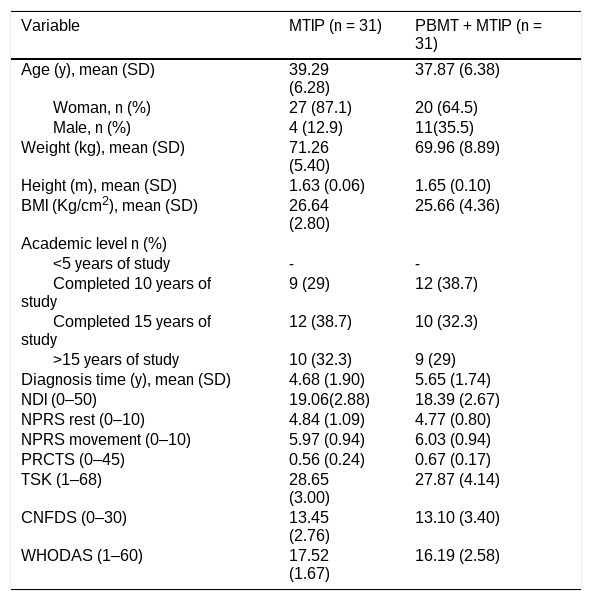
ResultsEighty-seven individuals were selected for eligibility verification. Sixty-two met the inclusion criteria, agreed to participate in the study, and signed the informed consent form (Fig. 1). The sixty-two participants included in the study were randomly divided into the MTIP (n = 31) and PBMT + MTIP (n = 31) groups. Twenty-nine individuals in the MTIP group and twenty-seven in the PBMT + MTIP group completed the eight-week intervention (Fig. 1). Twenty-six individuals from both study groups completed the one-month follow-up evaluation (Fig. 1). The groups were similar at baseline with respect to both clinical and sociodemographic characteristics (Table 2).
Baseline characteristics.
Abbreviations: y, Years; SD, Standard Deviation; MTIP, Multimodal Therapeutic Intervention Program; PBMT, Photobiomodulation Therapy; NDI, Neck Disability Index (high score = higher level of functional disability); NPRS, Numeric Pain Rating Scale (high score = higher level of pain intensity); PRCTS, Pain-related Catastrophizing Thoughts Scale (high score = higher level of catastrophizing); TSK, Tampa Scale for Kinesiophobia (high score = higher level of Kinesiophobia); CNFDS, The Copenhagen Neck Functional Disability Scale (high score = higher level of functional disability); WHODAS, World Health Organization Disability Assessment Schedule (high score = higher level of disability and functioning).
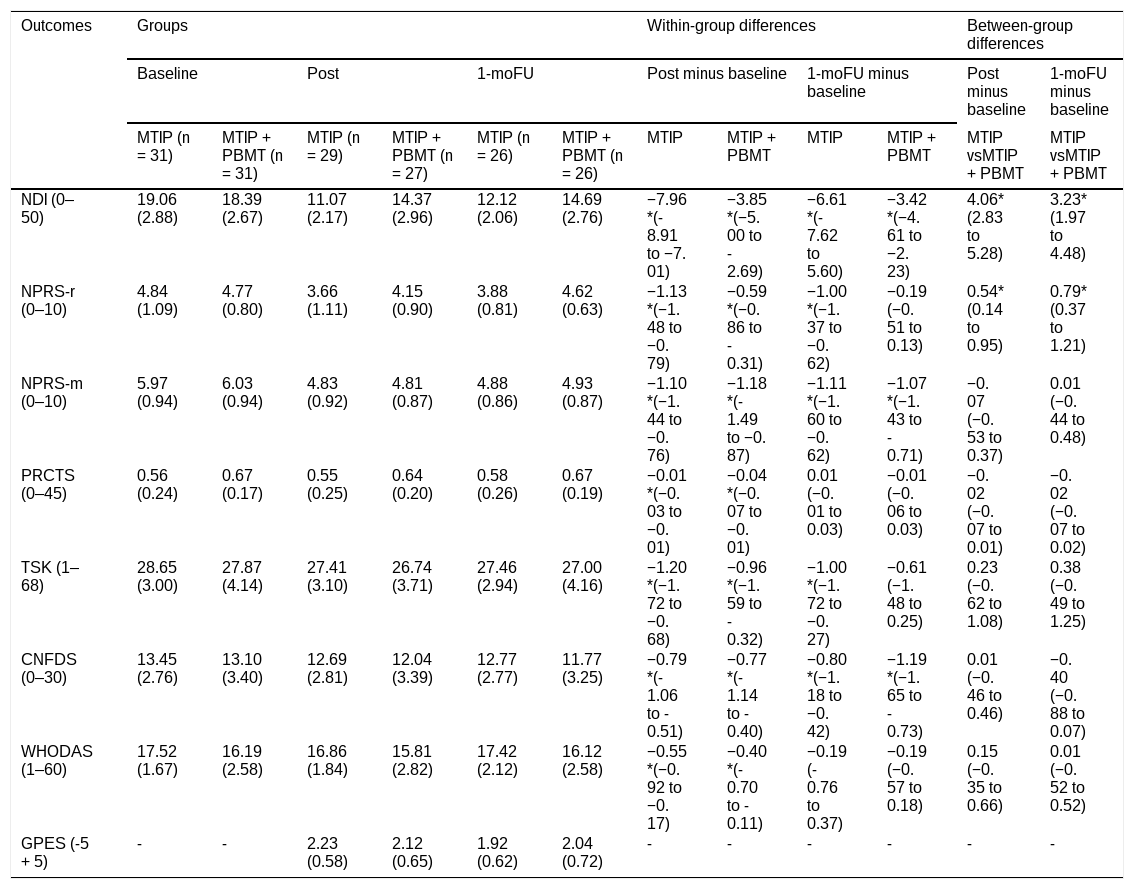
Statistically significant differences were observed between the MTIP and PBMT + MTIP groups following the intervention (4.06, 95% CI 2.83 to 5.28) and at the one-month follow-up (3.23, 95% CI 1.97 to 4.48) concerning functional disability, assessed by the NDI, as well as pain intensity at rest, measured using the NPRS-r post-intervention (0.54, 95% CI 0.14 to 0.95) and at the one-month follow-up (0.79, 95% CI 0.37 to 1.21), both favoring the MTIP group (Table 2). However, none of these differences met the MCID reference values. Significant intra-group differences were identified in both the MTIP and PBMT + MTIP groups after the intervention and at the one-month follow-up (Table 3).
Mean (SD) of groups, mean (SD) within-group differences, and mean (95%CI) between-group differences.
| Outcomes | Groups | Within-group differences | Between-group differences | |||||||||
|---|---|---|---|---|---|---|---|---|---|---|---|---|
| Baseline | Post | 1-moFU | Post minus baseline | 1-moFU minus baseline | Post minus baseline | 1-moFU minus baseline | ||||||
| MTIP (n = 31) | MTIP + PBMT (n = 31) | MTIP (n = 29) | MTIP + PBMT (n = 27) | MTIP (n = 26) | MTIP + PBMT (n = 26) | MTIP | MTIP + PBMT | MTIP | MTIP + PBMT | MTIP vsMTIP + PBMT | MTIP vsMTIP + PBMT | |
| NDI (0–50) | 19.06(2.88) | 18.39(2.67) | 11.07(2.17) | 14.37(2.96) | 12.12(2.06) | 14.69(2.76) | −7.96*(- 8.91 to −7.01) | −3.85*(−5.00 to - 2.69) | −6.61*(- 7.62 to 5.60) | −3.42*(−4.61 to −2.23) | 4.06* (2.83 to 5.28) | 3.23* (1.97 to 4.48) |
| NPRS-r (0–10) | 4.84(1.09) | 4.77(0.80) | 3.66(1.11) | 4.15(0.90) | 3.88(0.81) | 4.62(0.63) | −1.13*(−1.48 to −0.79) | −0.59*(−0.86 to - 0.31) | −1.00*(−1.37 to −0.62) | −0.19(−0.51 to 0.13) | 0.54* (0.14 to 0.95) | 0.79* (0.37 to 1.21) |
| NPRS-m (0–10) | 5.97(0.94) | 6.03(0.94) | 4.83(0.92) | 4.81(0.87) | 4.88(0.86) | 4.93(0.87) | −1.10*(−1.44 to −0.76) | −1.18*(- 1.49 to −0.87) | −1.11*(−1.60 to −0.62) | −1.07*(−1.43 to - 0.71) | −0.07 (−0.53 to 0.37) | 0.01 (−0.44 to 0.48) |
| PRCTS (0–45) | 0.56(0.24) | 0.67(0.17) | 0.55(0.25) | 0.64(0.20) | 0.58(0.26) | 0.67(0.19) | −0.01*(−0.03 to −0.01) | −0.04*(−0.07 to −0.01) | 0.01(−0.01 to 0.03) | −0.01(−0.06 to 0.03) | −0.02 (−0.07 to 0.01) | −0.02 (−0.07 to 0.02) |
| TSK (1–68) | 28.65(3.00) | 27.87(4.14) | 27.41(3.10) | 26.74(3.71) | 27.46(2.94) | 27.00(4.16) | −1.20*(−1.72 to −0.68) | −0.96*(−1.59 to - 0.32) | −1.00*(−1.72 to −0.27) | −0.61(−1.48 to 0.25) | 0.23 (−0.62 to 1.08) | 0.38 (−0.49 to 1.25) |
| CNFDS (0–30) | 13.45(2.76) | 13.10(3.40) | 12.69(2.81) | 12.04(3.39) | 12.77(2.77) | 11.77(3.25) | −0.79*(- 1.06 to - 0.51) | −0.77*(- 1.14 to - 0.40) | −0.80*(−1.18 to −0.42) | −1.19*(−1.65 to - 0.73) | 0.01 (−0.46 to 0.46) | −0.40 (−0.88 to 0.07) |
| WHODAS (1–60) | 17.52(1.67) | 16.19(2.58) | 16.86(1.84) | 15.81(2.82) | 17.42(2.12) | 16.12(2.58) | −0.55*(−0.92 to −0.17) | −0.40*(- 0.70 to - 0.11) | −0.19(- 0.76 to 0.37) | −0.19(−0.57 to 0.18) | 0.15 (−0.35 to 0.66) | 0.01 (−0.52 to 0.52) |
| GPES (-5 + 5) | - | - | 2.23(0.58) | 2.12(0.65) | 1.92(0.62) | 2.04(0.72) | - | - | - | - | - | - |
Abbreviations: MTIP, Multimodal Therapeutic Intervention Program; PBMT, Photobiomodulation Therapy; 1-mo FU, 1-month follow-up; SD, Standard Deviation; NDI, Neck Disability Index (high score = higher level of functional disability); NPRS-r, Numeric Pain Rating Scale-rest (high score = higher level of pain intensity); NPRS-m, Numeric Pain Rating Scale-movement (high score = higher level of pain intensity); PRCTS, Pain-Related Catastrophizing Thoughts Scale (high score = higher level of catastrophizing); TSK, Tampa Scale for Kinesiophobia (high score = higher level of Kinesiophobia); CNFDS, The Copenhagen Neck Functional Disability Scale (high score = higher level of functional disability); WHODAS, World Health Organization Disability Assessment Schedule (high score = higher level of disability and functioning); GPES, Global Perceived Effect Scale (high score = higher level of perception of change).
No statistically significant difference was observed between the MTIP and MTIP + PBMT groups in the GPES. The adjusted mean difference between MTIP and MTIP + PBMT was 0.24 points (CI 95% −0.16 to 0.64).
DiscussionThis is a single-blind superiority RCT evaluating whether PBMT, combined with an MTIP, is superior to the program alone in enhancing functional capacity and reducing pain intensity, catastrophizing, and kinesiophobia in individuals with CNSNP. Regarding the primary outcome, an improvement in functional capacity was observed. Among the secondary outcomes, a change in pain intensity at rest was noted. However, these changes did not demonstrate a clinically significant difference between the groups.
One of the key strengths of this RCT is its resemblance to clinical practice, as it develops a multimodal therapeutic intervention protocol that incorporates two first-line therapeutic resources for CNSNP.8,9 Additionally, the study adhered to updated guidelines for researching PBMT, utilizing LLLT with infrared wavelengths alongside multimodal protocols to enhance therapeutic outcomes while employing a dose typically used for PBMT in CNSNP.11 The intervention lasted eight weeks, followed by a one-month follow-up period. The sample size was determined based on clinical outcomes to ensure the detection of clinically significant differences between groups. The randomized clinical trial was prospectively registered, with the protocol published in advance and the trial conducted without deviations.18 Finally, the total follow-up loss rate was below 20%, indicating good adherence to the proposed interventions.
Some RCTs have compared the addition of PBMT to a therapeutic exercise program in assessing cervical functionality and pain.33–36 Two RCTs reported results similar to those of our study, using comparable wavelengths and doses of PBMT.35,36 However, these studies adhered to predefined therapeutic intervention protocols without following the minimum clinical guidelines for CNSNP. Conversely, even with relatively low energy doses (4 J)33,34 and shorter wavelengths (670 nm),33 two RCTs demonstrated that the inclusion of PBMT in therapeutic exercise programs improved indicators of cervical function.33,34 Nevertheless, these studies had smaller sample sizes than our RCT, which was based on a sample size calculation aimed at detecting clinically significant differences and included a longer follow-up period for treatment and evaluation.
Two systematic reviews indicate that unimodal PBMT reduces pain in individuals with chronic cervical pain.14,37 However, regarding functionality, this RCT supports the latest evidence suggesting that PBMT using LLLT is not clinically recommended for enhancing functionality.37 A similar trend has been observed in other chronic pain conditions, such as knee osteoarthritis, implying that when well-defined inclusion criteria,38 appropriate sample sizes, longer follow-up periods, and increased methodological rigor are implemented, PBMT does not appear to offer superior effects compared to established therapeutic protocols involving therapeutic exercises and manual therapy for individuals with CNSNP.15,39
Our results show that adding photobiomodulation therapy to a multimodal intervention program did not yield superior clinical outcomes under the tested dosage conditions, particularly regarding paravertebral applications at bilateral nerve root exit points. These findings reinforce prior clinical management recommendations, suggesting that, despite its limited clinical effect, the combination of therapeutic exercises and manual therapy alone is sufficient to improve functional and pain outcomes.39,40 This outcome may arise from the fact that manual therapy combined with therapeutic exercise induces changes in brain structure (cortical thickness and volume), promoting neurological adaptations associated with neuroplasticity.41
Considering the characteristics of study participants, the parameters used, and the application sites, clinicians should recognize that when strict methodological standards are followed, PBMT with LLLT does not appear to produce significant improvements in pain or function. Under these conditions, PBMT should be viewed as a secondary treatment option, used alongside primary interventions such as manual therapy and therapeutic exercise.37 Similarly, researchers are encouraged to conduct future studies with high methodological quality and sufficient sample sizes, focusing on implementing multimodal therapeutic protocols based on therapeutic exercise and manual therapy. When PBMT is included, the use of high-intensity laser therapy (HILT) may be explored, as it shows promise as an effective intervention for individuals with CNSNP.42,43
Study limitationsThese results should not be generalized to other photobiomodulation therapy dosimetries, application sites, treatment durations, or clinical contexts not examined in this study, and further research is needed to determine whether different protocols might produce different outcomes.
The limitations of this study include the lack of a placebo control group for PBMT. Because of the nature of the interventions, neither the physical therapists nor the study participants were blinded to treatment allocation. Additionally, PBMT was not administered using a cluster device, which could have covered a larger therapeutic area and enabled faster application. Participants were recruited from clinics and healthcare units within the same region of a single city, which may not fully represent the broader population of individuals with CNSNP. Furthermore, the research participants’ physical activity levels were not verified. Future studies should aim to address these limitations by including a longer follow-up and testing different PBMT parameters and application methods.
ConclusionUnder the specified dosage and conditions, adding PBMT to MTIP does not provide additional benefits for functional capacity, pain intensity, catastrophizing, kinesiophobia, or self-reported progress in individuals with CNSNP.
Authors' contributionsThis study was designed by G.N., A.V., and C.F.G. The experiments were performed by A.C., G.N., A.O., C.E.G., and P.G. Data validation and resource management were carried out by G.N., C.E.G., and P.G. Data were analyzed by G.N., A.V., and C.F.G., and the results were critically examined by all authors. The original draft was primarily written by G.N., A.V., and C.F.G., and the manuscript was reviewed and edited by G.N., A.V., C.E.G., C.F.G. and C.F.G. was responsible for project supervision. All authors approved the final version of the manuscript and agree to be accountable for all aspects of the work.
FundingThis work was partially supported by Coordenação de Aperfeiçoamento de Pessoal de Nível Superior (CAPES), finance code 001.
The authors declare no conflicts of interest.